Wild Turkey’s 17-Year Just Confirmed 11,400 Bottles — The Cut
In this episode
Wednesday’s biggest bourbon story didn’t arrive with a press release. It arrived in a federal label approval filed May 25 and a distributor trade deck circulated to Campari-aligned accounts before the general market knew to look. Wild Turkey’s Master’s Keep 2026 “Triumph” is confirmed: 17 years of age, 116.4 proof, $199.99 MSRP, 11,400 bottles nationally,…
Mentioned in this episode: Buffalo Trace, Eagle Rare, William Larue Weller, George T. Stagg, Wild Turkey, Heaven Hill, Parker’s Heritage, Four Roses, Sazerac, BTAC
Read the full transcript
This is The Cut. American whiskey, daily.
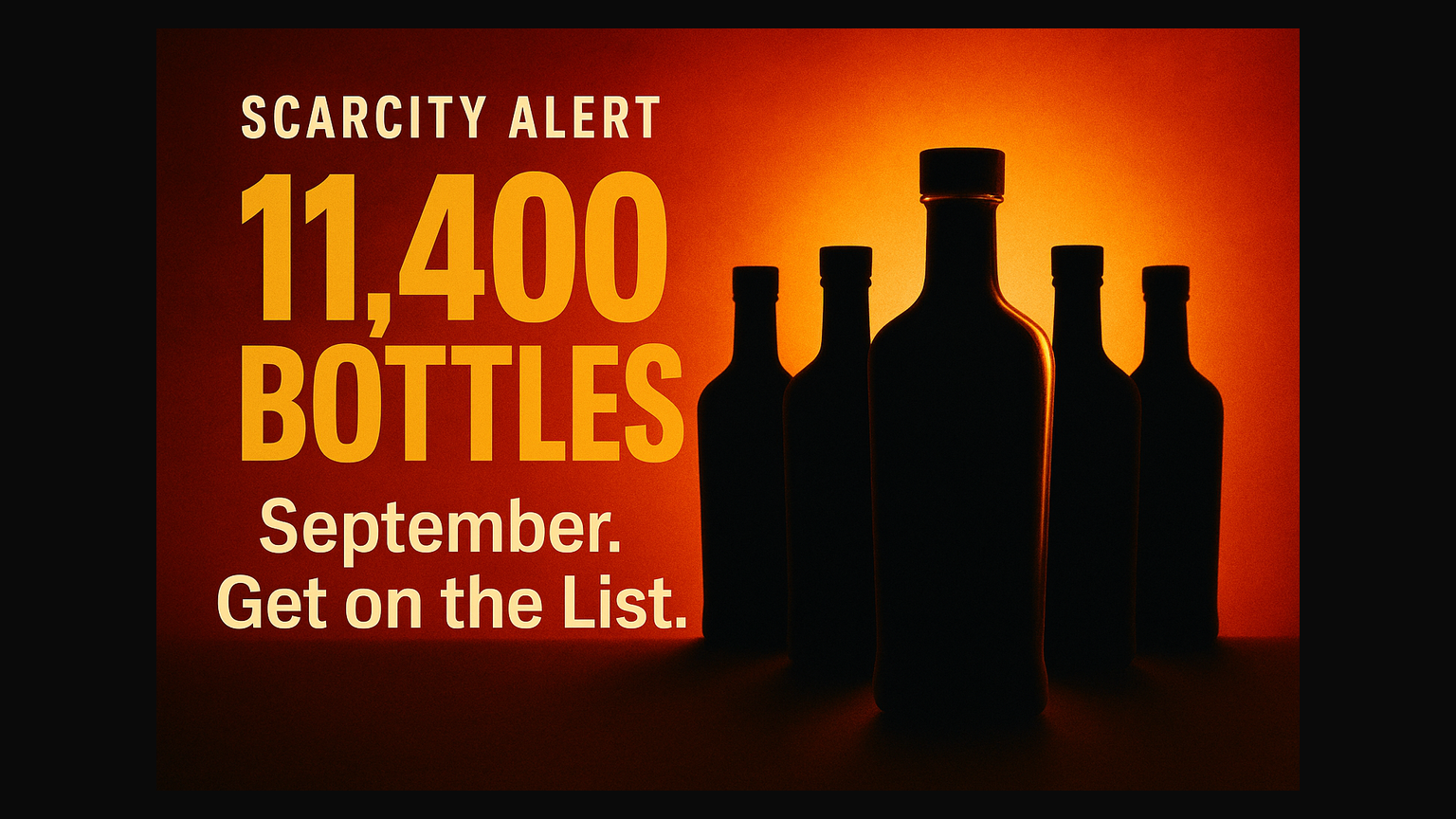
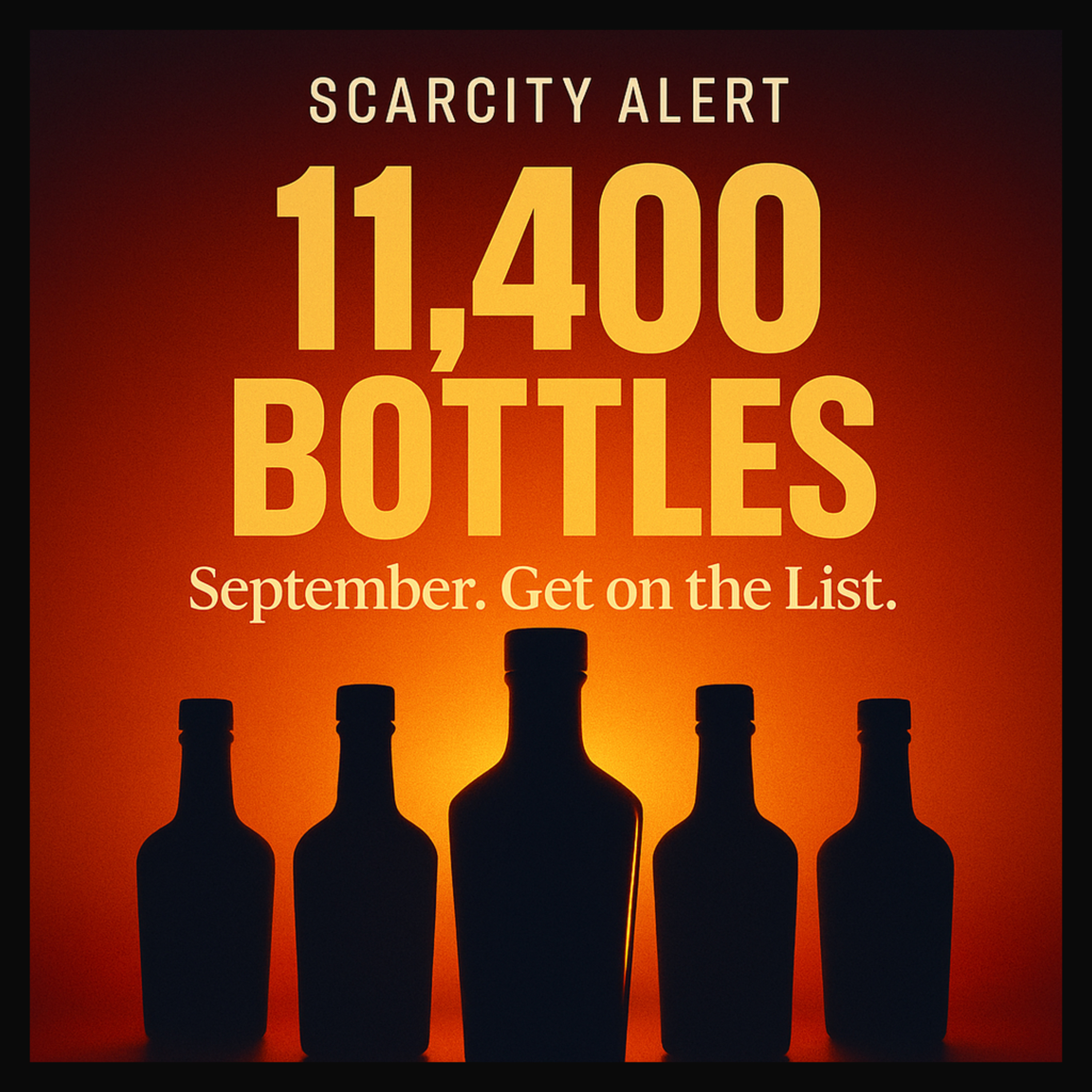
11,400 bottles. September. Get on the list. Wild Turkey just confirmed Master’s Keep 2026 “Triumph” at 17 years and 116.4 proof — the series’ most age-forward release under Eddie Russell — at $199.99 MSRP, and prior Master’s Keep expressions have cleared retail in under six weeks from first ship. The reserve lists are open before the press release is.
I’m John from Chasing the Unicorn Podcast. Here’s what moved today. May 27, 2026.
Today’s Big Move — Wild Turkey Master’s Keep 2026 “Triumph” production architecture. Here’s what happened.
Wednesday on The Cut is Market, Pricing, and Release Specs day. That frame fits exactly here — because the $199.99 MSRP and the 11,400-bottle ceiling aren’t marketing decisions. They’re arithmetic.
The barrels in this release went into Lawrenceburg rickhouses in 2008 or 2009 — the early recovery cycle, when Wild Turkey was running smaller. Every Kentucky summer since, heat pushed whiskey into the wood. Every winter, cold pulled it back. A small percentage left as vapor each year. In Kentucky, that’s 3 to 5 percent of barrel volume annually. Run that across 17 years and a 53-gallon barrel can finish with as few as 22 gallons. That’s about 55 bottles from what started as 265. The 11,400-bottle national allocation is what survived. Not a production cap — the barrel math.
The proof number carries a second story. Eddie Russell enters Wild Turkey barrels at 107 proof, well below the 125-proof federal maximum. Lower entry means slower, more integrated wood extraction. At 17 years with that approach, the oak and the corn have had time to settle. His words from the trade deck: “At 17 years in Kentucky limestone rickhouses, you’re right at the edge of where the oak gives and the corn shows up.”
Secondary floors on comparable Master’s Keep expressions sit at $300 to $380. At $199.99 MSRP, the entry math doesn’t require a secondary thesis. It requires a reserve list.
The lists at Seelbach’s, Total Wine, and Campari-aligned accounts are open now. Official announcement is expected June 5 to 15. September ship. The buyers who act before June will be the ones who read the trade deck in May.
Angel’s share is the concept that explains all of it — the price, the allocation, the 17-year production math. That’s today’s First Sip.
Today’s First Sip — the angel’s share. Here’s what it actually means when you see a long age statement priced well above a younger bottle.
So here’s what it is.
Every year, a bourbon barrel loses volume to evaporation. Heat swells the wood and pushes whiskey out. Cold shrinks it and pulls some back. A percentage escapes as vapor each cycle. In Kentucky’s climate, that’s 3 to 5 percent of barrel volume annually.
A 53-gallon barrel can hold around 265 bottles worth of whiskey. After 10 years, you might have 35 gallons left. After 17, you could be down to 22. That’s roughly 55 bottles from what started as 265. The rest is gone. The angels took it.
The trade: time concentrates flavor. Water and alcohol evaporate at different rates. The wood gives more of itself to what remains. A 17-year bourbon isn’t just older — it’s a survivor, richer because so much of the original volume didn’t make it through.
Think of reducing a stock on the stove. You start with a full pot. Apply heat. Most of it evaporates. What’s left is more concentrated, more complex, more expensive to produce — and there’s less of it. That’s 17 Kentucky summers in a rickhouse.
What this changes — when you see a long age statement priced well above a younger bottle, the angel’s share math accounts for most of that gap. You’re paying for what the barrel kept, not just how long it waited.
Today’s Chase — three bottles across three tiers. All three carry active windows. Let’s start with the one that matters most.
Parker’s Heritage Collection 2026 Bottled-in-Bond — 10 years, 100 proof, Heaven Hill. In the $80 to $200 tier at $99.99.
Here’s what to expect in the glass. Bright caramel and butterscotch on the nose. Structured wood and spice on the mid-palate. A clean, warm finish that sustains past the pour — consistent with the Heaven Hill Bottled-in-Bond family character at the 10-year tier. Approachable proof for a collector-tier bottle.
Here’s why it’s today’s spotlight. A federally guaranteed 10-year Bottled-in-Bond at $99.99, and tomorrow is the only day that price is still accessible. The pre-allocation submission window closes May 28. June 7 is the confirmed ship date. Three prior vintages each carried a 70 to 95 percent documented secondary premium. Walk-in retail hasn’t seen this bottle in two years running.
Worth the chase. Contact Seelbach’s, Liquor Barn, Westport Whiskey & Wine, or your Heaven Hill specialist account before end of business tomorrow.
Also on today’s Chase — Four Roses Single Barrel Select “Reunion” 2026 in the under-$80 tier at $74.99. The 11-year OBSV recipe at 113.6 proof. Pre-orders are shipping today; walk-in availability expected May 30 through June 7. And Wild Turkey Master’s Keep 2026 “Triumph” at $199.99 in the top tier — reserve lists open now at Campari accounts, September ship. Worth watching until first tasting notes land. Full detail in today’s Cut Daily. If you want more, head to The Brief at chasingtheunicornpodcast.
Alright — today’s Bar Talk. The BTAC price reset.
Today’s Bar Talk — whether the 2026 BTAC MSRP increase changes the math on entering a free state lottery. Community’s split on whether $10 to $20 more matters when the secondary floor is $400 to $1,400. Here’s what’s actually going on.
Buffalo Trace raised prices on four of the five BTAC expressions. Stagg moves to $149.99. Weller to $139.99. Handy to $119.99. Eagle Rare 17 and Sazerac 18 each up $10. The secondary floor on Stagg 2025 runs $1,250 to $1,400. Weller 2025 runs $1,300 to $1,500. A $20 MSRP move is invisible to those numbers.
The rye tier is the different story. Handy and Sazerac 18 trade at $370 to $440 — three to four times retail. At that multiple, a $10 MSRP increase is a proportionally larger erosion of the margin for a lottery winner who planned to flip. If you were entering to drink it, the math is still fine.
The lottery entries are free. Win rates stay below five percent per expression per cycle. Ohio and Pennsylvania portals are still open.
Here’s what it means for the rest of us — enter every BTAC lottery for any bottle you’d drink at the new price. The math still works. Unless you were buying the rye tier to flip, in which case, recalculate.
Two more things before we close. First — today’s AWIB in The Brief has the full Flight comparison: George T. Stagg 2025 versus William Larue Weller 2025. Same collection, same new MSRP environment, two very different profiles — the verdict on which expression earns the fall lottery entry for which kind of bourbon-curious drinker is in the brief. Second — today’s AWIB Label Room covers five COLA approvals from the May 25 to 27 window, including Wild Turkey Rare Breed Barrel Proof 2026 filed at 116.8 proof — the highest in the expression’s history on a held $49.99 MSRP — and the first NDP filing to carry voluntary multi-state distillate disclosure language six months before the mandate takes effect. Both are waiting at chasingtheunicornpodcast.com.
That’s The Cut. The full American Whiskey Industry Brief is waiting at chasingtheunicornpodcast.com/the-brief/. I’m John F. Schuster II. Thanks for joining me. Your unicorn is out there.
The Cut Daily
Listen to today’s episode and find us on Spotify and everywhere you listen at chasingtheunicornpodcast.com/podcast.

Informational and entertainment purposes only. Nothing here is investment advice. Verify before buying, trading, or bidding. We are not liable for errors or financial losses.
11,400 bottles. September. Get on the list. Wild Turkey just confirmed Master’s Keep 2026 “Triumph” at 17 years and 116.4 proof — the series’ most age-forward release under Eddie Russell — at $199.99 MSRP, and prior Master’s Keep expressions have cleared retail in under six weeks from first ship. The reserve lists are open before the press release is.
Today’s biggest news didn’t come from a press release. It came from a federal label approval and a distributor trade deck. Wild Turkey’s Master’s Keep 2026 — the “Triumph” edition — is locked at 17 years, 116.4 proof, $199.99, 11,400 bottles, ships in September. The reserve lists at specialty accounts opened before the announcement lands. If you want the bottle at MSRP, those lists are how you get it. Also moving today: Buffalo Trace pushed its first BTAC price increase since 2022 while the Ohio and Pennsylvania lottery portals are still open. The standard Parker’s Heritage Collection 2026 Bottled-in-Bond — separate from the Barrel Proof BiB variant we covered Sunday at $129.99 — closes pre-allocation tomorrow at $99.99. And the Four Roses “Reunion” OBSV pre-orders ship from accounts today at $99.
Wild Turkey’s 2026 Master’s Keep “Triumph” just got its full production spec locked. Seventeen years in Lawrenceburg rickhouses. 116.4 proof. $199.99 MSRP. 11,400 bottles nationally. September ship window. And the reserve lists at accounts running the Campari program are open right now — before any press release, before any review, before most buyers know to look.
Here’s the production math that explains the price. The barrels in the “Triumph” release went into the rickhouses in 2008 or 2009, at the beginning of the bourbon recovery cycle when Wild Turkey was running a smaller operation. Over 17 Kentucky summers and winters, those barrels lost somewhere between 45 and 60 percent of their volume to evaporation — the heat pulls whiskey into the wood; the cold pushes it back out; a small percentage leaves as vapor every year. What’s left is concentrated and genuinely scarce. The 11,400-bottle national allocation isn’t a marketing choice — it’s arithmetic.
Here’s why the proof matters. Eddie Russell enters his barrels at 107 proof — well below the 125-proof federal max. Lower entry means slower, more integrated wood extraction over time. Seventeen years at that approach gets you a 116.4-proof pour where, as Russell puts it from the trade deck, “you’re right at the edge of where the oak gives and the corn shows up.” That’s the experience the price is funding.
Prior Master’s Keep expressions have cleared allocated ceiling at major accounts in under six weeks from first ship. Secondary floors on comparable Master’s Keep expressions sit at $300 to $380. At $199.99 MSRP, the entry math doesn’t require a secondary thesis — it requires a reserve list.
Every year, a bourbon barrel loses some of its volume to evaporation. Heat swells the wood, cold shrinks it, and liquid escapes through the oak in both directions. Distillers call this “the angel’s share.” In Kentucky’s climate, a barrel loses roughly 3 to 5 percent of its volume every year.
A new barrel starts at 53 gallons. After 10 years, you might have 35 gallons left. After 17 years — the age statement on Wild Turkey’s Master’s Keep “Triumph” confirmed this week — you could have as few as 22 gallons remaining. That’s about 55 bottles from what was originally 265.
That’s the trade. Time concentrates flavor as the water and alcohol evaporate at slightly different rates and the wood contributes more of itself to what remains. But time also destroys inventory. A 17-year bourbon isn’t just older — it’s a survivor from a vintage year when Wild Turkey was running a much smaller operation than it does today.
The 11,400-bottle national allocation on the “Triumph” isn’t a scarcity marketing decision. It’s the number of surviving casks from a specific production window, after Kentucky took its cut for 17 consecutive years.
What this changes: When you see a long age statement priced well above a younger bottle, the math explains most of it. You’re paying for what’s left after the angels took their share — year after year, for 17 years.
Floor erosion is how far a bottle’s auction price has dropped from its all-time high. Forty-three percent erosion on the Four Roses Limited Edition Small Batch Select 2025 means the bottle is now selling at auction for about 56 cents on the dollar compared to its 2023 peak. At $158 realized against a $99.99 MSRP, the secondary premium is now 1.58 times retail — meaningful, but narrowing fast. Here’s what’s driving it: today’s AWIB confirms that Four Roses Limited Edition Small Batch Select 2026 will be the OSBQ recipe — a recipe with strong community preference that has never appeared in the Limited Edition Small Batch Select series before. When next year’s recipe gets confirmed, buyers holding 2025 stock start rotating out before the new vintage arrives. The 2025 OBSV floor will compress further as the 2026 OSBQ September ship window approaches and demand concentrates on the incoming bottle.
Rickhouse Report: 5 stories · Regional Report: 3 stories
◆ The Brief (free): https://chasingtheunicornpodcast.com/the-brief/
◆ Listen on Spotify: https://open.spotify.com/show/56Lt67gvTPjifCyeqFW3IT
◆ YouTube: https://www.youtube.com/@chasingtheunicornpodcast
Want the full picture? The complete American Whiskey Industry Brief — every section, every source, every story — is published free every morning at chasingtheunicornpodcast.com. Read it at chasingtheunicornpodcast.com/the-brief/.