130.4 Proof: Elijah Craig Barrel Proof C926 Pre-Allocation Closes Thursday at $79.99 — The Cut
In this episode
▶ Listen to this episode on Spotify Tuesday’s Cut opens with a proof record and a three-day deadline. Heaven Hill’s Elijah Craig Barrel Proof C926 is TTB-confirmed at 130.4 proof and 14.2 years average age — the highest-proof C-designated batch in the expression’s tracked history — shipping June 8 to pre-allocation accounts at $79.99 MSRP….
Mentioned in this episode: Pappy Van Winkle, Heaven Hill, Elijah Craig, Old Fitzgerald, Parker’s Heritage
Read the full transcript
The coach structure file isn’t accessible via the filesystem path, but I have everything I need from the provided inputs — the task instructions contain the full section flow, yesterday’s script shows the format, the voice profile and production spec are inline, and the Cut Summary has today’s content. Composing now.
—
The Cut — June 2, 2026 Episode: Tuesday, June 2, 2026
This is The Cut.
Fourteen years of Kentucky aging, bottled straight from the barrel — dark caramel, dried cherry, and a warmth that builds slow and opens up when you give it a moment. That’s Elijah Craig Barrel Proof C926. Heaven Hill confirmed the specs this week, the pre-allocation window closes Thursday, and the number on the label is not a reason to walk away.
I’m John from Chasing the Unicorn Podcast. Here’s what we’re going after today. June 2, 2026.
Here’s where we want to end up. Elijah Craig Barrel Proof C926 on a pre-allocation list at $79.99 before Thursday’s cutoff — before the bottle converts to walk-in and secondary sets a different floor.
Here’s what makes it tricky. Most buyers see 130.4 on the label and stop reading. They treat the bottling spec as a drinking instruction. It isn’t. The proof is what left the barrel. What proof you pour into a glass is a decision you make — and the technique to adjust it takes about ten seconds to execute.
Here’s the move. Contact your specialty account today, ask about ECBP C926 pre-allocation, and get on the list. If you’re not local, Seelbach’s and Binny’s both carry Heaven Hill allocation nationally. Don’t wait until Thursday — lists fill before the deadline, not on it.
Elijah Craig Barrel Proof is bottled uncut and unfiltered. No water added between the barrel and the bottle — what aged goes directly into the glass. That’s the first thing. The second: Heaven Hill filed a label amendment this week disclosing barrel entry at 107 proof, the first ECBP label to include that specification publicly. Lower entry proof means the new-make went into the barrel with more water already present, which changes how flavor compounds extract across a long aging run. Across 14 years, that entry spec is doing a lot of the architectural work in the glass. To use it: three to five drops of still water, swirl, wait thirty seconds, taste. The caramel and dark fruit are present at full strength, but the alcohol is running interference. Drop the proof in the glass a few points and those compounds come forward. That’s not a workaround — that’s how barrel-proof bourbon is meant to be explored.
Tuesday’s Chase covers three bottles with open Father’s Day windows. Let’s start with the one that warrants the most attention right now.
Garrison Brothers Cowboy Bourbon 2026 at $149.99. Texas barrel-strength, six to seven years, reserve window open now through mid-June. Concentrated peach preserve and char smoke on the nose; dense dark caramel and a mid-palate intensity that Texas Hill Country aging produces faster than Kentucky climate can replicate. The finish is shorter than Kentucky barrel-strength equivalents, but the mid-palate is the point. Recent Cowboy Bourbon editions have tracked $40 to $75 above MSRP post-release, and the reserve window doesn’t close on a calendar date — it closes when accounts fill. This is worth the chase.
Also on today’s Chase: Old Fitzgerald Bottled-in-Bond Fall 2026 at $79.99 — wheated Heaven Hill, 100 proof, pre-allocation closes June 4, soft caramel and stone fruit for the recipient who doesn’t need barrel proof. Nothing new above two hundred dollars this week — the top shelf is quiet, and we’ll flag a real one the day it lands. Full read is in today’s Cut Daily on our website. Free.
A word of caution on proof hesitation. Before 130.4 proof stops you from getting on a C926 pre-allocation list, ask what the actual downside is. A $79.99 pre-allocation commit on a confirmed 14-year barrel-proof Heaven Hill is not a high-stakes call. The price of being wrong is walking away from a bottle that recent C-batch history puts at $120 to $145 on secondary within 30 days of retail arrival. The odds and the downside both point the same direction. The price of being wrong matters as much as the odds of being right — and here, the downside is modest.
Today’s full American Whiskey Industry Brief at chasingtheunicornpodcast.com has the Flight — Old Fitzgerald BiB Fall 2026 against Parker’s Heritage 2026 Bottled-in-Bond. Same Bernheim facility, same Father’s Day price tier, opposite bets on proof and age statement. The gifting verdict is in the Flight. Also in the Brief: the Pappy Van Winkle 2026 fall COLA filings — both the 20-Year and 23-Year confirmed in the TTB registry, the full state lottery calendar opening in July, and what a new vintage in the pipeline means for the 2024 secondary floor right now.
That’s The Cut. The full American Whiskey Industry Brief is at chasingtheunicornpodcast.com/the-brief/. I’m John F. Schuster II. Thanks for joining me. Your unicorn is out there.
The Cut Daily
▶ Listen to this episode on Spotify
Tuesday’s Cut opens with a proof record and a three-day deadline. Heaven Hill’s Elijah Craig Barrel Proof C926 is TTB-confirmed at 130.4 proof and 14.2 years average age — the highest-proof C-designated batch in the expression’s tracked history — shipping June 8 to pre-allocation accounts at $79.99 MSRP. Most specialty retailer lists close Thursday, June 4. The r/bourbon debate about whether 130.4 is too hot misses the point: the bottling proof is what left the barrel. The drinking proof is what you decide on. Three to five drops of still water opens the caramel and dark fruit that 130.4 is running interference on. That’s not a workaround — it’s how barrel-proof bourbon is meant to be explored. Also today: Garrison Brothers Cowboy Bourbon 2026 at $149.99 is open in the reserve window through mid-June. Pappy Van Winkle 23-Year 2024 sits at 50.5% floor erosion with a new vintage just confirmed in the TTB registry. Full analysis in today’s Cut. Listen now at chasingtheunicornpodcast.com.Listen to today’s episode on Spotify, or find us wherever you get your podcasts.

Informational and entertainment purposes only. Nothing here is investment advice. Verify before buying, trading, or bidding. We are not liable for errors or financial losses.
130.4 proof isn’t the problem. Heaven Hill’s Elijah Craig Barrel Proof C926 ships June 8 at $79.99 — highest proof the C batch has ever hit, pre-allocation closes Thursday. Here’s what the number actually tells you.
Heaven Hill just confirmed the most potent Elijah Craig Barrel Proof in the C-batch’s history — 130.4 proof, 14.2 years average age, $79.99 MSRP — and most retailer pre-allocation lists close Thursday ahead of a June 8 ship. It’s the headline on a Tuesday window stacked with TTB-confirmed deadlines, state lottery calendars activating on the fall BTAC cycle, and a quiet regulatory filing that tells you something Heaven Hill never announced publicly about how they make Elijah Craig. Today’s Cut Daily covers the pre-allocation deadline, what 130.4 proof actually means for the person buying it, and a First Sip on why barrel proof is a specification, not a warning.
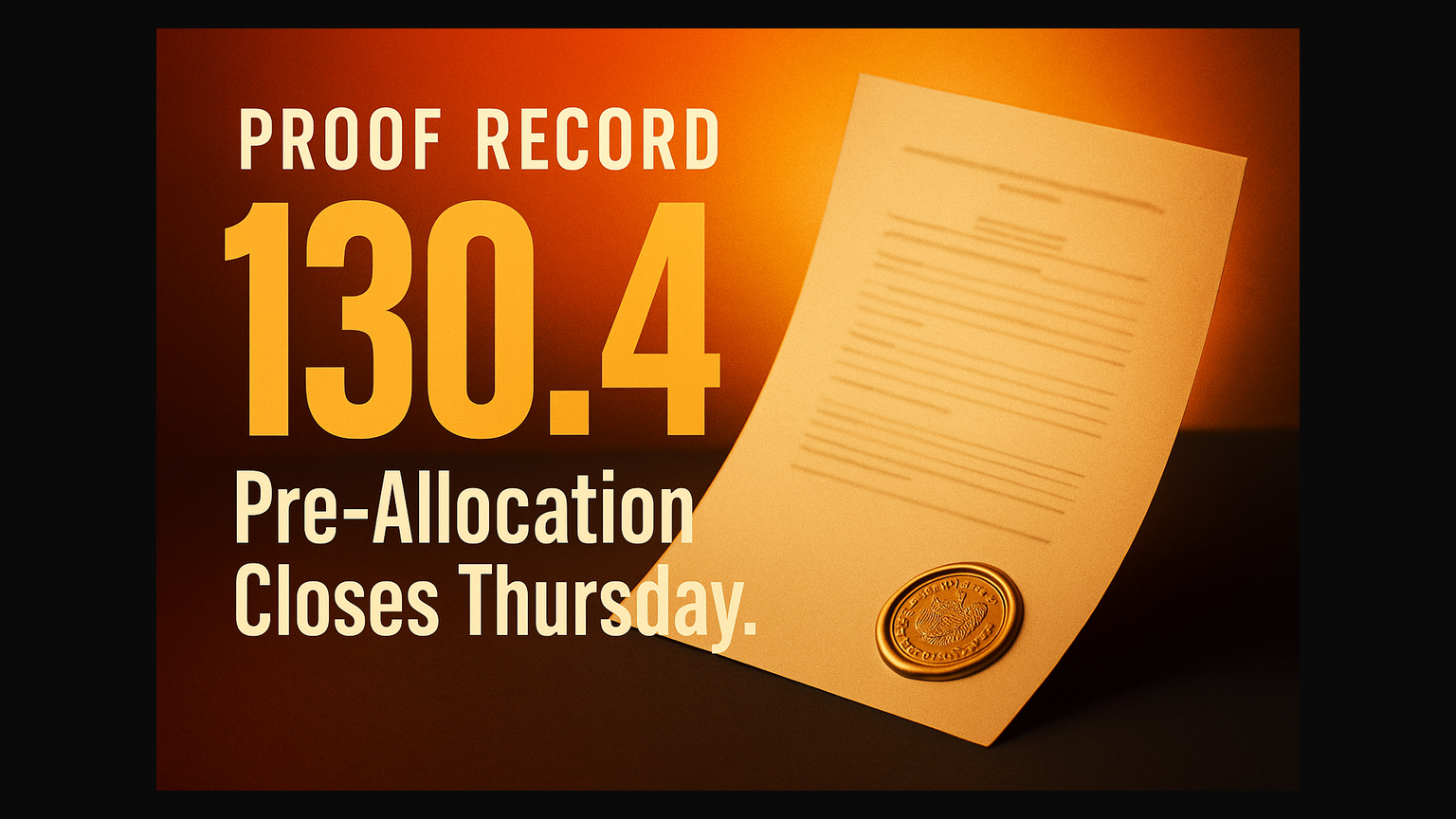
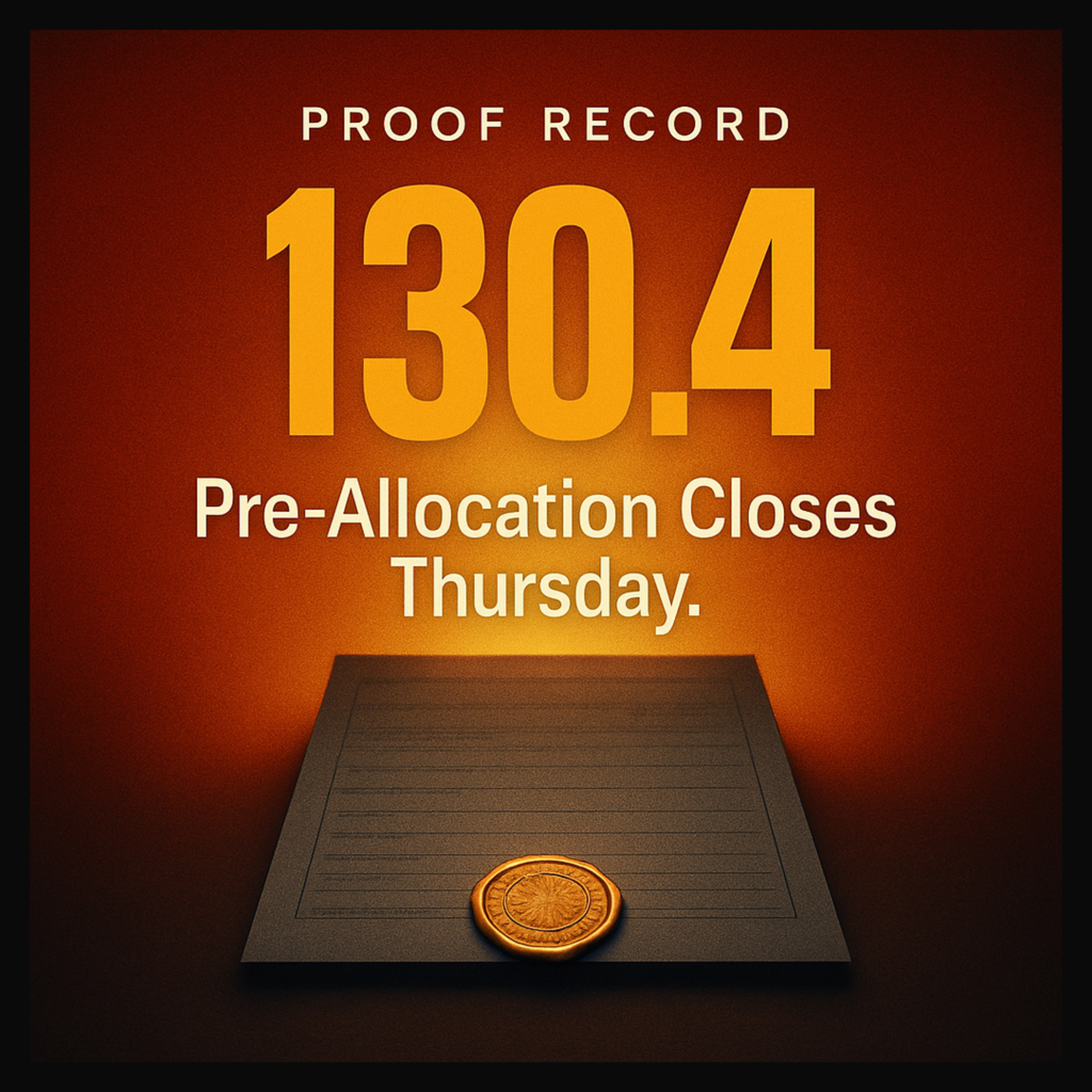
Heaven Hill locked the spec on Elijah Craig Barrel Proof C926 earlier this spring, and the TTB confirmed it: 130.4 proof, 14.2 years average age, $79.99 MSRP, June 8 ship to pre-allocation accounts. That 130.4 clears every previous C-designated batch — above C925 at 128.6, above B926 at 127.8. It is the highest proof the C position in this series has ever carried.
The number is not cosmetic. Elijah Craig Barrel Proof is bottled uncut and unfiltered — what comes out of the barrel goes into the bottle, no water added. And on June 2, Heaven Hill filed a quiet label amendment with the TTB that most buyers won’t notice: it adds an explicit barrel-entry proof disclosure of 107 proof to the C926 label — the first ECBP label to include that specification. Lower entry proof means the new-make spirit entered the barrel with more water, which changes how wood-soluble flavor compounds extract over time. Across 14 years, that 107-proof entry is the architecture behind everything in the glass.
What that means for the pour: 130.4 is the proof when it left the barrel. It doesn’t have to be the proof when it reaches your palate. Three to five drops of still water brings the proof down into the range where caramel, dark fruit, and oak integration — compounds that read as heat at full strength — become perceptible. That technique isn’t a workaround. It’s how barrel-proof bourbon is meant to be explored.
Most participating specialty accounts close their C926 pre-allocation lists by Thursday, June 4, ahead of the June 8 ship. If you’re not on a list by then, remaining bottles go to walk-in.
Most bourbon gets cut with water before bottling. The distillery takes whiskey out of the barrel — could be 115 proof, could be 130 — and adds water to reach a consistent, marketable bottle proof. “Barrel proof” or “cask strength” means they skipped that step. Whatever came out of the barrel goes directly into the bottle.
The appeal is transparency. You’re tasting exactly what aged in that specific barrel. The trade-off is intensity — barrel-proof bourbon often runs 120 to 140 proof, which is a lot for the palate to process at once.
Here’s the thing experienced bourbon drinkers learn fast: water is a tool, not an admission of defeat. Adding a few drops to a barrel-proof pour doesn’t weaken it — it opens it. Certain flavor compounds only become perceptible below a specific proof threshold. A 128-proof bourbon poured neat can taste hot and closed. The same pour with three to five drops of water can reveal caramel, orange peel, and oak integration that the alcohol was masking.
The number on the label is the bottling proof — what left the barrel. It doesn’t have to be the proof in your glass. That’s entirely up to you, and the technique to find the right point is simple: start with three drops, swirl, wait 30 seconds, taste. Let the bottle tell you where it opens.
What this changes: barrel-proof bottles are built for exploration. The alcohol is the entry. The water is how you read what’s underneath.
Floor erosion is how far a bottle’s secondary market price has dropped from its all-time high. Pappy Van Winkle 23-Year 2024 closed at $2,180 on May 28 — down 50.5% from its $4,400 peak in October 2022. The bottle is now selling for roughly half of what it fetched at its highest. That doesn’t mean it’s in freefall. Pappy 23 has held a $2,100–$2,300 band for roughly four months — what analysts call a stabilization floor rather than a recovery. What shifts that floor is the signal that arrived Tuesday: the 2026 Pappy 23 COLA landed in the TTB registry, which historically triggers state lottery portal announcements within two to three weeks. A new vintage entering the pipeline is direct competition for the collector attention holding the 2024 floor in place. Prior-year Pappy secondary demand predictably softens in the 60-to-90-day window before new-vintage state lottery distribution begins.
Rickhouse Report: 5 stories · Regional Report: 3 stories
◆ The Brief (free): https://chasingtheunicornpodcast.com/the-brief/
◆ Listen on Spotify: https://open.spotify.com/show/56Lt67gvTPjifCyeqFW3IT
◆ YouTube: https://www.youtube.com/@chasingtheunicornpodcast
Want the full picture? The complete American Whiskey Industry Brief — every section, every source, every story — is published free every morning at chasingtheunicornpodcast.com. Read it at chasingtheunicornpodcast.com/the-brief/.