The Cut — June 24, 2026 — SE02E59 — Everyone Else Dropped. This Bottle Didn’t.
In this episode
Wednesday’s Cut opens on the bourbon secondary market’s clearest live illustration of what genuine scarcity looks like. Buffalo Trace’s Weller Antique 107 Batch 2026-02 cleared the TTB COLA Registry at 107 proof — the
Mentioned in this episode: Buffalo Trace, Weller, Wild Turkey, Old Fitzgerald, Michter’s
Read the full transcript
This is The Cut.
Soft wheat, honey, a little dried peach on the mid-palate — and 107 proof that earns its heat without announcing itself. That’s Weller Antique 107. The second 2026 batch just cleared federal label approval at the same spec as the first, and the floor on this bottle is doing something the rest of the wheated secondary tier stopped doing a year ago.
I’m John from Chasing the Unicorn Podcast.
Here’s where we want to end up: a clear read on when a secondary floor is telling you something real about supply — and the move that gets you into this bottle at retail price while a comparison window most buyers never see is sitting open.
Here’s what makes it tricky. Most buyers look at Weller Antique sitting $15 to $35 above its $49.99 MSRP on secondary and assume the premium is brand name. Same distillery, same wheated mash bill as everything else in the Weller lineup — must be the halo. But Weller Special Reserve from the same distillery, the same grain family, has compressed to within five dollars of its $29.99 MSRP at most active markets. Same brand. Same house. Different floor. Brand recognition doesn’t explain that gap. Per-account supply does.
Here’s the move. Call your specialty retailer today. Ask two questions: do they still have Batch 2026-01 on the shelf, and when is Batch 2026-02 arriving. Two same-year batches at identical proof at MSRP is a comparison that almost never opens at retail price — and right now it is.
Here’s why that floor divergence is worth understanding before you make any move on the secondary. Weller Antique ships at lower volumes per account than Weller Special Reserve. That’s not a marketing distinction — it’s a logistics one. Fewer bottles per retailer, tighter hold across distribution. When the broader wheated secondary corrected toward retail through 2024 and 2025, the Weller Antique floor didn’t follow because the per-account supply never loosened enough to close the gap. The secondary price is tracking the allocation constraint, not the brand name. That’s the signal.
The second thing to understand is what two consecutive same-year batches at identical proof gives you. Buffalo Trace’s consistency decision — 107 proof, no adjustment — creates a palate reference between barrels drawn from different aging seasons inside the same rickhouse cycle. Any variation you find between 2026-01 and 2026-02 is wood and barrel position, not production drift. That’s a real comparison. At $49.99 each, not secondary price.
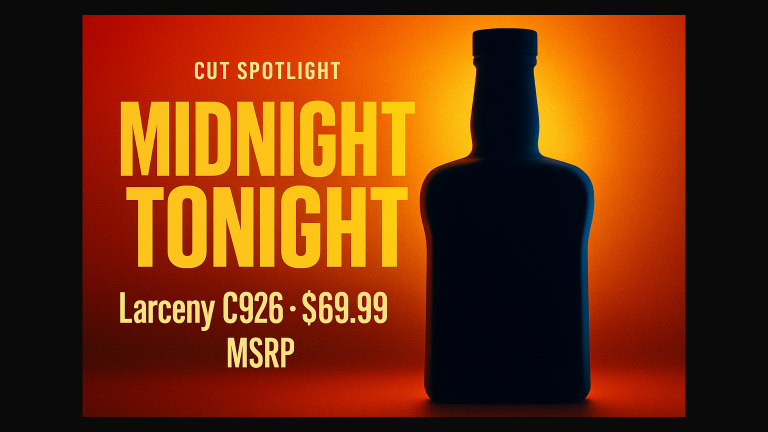
The Chase this window. The Spotlight is Wild Turkey Master’s Keep Triumph 2026 — $199.99, pre-allocation open now through approximately mid-July. Eddie Russell held candidate barrels at 15 and 16 years before committing to this cohort. Seventeen years of Wild Turkey’s low-entry-proof production at 116.4 proof — 11,400 bottles nationally. Whisky Advocate’s 2025 Triumph scored 92 points with a finish that extended past 90 seconds. Secondary floor on last year’s edition runs $290 to $340 on Bottle Spot. Wild Turkey’s Landmark 2026 filing also confirmed at 14 years this week, which means fall allocation is now a two-expression decision — committing to Triumph pre-allocation now removes that uncertainty before Landmark pricing arrives. Worth the chase — Seelbach’s portal or a participating Campari account.
Also in this window: Old Fitzgerald Bottled-in-Bond Fall 2026 at $79.99 — 11-year wheated BiB, pre-allocation open now at Seelbach’s, no published close date but the window narrows without notice. And in the high tier, it’s quiet this week — no confirmed $200-plus entry is active, and we’d rather say so than push you toward the wrong bottle. Full read on all three is in today’s Cut Daily on our website. Free.
A word of caution. A floor that held through a correction is not a floor that rises. The risk in chasing any secondary premium is that conditions change faster than the price updates. The rule of thumb: the price of being wrong matters as much as the odds of being right. The MSRP window is always the safer entry — and this week, for Weller Antique, it’s open.
One more thing before we close — today’s American Whiskey Industry Brief has the full Flight on Michter’s US★1 Sour Mash Batch 2026-02 against the US★1 Bourbon: same distillery, same 86 proof, same shelf price, different grain credential. The full palate comparison and the call on whether that difference justifies identical pricing is on Patreon.
That’s The Cut. Follow the show wherever you listen, so tomorrow’s brief finds you first. The full American Whiskey Industry Brief is at patreon.com/ChasingTheUnicornPodcast. I’m John Schuster. Thanks for joining me. Your unicorn is out there.
The Cut Daily
Listen to today’s episode and find us on Spotify and everywhere you listen at chasingtheunicornpodcast.com/podcast.

Informational and entertainment purposes only. Nothing here is investment advice. Verify before buying, trading, or bidding. We are not liable for errors or financial losses.
Everyone else dropped. This bottle didn’t. The wheated secondary market has been sliding toward retail price since 2024 — and Weller Antique 107 just got a second 2026 batch confirmed while its floor is still holding $15 to $35 above MSRP. In a correction, that’s a specific story.
The biggest bourbon story this Wednesday is a pricing signal hiding inside a routine TTB label approval. Weller Antique 107 Batch 2026-02 cleared the federal registry at 107 proof — the same spec as the first 2026 batch — and the secondary floor is doing something its sister expressions from the same distillery are not doing. Today’s edition covers what that divergence tells buyers about where genuine scarcity lives in the current market, a pre-allocation window on an 11-year wheated BiB that doesn’t have a published close date but won’t last, and what Michter’s two US★1 bottles sitting at the same shelf price are actually telling you about the value of the bourbon designation.
Buffalo Trace released two Weller Antique 107 batches in 2026. The second one just cleared federal label approval at the same 107 proof as the first — the same proof the expression has held through every batch in the current production cycle.
That consistency is a decision. At a moment when several producers have nudged accessible-bottle proofs down to manage cost pressure, the Weller Antique lineup hasn’t moved. 107 proof, both batches, no adjustment.
The number that carries more weight today isn’t on the label. It’s on the secondary market. Weller Antique 107 tracks at approximately $65 to $85 on Bottle Spot’s 30-day realized-price average — a $15 to $35 premium over $49.99 MSRP. That sounds modest until you look at what’s sitting next to it on the same shelf.
W.L. Weller Special Reserve — same distillery, same wheated mash bill, same Buffalo Trace production floor — has compressed to within five dollars of its $29.99 MSRP at most active markets. In dollar terms, the gap between those two floors tells you where the supply discipline actually lives in the Weller portfolio. Weller Antique ships at lower per-account volumes than Special Reserve. The floor difference follows that allocation gap more precisely than it follows brand recognition alone.
The practical window this creates: two consecutive same-year batches at identical proof are arriving in distribution overlap. Batch 2026-01 is still on shelves at some specialty accounts. Batch 2026-02 is entering distribution now. A same-year batch comparison at retail price — no secondary purchase, no lottery — is available for the first time in this release cycle.
“Allocated” describes how a bottle is distributed — not how good it is. Allocated bottles are ones a distillery produces in limited quantities where demand exceeds what supply can cover, so distributors ration them to retailers in small numbers.
The classic examples are Pappy Van Winkle, the Buffalo Trace Antique Collection, and Weller Antique 107 — all from the same distillery, all allocated because genuine production constraints keep supply below demand.
Here’s what today’s Weller story makes concrete: allocation lives at the per-account volume level, not just the label. Weller Antique ships to fewer bottles per account than Weller Special Reserve. That’s why Antique’s secondary floor is still $15 to $35 above its $49.99 MSRP while Special Reserve has dropped to within a few dollars of its $29.99 retail price. Same distillery. Same family. Different allocation tier. The floor divergence follows that supply gap more precisely than it follows brand recognition.
Not everything “hard to find” is genuinely allocated. Marketing loves the word “rare.” Real allocation shows up when retailers announce a bottle by lottery or hold list, when MSRP exists but shelf prices vary widely by region, and when secondary prices track meaningfully above retail even during a broader correction.
A bottle that’s hard to find and a bottle that’s allocated are not always the same story. The Weller floor data this week is the difference made visible.
What this changes: When you’re chasing a bottle, ask whether the scarcity is supply-driven or distribution-driven. The answer changes your access strategy — and your realistic timeline.
Floor erosion measures how far a bottle has fallen from its all-time secondary high. Parker’s Heritage 2025 peaked at $295 in November when buyers who missed the $99.99 MSRP window were willing to pay a post-release collector premium. By June it’s clearing at $198 — roughly a third of its peak value gone in seven months. The mechanism is predictable: Parker’s Heritage releases annually. The moment the 2026 edition enters pre-allocation at $99.99 MSRP, the collector incentive to pay $295 for last year’s edition essentially evaporates. Today’s Label Room covers the Parker’s Heritage 2026 COLA confirmation at 122.6 proof with an American whiskey designation — the new vintage entering the pipeline is the price ceiling landing on the 2025 secondary floor. Buyers holding PHC 2025 above $200 acquired at secondary are now sitting on a loss against an annual program that resets at retail.
Rickhouse Report: 5 stories · Regional Report: 3 stories
◆ Full AWIB (Paid Patreon Subscriber): https://www.patreon.com/c/ChasingTheUnicornPodcast
◆ Listen on Spotify: https://open.spotify.com/show/56Lt67gvTPjifCyeqFW3IT
◆ YouTube: https://www.youtube.com/@chasingtheunicornpodcast
Want the full picture? The complete American Whiskey Industry Brief — every section, every source, every story — is published daily for subscribers on Patreon. Join us at patreon.com/ChasingTheUnicornPodcast.