The Cut — May 18, 2026 — Eddie Russell Opens the Rickhouse | $125 Flavor Map | The Cut
In this episode
▶ Listen to this episode on Spotify Monday’s biggest industry move is a $125 rickhouse science curriculum — and it may be the most honest consumer-education product a Big 4 distillery has ever offered. Wild Turkey launched its “Flavor Map” Rickhouse Education Tour on Saturday at the Lawrenceburg campus. Eddie Russell led 18 participants through…
Mentioned in this episode: Wild Turkey, Heaven Hill, Elijah Craig, Larceny, Old Fitzgerald, Four Roses, Maker’s Mark
Read the full transcript
Target runtime: 7:48 Word count: 1,187 Estimated runtime: 7:55 Source: The Cut Daily 2026-05-18
—
This is The Cut. American whiskey, daily.
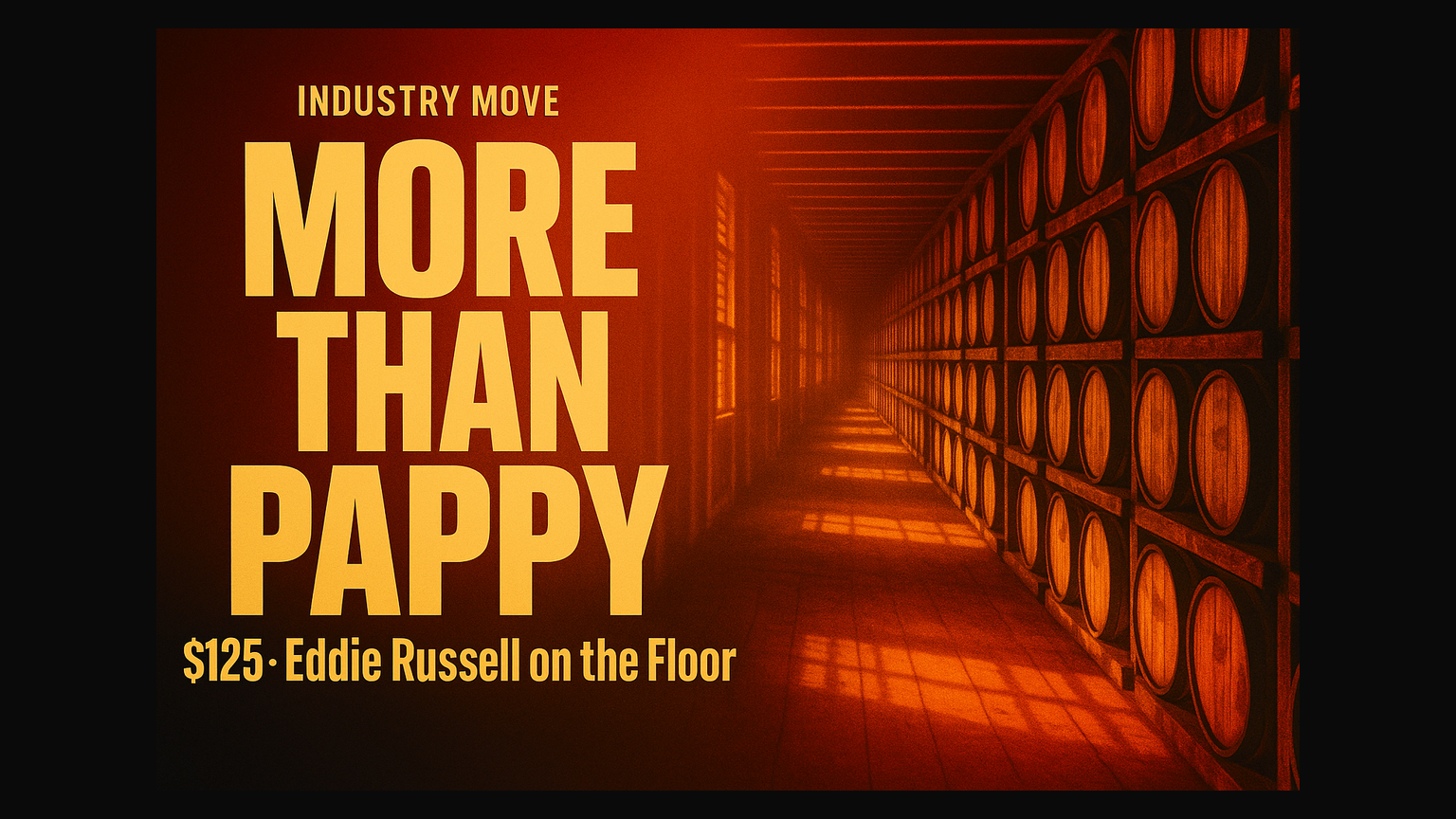
The $125 tour teaches more than Pappy. Wild Turkey just launched the first Big 4 program that puts a sitting master distiller on the rickhouse floor with actual temperature records — and showed eighteen people why where a barrel sits determines everything about the bourbon in their glass.
I’m John from Chasing the Unicorn Podcast. Here’s what moved today. May 18, 2026.
Today’s Big Move — Wild Turkey just launched the first rickhouse education program in the Big 4, and it’s as much an industry move as it is a consumer product. Here’s what happened.
Monday is industry move day, and this one fits. Eddie Russell has made the same argument in interviews for years: the floor, the end, the orientation of the warehouse a barrel lands in produces measurably different bourbon than a barrel filled the same day from the same batch. Wild Turkey’s blending team uses this reality every single time they decide which barrels go into which expressions. Until Saturday, that argument lived in podcast clips. Now it’s a curriculum.
The Flavor Map Rickhouse Education Tour launched May 17 at the Lawrenceburg campus. Russell led eighteen people through three floors of Rickhouse K with the temperature data his production team actually tracks per floor per season. At each stop, participants pulled barrel samples. Top floor: summer temperatures push past 110 degrees, aggressive cycling — bolder, more wood-forward bourbon. Ground floor: cool, stable, slower extraction — softer, brighter bourbon from the same batch, same distillation date. The session closes with a five-expression tasting mapped to the floor walk.
No other Big 4 producer has offered this in a repeating public format. Wild Turkey released per-floor temperature variance documentation as part of the program — a transparency move you normally see from craft operations and research distilleries, not a Campari Group flagship. The 18-person cap isn’t a marketing gesture. Floor-level barrel pulls at production scale don’t work with 45 people. The format is the constraint. The constraint is what makes it genuine.
$125 per person. Weekend morning sessions through September. Late August and September have the best availability right now. Book at wildturkey.com or through the Lawrenceburg visitor center. Which brings us to today’s First Sip — the science the tour is built around.
Today’s First Sip — rickhouse position. You’ll see it referenced in the Wild Turkey program, on single-barrel labels, and in every blending conversation any distillery has internally. Most drinkers walk past it without knowing what it means.
So here’s what it is.
Rickhouses are tall — six to nine stories. Every floor is a different climate. The top floor bakes in Kentucky summers, pushing past 110 degrees and cycling hard through winter cold. Whiskey expands into the wood in heat, contracts back in cold. Upper floors age faster: bolder, more wood-forward, more liquid lost to evaporation each year.
The ground floor stays cool and stable. Lower evaporation, gentler cycling, slower extraction. Bourbon from the same batch on the same distillation date, aged the same number of years, tastes softer and brighter down here than it does eight floors up.
The middle floors — where Wild Turkey, Four Roses, and many premium releases target their best barrels — split the difference. Enough heat cycling to drive complexity, stable enough to let fruit and caramel integrate rather than compress under wood.
Most bottles you buy are blended across floors to smooth this variation out. Single-barrel releases expose it. Think of it like a building with three different climates: the attic, the basement, and the living floor between them. Same bourbon, different environment, different result.
What this changes — when you see “upper warehouse” or “rick position” on a single-barrel label, that’s a flavor prediction, not decoration. Today’s Chase has the wheated barrel-proof bottle that shipped to accounts this morning.
Today’s Chase — three bottles across three tiers. One ships today, one has a pre-allocation window closing this week, and one has an early-bird deadline four days out. Let’s start with the one that matters most.
Larceny Barrel Proof C926. Under-$80 tier at $69.99. National ship is today and tomorrow. Walk-in access at specialty accounts with remaining allocation through approximately May 21.
In the glass: toasted caramel, butterscotch, and candied brown sugar on the nose. Creamy, wheat-driven mid-palate with baking spice and gentle oak. Warm medium-length finish with persistent sweetness. The C-series historically runs 122 to 128 proof — this is a softer barrel-proof entry than comparable high-rye releases at this price. That’s the wheated grain bill doing exactly what it does.
Here’s why it’s today’s spotlight. Overnight, the timing call shifted. The pre-order window closed and walk-in begins now. At $69.99 for wheated barrel-proof bourbon with no lottery and national specialty distribution, the value is as clean as it gets in this tier. B and A-series predecessors cleared secondary at $120 to $145 within 30 days of ship. The MSRP window is today and tomorrow. Call your account before noon — afternoon floor clearance reduces walk-in availability. Seelbach’s nationally, and specialty accounts with Heaven Hill spring 2026 allocation.
This is worth the chase.
Also on today’s Chase — Four Roses Single Barrel Select Reunion 2026 OBSV in the $80 to $200 tier at $99.99, an 11-year barrel-proof selection that held its V-yeast stone-fruit character past the recipe’s documented window, with pre-allocation conversations open through May 24. And the Kentucky Bourbon Festival 2026 VIP early-bird pass at $299, open through May 23 with roughly 2,200 passes remaining — the 2024 early-bird closed six days before its stated deadline. Full detail in today’s Cut Daily. If you want more, head to our Patreon at chasingtheunicornpodcast.
Alright — today’s Bar Talk. Two Heaven Hill barrel-proof bourbons, same distillery, same week, ten dollars apart.
Today’s Bar Talk — Heaven Hill ships two Bottled-in-Bond barrel-proof bourbons this week from Bernheim Distillery. Community’s split on whether the $10 gap means anything. Here’s what’s actually going on.
Elijah Craig Barrel Proof C926: 14.2 years, 130.4 proof, $79.99 MSRP, shipping today. Larceny Barrel Proof C926: age unlisted, proof unconfirmed but the C-series runs 122 to 128, $69.99 MSRP, shipping today. Both Bottled-in-Bond. On every measurable spec, ECBP wins. The r/bourbon thread has 1,760 upvotes and the most-upvoted comment is “just buy both” — which is correct and unhelpful.
The variable the spec sheet can’t show is the mash bill. Both carry the BiB credential from the same distillery. But the grain recipe is different. Elijah Craig uses a traditional rye-secondary mash — the same architecture as most Kentucky bourbon. Rye adds spice: black pepper, cinnamon, a sharper finish that escalates at high proof. Larceny substitutes wheat for rye — same architecture as Maker’s Mark and the Pappy family. Wheat softens rather than amplifies. At barrel proof, the wheat produces caramel-forward entry heat that stays controlled, a round mid-palate, a finish that settles rather than climbs.
Secondary confirms the premium — ECBP B-series batches track $130 to $165 on Bottle Spot; Larceny BP B-series runs $85 to $110. The $10 MSRP gap understates ECBP’s secondary floor.
Here’s what it means for the rest of us — know your mash bill preference. Wheated or rye. The $10 answers itself.
Two more things before we close. First — today’s AWIB on Patreon has the full Flight comparison: Larceny Barrel Proof C926 versus Maker’s Mark Cask Strength. Two wheated barrel-proof expressions head to head, triggered by C926’s national ship this morning — full side-by-side specs, nose to finish at barrel proof and with water. The verdict on which one wins for which kind of bourbon-curious drinker is in the brief. Second — the Old Fitzgerald Bottled-in-Bond 15-Year Decanter cleared TTB on May 15, the longest age statement in the series’ history, drawn from Heaven Hill’s constrained post-fire Bernheim production window that can’t be replicated — today’s AWIB has the supply-terminal argument, the secondary floor projection, and the retailer conversation to have before distributor pre-allocation closes. Both are waiting on Patreon.
That’s The Cut. The full American Whiskey Industry Brief is waiting at patreon.com/ChasingTheUnicornPodcast. I’m John Schuster. Thanks for joining me. Your unicorn is out there.
The Cut Daily
▶ Listen to this episode on Spotify
Monday’s biggest industry move is a $125 rickhouse science curriculum — and it may be the most honest consumer-education product a Big 4 distillery has ever offered. Wild Turkey launched its “Flavor Map” Rickhouse Education Tour on Saturday at the Lawrenceburg campus. Eddie Russell led 18 participants through three floors of Rickhouse K with the per-floor temperature variance data his production team tracks each season — barrel samples pulled at upper, middle, and ground positions, a closing tasting mapped directly to the floor walk, and Wild Turkey’s documented temperature records published alongside the program. Weekend morning sessions run through September 2026 at $125 per person. Late August and September remain the most available windows. Book at wildturkey.com or through the Lawrenceburg visitor center. Also today: Larceny Barrel Proof C926 ships nationally at $69.99 MSRP — wheated barrel-proof, no lottery, walk-in access at specialty accounts with remaining allocation through approximately May 21. The Bar Talk covers the $10 gap between Elijah Craig Barrel Proof C926 and Larceny Barrel Proof C926, both BiB barrel-proof from Bernheim, both shipping this week. Listen to the full Cut for today’s complete rickhouse position primer and Chase action points.Listen to this episode on Spotify, or find us wherever you get your podcasts.

Informational and entertainment purposes only. Nothing here is investment advice. Verify before buying, trading, or bidding. We are not liable for errors or financial losses.
The $125 tour teaches more than Pappy. Wild Turkey just launched the first Big 4 program that puts a sitting master distiller on the rickhouse floor with actual temperature records — and showed eighteen people why where a barrel sits determines everything about the bourbon in their glass.
Wild Turkey’s “Flavor Map” Rickhouse Education Tour launched Saturday in Lawrenceburg — Eddie Russell on the production floor at Rickhouse K, floor-temperature data in hand, barrel samples at three levels, and the clearest public demonstration yet of why the same bourbon aged at the same distillery for the same number of years tastes different depending on where in the warehouse it sat. That’s today’s lead, and it anchors directly to this edition’s First Sip on rickhouse position. Also today: Larceny Barrel Proof C926 ships nationally this morning at $69.99 — it’s in the Chase and it’s the window’s most time-sensitive bottle action. The Bar Talk settles the week’s most active r/bourbon argument: Elijah Craig Barrel Proof C926 versus Larceny Barrel Proof C926, both Bottled-in-Bond, both from Heaven Hill, both arriving today, ten dollars apart.
Eddie Russell has been making the same argument in interviews for years — that which floor, which end, which orientation of the warehouse a barrel lands in produces measurably different bourbon than a barrel filled from the same batch on the same day. Wild Turkey’s blending team uses this exact reality every time they decide which barrels go into which expressions. Until Saturday, that argument lived in interview clips and podcast episodes. Now it’s a curriculum.
The “Flavor Map” Rickhouse Education Tour launched May 17 at the Lawrenceburg distillery campus with Russell leading the inaugural session through three floors of Rickhouse K — eighteen people maximum, moving between barrel positions while he walked through the documented temperature variance data Wild Turkey’s production team tracks per floor per season. At each stop, participants pulled barrel samples. At the top floor, where summer temperatures push past 110 degrees, the whiskey is bolder, more wood-forward, more aggressively matured. At the ground floor, where temperatures stay cool and stable, the same bourbon from the same distillation date is softer, brighter, less wood-driven. The session closes with a five-expression tasting tied directly to the floor walk.
No Big 4 producer has offered this curriculum before in a repeating public format. Wild Turkey has published per-floor temperature variance documentation as part of the program’s release materials — a transparency move historically associated with craft distilleries and research operations, not a Campari Group flagship. The 18-person cap isn’t a marketing gesture. Floor-level barrel sample pulls at production scale don’t work with 45 people. The format is the constraint, and the constraint is what makes the session genuine.
The program is priced at $125 per person. Weekend morning sessions run through September 2026. Summer slots are moving; late August and September remain the most available windows.
Wild Turkey’s “Flavor Map” program is built around one argument: where a barrel sits in the rickhouse determines how it tastes. Eddie Russell has made this case in interviews for years. Saturday, he made it on the production floor with the temperature records his team actually uses.
Here’s the science behind the tour. Rickhouses are tall — six to nine stories. Every floor is a different climate. The top floor bakes in Kentucky summers, pushing temperatures past 110 degrees and cycling aggressively through winter cold. Whiskey expands into the wood in heat, contracts back in cold. Barrels on the upper floors age faster, pick up more wood character, lose more liquid to evaporation each year. The result is bolder, more wood-forward bourbon.
The ground floor stays cool and stable. Lower evaporation rate, gentler cycling, slower extraction. Bourbon from the same batch on the same distillation date, aged the same number of years, tastes softer and brighter down here than it does eight floors up.
The middle floors — where Wild Turkey, Four Roses, and many premium releases specifically target their best barrels — split the difference: enough heat cycling to drive complexity, stable enough to let fruit and caramel integrate rather than compress under wood.
Most bottles you buy are blended across multiple floors specifically to smooth this variation out. Single barrel releases expose it. When a bottle notes its warehouse and position, that information is doing real work.
What this changes: when you see “upper warehouse” or “rick position” on a single barrel label, you’re reading a flavor prediction, not decoration.
Floor erosion is how far a bottle’s secondary market price has dropped from its all-time high. The 2024 Pappy Van Winkle 15-Year peaked at $1,850 on the secondary market in late 2022, when pandemic-era collector demand and a cultural moment around allocated bourbon pushed prices to levels that had almost nothing to do with what was in the bottle. Sunday’s realized price at Bottle Spot is $955 — below $1,000 for the first time since approximately 2019. That 48.4% drop means the bottle is now selling for just over half its peak price. Pappy Van Winkle is the bourbon brand that non-bourbon people know. It’s the reference point friends use when they talk about expensive whiskey. If that bottle is correcting nearly 50%, the secondary correction is not a niche market phenomenon. It’s a structural event that has reached the most recognizable name in the category.
Rickhouse Report: 5 stories · Regional Report: 3 stories · Research Notes: complete
◆ Full AWIB (Paid Patreon Subscriber): https://www.patreon.com/c/ChasingTheUnicornPodcast
◆ Listen on Spotify: https://open.spotify.com/show/56Lt67gvTPjifCyeqFW3IT
◆ YouTube: https://www.youtube.com/@chasingtheunicornpodcast
Want the full picture? The complete American Whiskey Industry Brief — every section, every source, every story — is published daily for subscribers on Patreon. Join us at patreon.com/ChasingTheUnicornPodcast.