The Cut — April 19, 2026 — Sazerac Bids $15 Billion for Brown-Forman
In this episode
▶ Listen to this episode on Spotify Sazerac, the Louisiana-based owner of Buffalo Trace and Pappy Van Winkle, formally offered $15 billion in all-cash for Brown-Forman on April 15, 2026 — the largest American whiskey deal since Beam Inc.’s 2014 sale. The bid disrupts existing merger-of-equals talks between Brown-Forman and Pernod Ricard. Reuters and Bloomberg…
Mentioned in this episode: Buffalo Trace, Pappy Van Winkle, Maker’s Mark, Old Forester, Woodford Reserve, Angel’s Envy, Sazerac, BTAC
Read the full transcript
Target runtime: 7:48 Word count: 981 Estimated runtime: 6:32 Source: The Cut Daily 2026-04-19
⚠ NOTE: Script is short — runtime may be under 7:20. Best-effort generation; expand Big Move or Bar Talk for tighter 7:48 target.
—
This is The Cut. American whiskey, daily.
Sazerac just bid 15 billion dollars for Jack Daniel’s. An all-cash offer for Brown-Forman that landed Wednesday — and the Brown family reportedly prefers the other deal on the table. Here’s what’s actually happening.
I’m John from Chasing the Unicorn Podcast. Here’s what moved today. April 19, 2026.
Today’s Big Move — Sazerac formally bid 15 billion dollars for Brown-Forman. Here’s what happened.
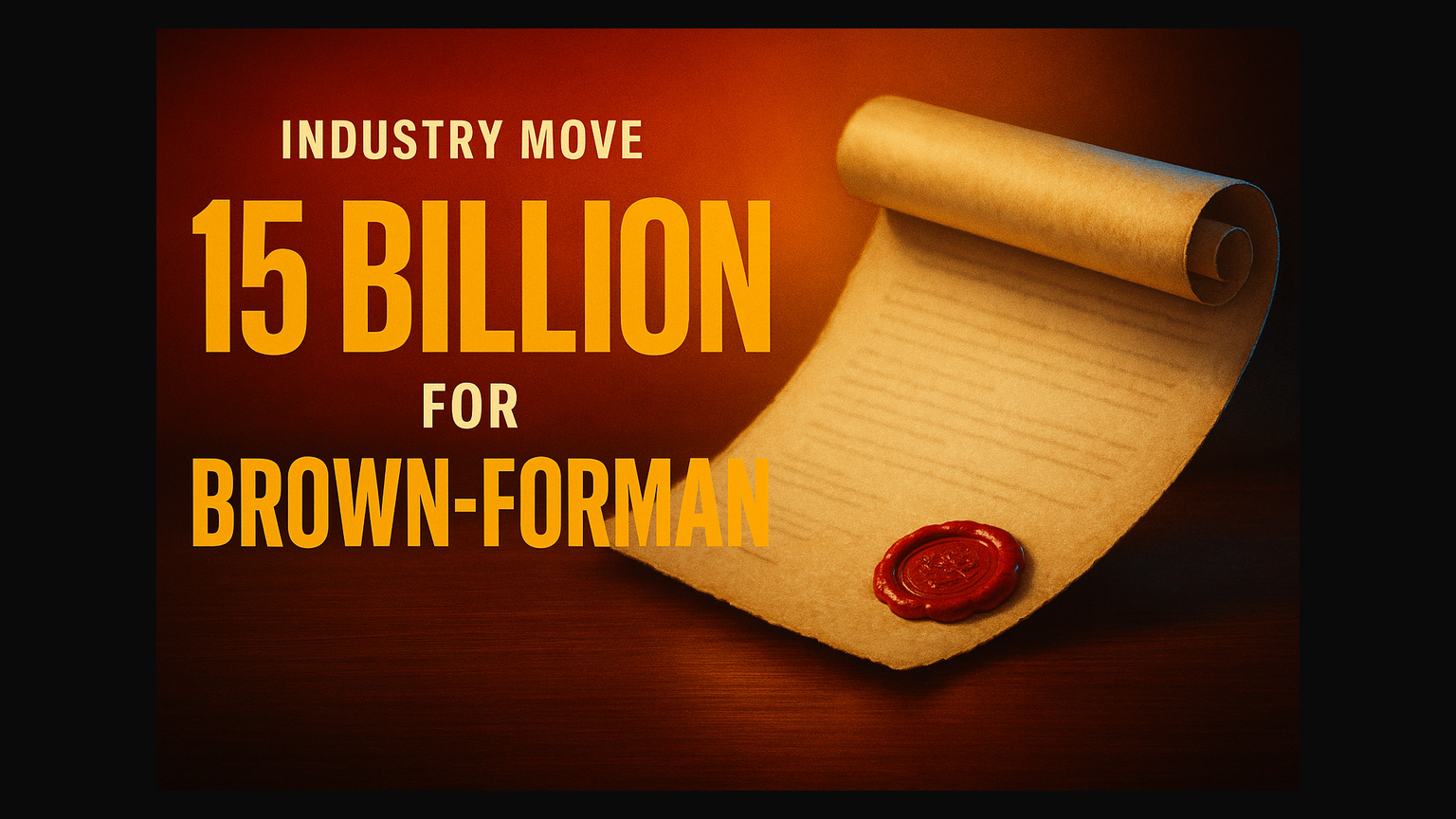
On Wednesday, Sazerac made the offer. All cash. Thirty-two dollars a share. Sazerac is the Louisiana-based spirits company that owns Buffalo Trace, Pappy Van Winkle, the whole BTAC lineup, and about forty other brands. Brown-Forman is what makes Jack Daniel’s, Woodford Reserve, and Old Forester.
This is the biggest American whiskey deal since Beam got bought in 2014.
Here’s what makes it complicated. Brown-Forman was already in separate talks with Pernod Ricard — the French spirits giant that owns Absolut, Jameson, and Martell — about a merger of equals. That’s been in public reporting for about two weeks. Sazerac’s offer lands in the middle of those talks as a competing bid.
Over the weekend, reporting from Reuters and Bloomberg crystallized the Brown family’s apparent preference. They favor Pernod. The reason isn’t about money. Pernod’s deal could be structured as a share swap, which means the Brown family keeps an ownership stake in the combined entity. Sazerac’s all-cash offer would fully exit them.
The family has run this company since 1870. That’s five generations of ownership they’d be walking away from.
Brown-Forman hasn’t issued a formal statement either way. No SEC filing. No public rejection of Sazerac. The next 30 to 60 days decide what happens to Jack Daniel’s. Speaking of what happens when a rye drops — that sets up today’s First Sip.
Today’s First Sip — the mash bill. Angel’s Envy just dropped its first age-stated cask-strength rye. It’s a rye, not a bourbon. That distinction is all about one thing.
So here’s what it is.
The mash bill is the recipe of grains that goes into the still before distillation. Every bourbon has to be at least 51 percent corn. Every rye has to be at least 51 percent rye. The other 49 percent is where distilleries differ.
Corn is the sweetness. Rye is the spice — black pepper, cinnamon, a sharper finish. Wheat is the softness — rounder, mellower. Malted barley helps fermentation along and adds a biscuit note.
Two bottles tell the story. Buffalo Trace is a high-rye bourbon, around 10 percent rye — punchier and spicier. Maker’s Mark is wheated — wheat replaces the rye — softer, warmer. Same category. Very different experiences. Read the mash bill like a recipe.
What this changes — if you love Maker’s Mark, you probably prefer wheated bourbons. If you love Bulleit, high-rye. That’s useful when you’re staring at a shelf. Which brings us to today’s Chase.
Today’s Chase — three bottles across three tiers. Let’s start with the one that matters most.
Angel’s Envy 10-Year Cask Strength Rye. Top tier, 269 dollars and 99 cents. Launched Friday. 10,800 bottles nationwide.
Flavor direction — this is a rye finished in Caribbean rum casks for a combined ten years. Spicy high-rye foundation, then the rum cask softens it — dried fruit, baking spice, leather, a long finish where rum-cask sweetness balances against ten-year oak depth. 111.6 proof.
Here’s why it’s the spotlight. A week ago, this specific combination didn’t exist anywhere in American whiskey. First-ever age-stated rye from Angel’s Envy. First at cask strength. Caribbean rum cask on a ten-year rye is not something WhistlePig or High West currently does. And Bacardi’s distribution footprint means this actually hits specialty retail shelves — not a distillery-only release.
This is worth the chase. 10,800 bottles is tight enough that sellthrough happens fast in most markets. If you see one at MSRP, that’s the window.
Also on today’s Chase — Buffalo Trace’s new Single Oak Rye Bourbon at 74.99 in the 375 milliliter format, the inaugural permanent release from the Single Oak Project. And Blood Oath Pact 12, the Italian wine cask bourbon launching next Saturday at Lux Row. Full detail in today’s Cut Daily. If you want more, head to our Patreon at chasingtheunicornpodcast.
That brings us to today’s Bar Talk.
Today’s Bar Talk — does Angel’s Envy’s rye actually rewrite the category? Community’s split on whether this is a real category move or a flavor experiment. Here’s what’s actually going on.
Angel’s Envy just released its first-ever age-stated rye at cask strength. Ten years old, 111.6 proof, finished in Caribbean rum casks. A week ago, that specific combination didn’t exist. Now it does.
Quick vocabulary check. A finishing cask is a barrel a whiskey gets moved into at the end of aging to pick up flavor from whatever was in that barrel before. Rum casks are common on bourbon. Angel’s Envy has used them for fifteen years. Rum casks on age-stated rye at cask strength is uncommon.
The price sits at 269.99. For comparison — WhistlePig 12 Year runs 150 to 200 dollars. High West A Midwinter Night’s Dram runs 100 to 300 depending on the batch. Willett Family Estate 4-Year Rye runs 150 to 300. None of those use Caribbean rum cask finishing on age-stated rye. Angel’s Envy is filling a specific profile gap.
Here’s what it means for the rest of us — it’s not a category rewrite, it’s a category fill-in. A new expression in a gap that was waiting.
One more for today — today’s full American Whiskey Industry Brief covers the Unicorn Chicago Van Winkle auction opening tonight, with a Binny’s 18 already at 75,100 dollars and a Pappy 23 private barrel pick, one of only three known. It’s waiting on Patreon.
That’s The Cut. The full American Whiskey Industry Brief is waiting at patreon.com/ChasingTheUnicornPodcast. I’m John Schuster. Thanks for joining me. Your unicorn is out there.
The Cut Daily
▶ Listen to this episode on Spotify
Sazerac, the Louisiana-based owner of Buffalo Trace and Pappy Van Winkle, formally offered $15 billion in all-cash for Brown-Forman on April 15, 2026 — the largest American whiskey deal since Beam Inc.’s 2014 sale. The bid disrupts existing merger-of-equals talks between Brown-Forman and Pernod Ricard. Reuters and Bloomberg report the Brown family favors Pernod’s share-swap structure, which preserves the ownership stake they’ve held since 1870. Today’s Cut also covers Angel’s Envy’s first age-stated cask-strength rye, Buffalo Trace making Single Oak Project permanent, and the Unicorn Chicago Van Winkle auction opening tonight. Listen to the full episode.Listen to this episode on Spotify, or find us wherever you get your podcasts.

Informational and entertainment purposes only. Nothing here is investment advice. Verify before buying, trading, or bidding. We are not liable for errors or financial losses.
Sazerac just bid 15 billion dollars for Jack Daniel’s. An all-cash offer for Brown-Forman that landed Wednesday — and the Brown family reportedly prefers the other deal on the table. Here’s what’s actually happening.
The biggest move in American whiskey this week isn’t a new bottle — it’s a bid. Sazerac, the company that owns Buffalo Trace and Pappy Van Winkle, just made a 15-billion-dollar offer to buy Brown-Forman, which makes Jack Daniel’s, Woodford Reserve, and Old Forester. It’s the largest American whiskey deal since 2014, and the Brown family — who’ve run the company since 1870 — apparently prefers the other deal from Pernod Ricard. Today’s Cut also covers Angel’s Envy’s first-ever age-stated rye at cask strength, Buffalo Trace making its Single Oak Project a permanent brand, and the Unicorn Chicago Van Winkle auction that opens tonight.
On Wednesday, Sazerac formally offered 15 billion dollars for Brown-Forman. All cash. Thirty-two dollars a share. Sazerac is the Louisiana-based spirits company that owns Buffalo Trace, Pappy Van Winkle, the whole BTAC lineup, and about forty other brands. Brown-Forman is what makes Jack Daniel’s, Woodford Reserve, and Old Forester. This is the biggest American whiskey deal since Beam got bought in 2014. Here’s what makes it complicated. Brown-Forman was already in separate talks with Pernod Ricard — the French spirits giant that owns Absolut, Jameson, and Martell — about a merger of equals. That’s been in public reporting for about two weeks. Sazerac’s offer lands in the middle of those talks as a competing bid. Over the weekend, reporting from Reuters and Bloomberg crystallized the Brown family’s apparent preference. They favor Pernod. The reason isn’t about money. Pernod’s deal could be structured as a share swap, which means the Brown family keeps an ownership stake in the combined entity. Sazerac’s all-cash offer would fully exit them. The family has run this company since 1870. That’s five generations of ownership they’d be walking away from. Brown-Forman hasn’t issued a formal statement either way. No SEC filing. No public rejection of Sazerac. The next 30 to 60 days will decide what happens to Jack Daniel’s.
Angel’s Envy just dropped their first age-stated cask-strength rye. It’s a rye. Not a bourbon. That distinction is all about one thing — the mash bill. So here’s what it is. The mash bill is the recipe of grains that goes into the still before distillation. Every bourbon has to be at least 51 percent corn. Every rye has to be at least 51 percent rye. The other 49 percent is where distilleries differ — and where flavor direction is set before the barrel ever enters the picture. Corn is the sweetness. Rye is the spice — black pepper, cinnamon, a sharper finish. Wheat is the softness — rounder, mellower, easier on the palate. Malted barley, usually a small percentage, helps fermentation along and adds a biscuit-like note. Two bottles tell the story cleanly. Buffalo Trace is a high-rye bourbon — around 10 percent rye, punchier and spicier. Maker’s Mark is a wheated bourbon — wheat replaces the rye, softer, warmer, easier to drink neat. Same legal category. Very different experiences. What this changes: read the mash bill the way you read a recipe. If you love Maker’s Mark, you probably prefer wheated bourbons. If you love Bulleit, you probably prefer high-rye. That’s a useful thing to know when you’re staring at a shelf.
Floor erosion is how much a bottle’s market value has dropped from its all-time high. A 12.7% floor erosion means the bottle is trading at about 87 cents on the dollar compared to what it went for at peak. The Binny’s 18 is one of roughly six Van Winkle 18 Year private-barrel picks that Binny’s Beverage Depot in Chicago commissioned between 2001 and 2005 — all from Stitzel-Weller-era wheated bourbon stocks. None of those barrels will ever be produced again. That’s why bottles like this hold value better than the allocated Van Winkles you see every year. The scarcity here is permanent, not annual.
The Hunt: 6 active drops · Bar Talk: 2 debates · The Secondary: 3 graded bottles
◆ Full AWIB (Paid Patreon Subscriber): https://www.patreon.com/c/ChasingTheUnicornPodcast
◆ Listen on Spotify: https://open.spotify.com/show/56Lt67gvTPjifCyeqFW3IT
◆ YouTube: https://www.youtube.com/@chasingtheunicornpodcast
Want the full picture? The complete American Whiskey Industry Brief — every section, every source, every story — is published daily for subscribers on Patreon. Join us at patreon.com/ChasingTheUnicornPodcast.