The Cut — May 24, 2026 — Eddie Russell’s Last Rickhouse K Sessions — Same Bourbon, Three Floors
In this episode
Sunday’s biggest story isn’t on a spreadsheet or in a filing — it’s running live on a working distillery floor in Lawrenceburg, Kentucky right now. Wild Turkey Master Distiller Eddie Russell is personally leading the final sessions of the Rickhouse K Flavor Map program today, the closing day of the format’s inaugural public weekend. The…
Mentioned in this episode: Wild Turkey, Parker’s Heritage, Four Roses, Maker’s Mark, Knob Creek, Old Forester, Angel’s Envy, BTAC
Read the full transcript
This is The Cut. American whiskey, daily.
Same bourbon. Three floors. Three different whiskeys. Wild Turkey Master Distiller Eddie Russell closes his inaugural Rickhouse K Flavor Map weekend today — the 90-minute program that puts the same production batch in three glasses drawn from the seventh, fourth, and first floors of the same warehouse, and lets you taste why your bottle’s position in a rickhouse changes everything. Same-day booking still open.
I’m John from Chasing the Unicorn Podcast. Here’s what moved today. May 24, 2026.
Today’s Big Move — Wild Turkey’s Rickhouse K Flavor Map inaugural weekend. Here’s what happened.
Sunday on The Cut is Field Reports and Beginner Bench day. Today’s field report is running live at the Lawrenceburg campus — and the science underneath it is worth understanding even if you’re not in that room today.
The program is built around one fact: where a barrel sits in a rickhouse changes the bourbon inside it. The seventh floor of a Kentucky warehouse hits 100 to 115 degrees in summer. The spirit pushes into the wood hard, contracts back in winter. Angel’s share — the evaporation loss — runs four to six percent of the barrel’s volume every year up there. That’s aggressive aging. Bold, wood-driven whiskey is what survives it.
The ground floor holds at 60 to 75 degrees through those same seasons. Evaporation drops to two to three percent annually. Slower oak extraction. Grain character stays brighter — character the upper floor burned off years earlier. The fourth floor, mid-tier, is where Wild Turkey’s blending program targets the balance between the two.
Same warehouse. Same batch. Three different climates inside one building, and the bourbon never had to leave it.
Sessions cap at 16 people at $125 each. Russell leads every session personally through this inaugural weekend. That changes in June — the format moves to a head-distiller-led structure. Same program, different guide. The pricing will need to answer a different question when his name isn’t on the door.
Today is the last day you get Russell in the room. Same-day booking at WildTurkey.com/visits. Walk-up at the Lawrenceburg visitor center when capacity allows.
If you’ve been drinking Wild Turkey for years without understanding how much work warehouse position was doing, today is the $125 explanation with the right person delivering it. Which brings us to today’s First Sip — rickhouse position, and what it means for the bottle already sitting on your shelf.
Today’s First Sip — rickhouse position. Why where a barrel sits changes what you taste.
So here’s what it is.
A rickhouse is a tall warehouse — six to nine stories — lined with wooden racks holding barrels aging in place. Every barrel stays at one position for its entire aging life. That position controls temperature swings, evaporation rate, and how fast the spirit pulls flavor from the wood.
What it isn’t: uniform. Two barrels from the same mash bill, the same fill date, placed at opposite ends of the same building, can taste like different expressions by year four. That’s not variance. That’s physics.
Why it matters: blended expressions correct for this. Standard Wild Turkey 101, standard Maker’s Mark — those blends smooth positional differences across the warehouse into a consistent house profile. Single barrel releases don’t smooth anything. When two single barrels from the same label taste noticeably different, rickhouse position is usually why.
The analogy: coffee beans roasted in different positions inside the drum. Beans closest to the heat go darker, carry more bitterness. Beans at the edge stay lighter. Same beans. Same roaster. Different exposure, different cup.
What this changes — “single barrel” means the variation wasn’t corrected for. Know which floor your barrel came from and you know something real about what’s in the bottle. Today’s Chase has a single barrel closing its pre-allocation window tonight.
Today’s Chase — three bottles across three tiers. One deadline is midnight CT. Let’s start with the one that matters most.
Four Roses Single Barrel Select “Reunion” 2026 — OBSV recipe, 11 years old, at $99.99. That’s in the $80 to $200 tier.
In the glass: V-yeast delivers ripe stone fruit — fresh peach and apricot on the nose, a floral lift that holds into the mid-palate. High-rye spice from Mash B comes through warm and controlled. The finish runs longer and cleaner than an 11-year pushing past its recipe’s documented performance window has any right to. Less wood bitterness than the age statement suggests. That’s the tell. Brent Elliott held this recipe four years past what it was designed for and it didn’t collapse. That’s the gamble. This bottle is the result.
Here’s why it’s today’s spotlight. Pre-allocation at Seelbach’s and Binny’s closes midnight CT tonight. After that, “Reunion” moves to general specialty distribution, where comparable Four Roses limited single-barrel releases have historically launched $10 to $20 above MSRP. Pre-ship secondary is already seeding at $130 to $155. Pre-allocation at $99.99 locks your floor price regardless of what the mid-June independent reviews say when bottles arrive.
This is worth the chase. Tonight, not tomorrow.
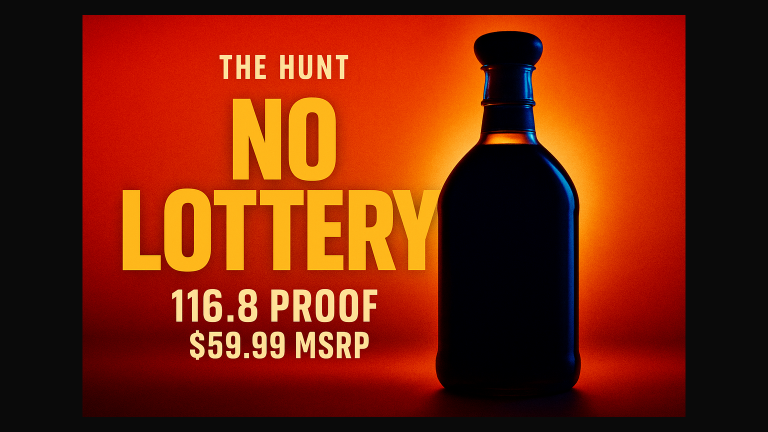
Also on today’s Chase — Maker’s Mark 46 Cask Strength 2026 at $59.99, the house wheated style at full proof with no water added; call your specialty account to confirm stock has arrived, distribution is in its first two weeks and uneven. And the BTAC 2026 state lotteries — Ohio and Pennsylvania still open, free to enter, three minutes per portal. Full detail in today’s Cut Daily. If you want more, head to our Patreon at chasingtheunicornpodcast.
Alright — today’s Bar Talk. The $125 question.
Today’s Bar Talk — whether Wild Turkey’s Rickhouse K Flavor Map is worth $125 when distillery tours cover the same science for a fraction of the price. Community’s split on whether the format difference earns the premium. Here’s what’s actually going on.
The r/bourbon thread crossed 890 upvotes in 24 hours. The “not worth it” argument: every major Kentucky distillery tour — $20 to $45 — includes a rickhouse walkthrough. Temperature variation, angel’s share by floor, positional aging. Same content. Lower price.
The counter: the Flavor Map is not doing what the tour is doing. A guide tells you position creates different whiskey. The Rickhouse K program puts three glasses from the same production batch at three floor positions in your hand and makes you confirm it yourself. Participants from Saturday’s inaugural sessions consistently named the moment of tasting the ground-floor pour after the upper-floor pour as the thing no guided walkthrough delivers — not something they were told, but something they tasted.
The sustainability concern the thread raised is real: if the format moves to junior guide delivery after Russell’s inaugural run, the premium case weakens. The $125 currently reflects his personal participation. The June expansion will be the first test of what this program holds without him.
Here’s what it means for the rest of us — the free tour describes the difference. The $125 program puts it in your glass. Know which experience you’re buying before you book today’s session.
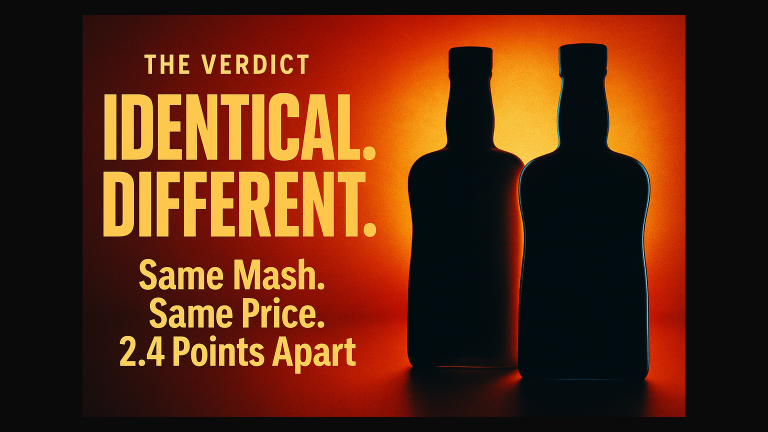
Two more things before we close. First — today’s AWIB on Patreon has the full Flight comparison: Maker’s Mark 46 Cask Strength 2026 versus standard Maker’s Mark 46. Same wheated mash bill, same French oak stave finishing program, $50 apart in price and 20-plus proof points apart at the bottle. The verdict on which one wins for which kind of bourbon-curious drinker is in the brief. Second — today’s AWIB Label Room confirmed five COLA filings in a single 48-hour window: Parker’s Heritage 2026 Barrel Proof Bottled-in-Bond at 128.4 proof, Garrison Brothers Cask Strength at 131.8, Knob Creek Single Barrel 18-Year, Angel’s Envy Cask Strength Rye, and Old Forester 150th Anniversary — five confirmed production decisions worth knowing before any of them reach shelves. Both are waiting on Patreon.
That’s The Cut. The full American Whiskey Industry Brief is waiting at patreon.com/ChasingTheUnicornPodcast. I’m John Schuster. Thanks for joining me. Your unicorn is out there.
The Cut Daily
The Cut podcast runs Monday through Friday — catch tomorrow’s episode on Spotify and everywhere you listen at chasingtheunicornpodcast.com/podcast.

Informational and entertainment purposes only. Nothing here is investment advice. Verify before buying, trading, or bidding. We are not liable for errors or financial losses.
Same bourbon. Three floors. Three different whiskeys. Wild Turkey Master Distiller Eddie Russell closes his inaugural Rickhouse K Flavor Map weekend today — the 90-minute program that puts the same production batch in three glasses drawn from the seventh, fourth, and first floors of the same warehouse, and lets you taste why your bottle’s position in a rickhouse changes everything. Same-day booking still open.
The biggest story in American whiskey today is happening in Lawrenceburg, Kentucky right now: Wild Turkey Master Distiller Eddie Russell is personally leading the final sessions of the Rickhouse K Flavor Map program, a $125 tasting that puts the same batch of bourbon from three different positions in a working warehouse into your hand and asks you to taste the difference. Today closes the Russell-led inaugural weekend. Also today: the Four Roses “Reunion” pre-allocation window — the last chance to lock $99.99 on Brent Elliott’s most ambitious single-barrel gamble — closes at midnight CT tonight. Woodford Reserve launched a purpose-built 45-minute beginner session this morning at its Versailles campus, aimed specifically at the first-time visitor who arrives at the Kentucky Bourbon Trail without a bourbon vocabulary. And the bourbon secondary market confirmed a two-tier correction shape in a single day of cleared Unicorn Auctions lots last week, with data worth understanding before you make any hold-or-sell decisions on your shelf.
Today is the last day Wild Turkey Master Distiller Eddie Russell is personally leading the Rickhouse K Flavor Map sessions at the Lawrenceburg campus. The inaugural public weekend opened Saturday and closes today — and if you’ve been drinking bourbon for years without understanding why two bottles from the same distillery can taste genuinely different, this 90-minute program is as direct an answer as anyone is currently offering on a working distillery floor.
Here’s the format. Participants taste bourbon drawn from three different rack positions inside Rickhouse K — all from the same production batch, all aged the same calendar time. Upper floor, seventh rack: summer temperatures in that warehouse reach 100 to 115 degrees, pushing the spirit aggressively in and out of the wood and evaporating somewhere between four and six percent of the barrel’s volume every year. Ground floor, first rack: the same warehouse holds at 60 to 75 degrees through those same seasons, producing slower oak extraction and retaining grain-forward brightness the upper floor burned off years earlier. Mid-tier fourth rack: where Wild Turkey’s blending program finds the balanced target.
You’re not tasting three different bourbons. You’re tasting the same bourbon shaped by three different climate zones it never left the building to experience.
Sessions cap at 16 people at $125 each. Russell leads each session personally through this inaugural weekend. When the format expands in June, it transitions to a head-distiller-led structure — same program, different guide. Same-day booking is available at WildTurkey.com/visits or by calling the Lawrenceburg campus directly. Walk-up space at the visitor center when capacity allows.
This is the last day the format runs with Russell in the room. That matters — not as marketing, but as production history.
Bourbon ages in tall warehouses called rickhouses. Most are six to nine stories tall, lined with wooden racks holding dozens of barrels each. Where a barrel sits in that warehouse changes how it ages — sometimes dramatically.
Top floor: hottest in summer, sometimes over 110 degrees Fahrenheit, coldest in winter, biggest swings. Whiskey expands deep into the wood in summer, contracts back in winter. Faster, more aggressive aging. More angel’s share evaporation — up to six percent of the barrel’s volume gone every year. Bigger, bolder, more wood-driven whiskey.
Ground floor: coolest, most stable, lowest evaporation — closer to two to three percent per year. Whiskey ages slower, picks up less wood character, stays brighter and more grain-forward. Middle floor: the sweet spot most distilleries target for blending, where heat and grain characteristics find balance.
Wild Turkey’s Rickhouse K Flavor Map — running its final Eddie Russell-led sessions today — takes the same production batch from the seventh, fourth, and first floors and puts all three in your glass. The difference is not subtle. Same bourbon. Same warehouse. Three genuinely different results from three different climates in the same building.
What this changes: “Single barrel” releases expose the variation that blended bottles smooth out. Two single barrels of the same bourbon can taste like different expressions — and now you know why.
Floor erosion is how much a bottle’s resale value has dropped from its all-time high. Fifty-one percent erosion means Eagle Rare 17 is now selling at auction for about half what it went for when the secondary market peaked in late 2022. At $415 realized on May 22 at Unicorn Auctions against a $99 retail lottery price, the bottle still commands a 4.2x retail premium — meaning the secondary floor isn’t zero, and holders who bought at or below $500 aren’t in a crisis position. But the trajectory tells a clear story: Eagle Rare 17 was the mid-tier BTAC expression that peaked at 8.6x retail and has returned to 4.2x. That is the sharpest single-bottle illustration of the mid-tier BTAC correction available in this window’s data. The same Unicorn Auctions session that placed Eagle Rare 17 at $415 placed a George T. Stagg 2022 with documented provenance at $1,475 — confirming the two-tier correction shape where blue-chip consignments held competitive bidding while mid-tier BTAC expressions settled at or near reserve.
Rickhouse Report: 5 stories · Regional Report: 3 stories
◆ Full AWIB (Paid Patreon Subscriber): https://www.patreon.com/c/ChasingTheUnicornPodcast
◆ Listen on Spotify: https://open.spotify.com/show/56Lt67gvTPjifCyeqFW3IT
◆ YouTube: https://www.youtube.com/@chasingtheunicornpodcast
Want the full picture? The complete American Whiskey Industry Brief — every section, every source, every story — is published daily for subscribers on Patreon. Join us at patreon.com/ChasingTheUnicornPodcast.