July 28, 2026
A Bourbon Just Spent 27 Months in a Pineapple Cask
Or subscribe where you already listen
New episode every weekday morning. The Cut Weekend lands Saturday and Sunday.
Read the full transcript
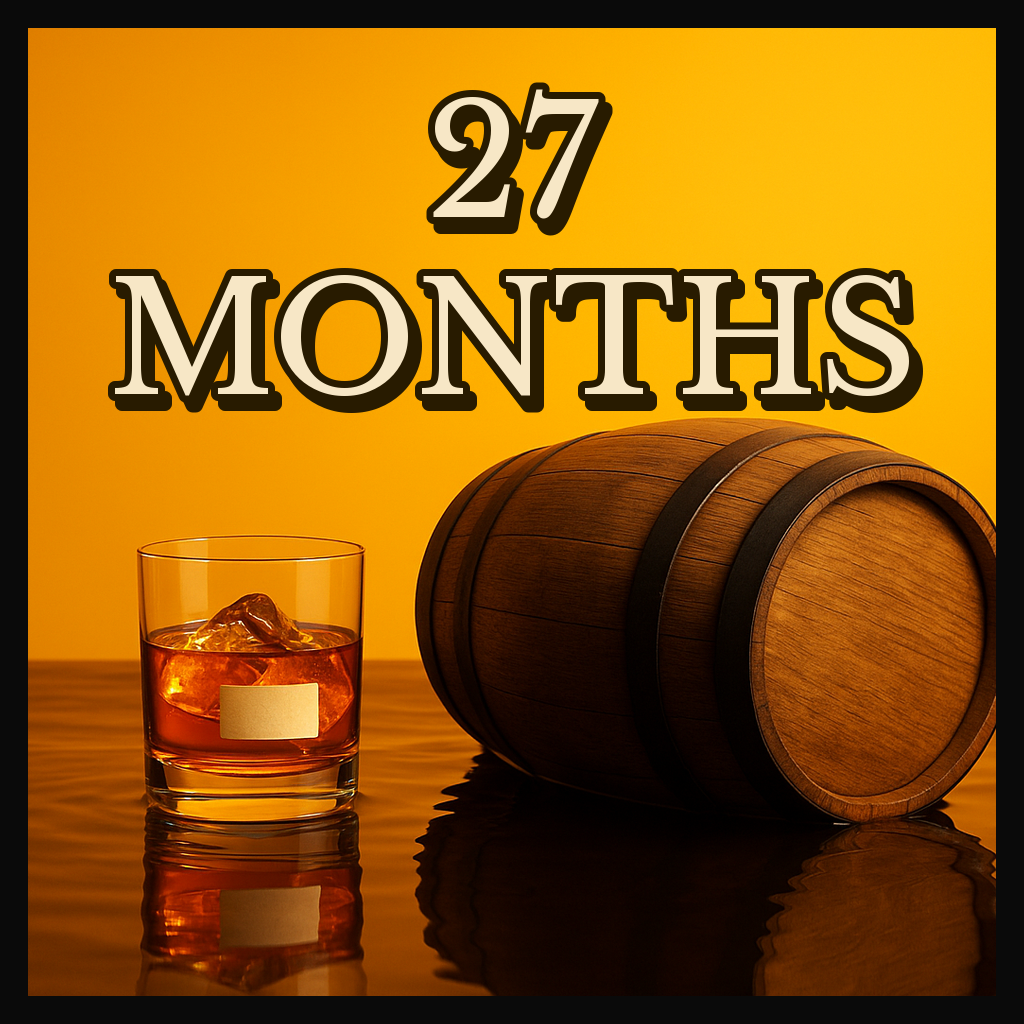
A bourbon just spent twenty-seven months on vacation. Bardstown Bourbon Company finished a ten-year bourbon in pineapple rum casks for over two years before bottling it — fewer than three hundred fifty cases exist, and every one of them is staying in Kentucky.
I'm John from Chasing the Unicorn Podcast. Here's what moved today. July 28, 2026.
Bardstown Bourbon Company just launched something it's calling the Finishing Series, and the first bottle out the door is a real swing. It's a blend of ten- and eleven-year bourbon, plus eleven-year rye, and instead of the usual six to twelve months in a second barrel, they left it in pineapple rum casks for twenty-seven months. Over two years. Bottled at a hundred and six proof, priced at a hundred thirty-nine ninety-nine, capped under three hundred fifty cases nationally, and none of it is leaving Kentucky.
Here's why the length matters. A long finish is a bet against itself. Leave whiskey in a flavored cask too long and the cask can swallow the bourbon underneath it — you end up tasting rum and pineapple with barely a whisper of the base spirit. So why take that risk? Because Bardstown published exactly what's in the blend before it ever touched the second barrel. Ten- and eleven-year bourbon, eleven-year rye. You're not guessing what got finished. You know going in. That's what gives a twenty-seven-month cask stay more credibility than most — the distillery had less to hide, so it had less reason to worry about the finish covering something up.
Now — today's Label Room. This is where we look at what just cleared federal review, and today there's a filing that's a little unusual.
Kentucky Peerless put in a single barrel rye label this week that does something most labels don't. It doesn't just list a barrel number and a warehouse name — it puts the exact rickhouse floor position right on the federally approved label. Rick four, floor six. That's the kind of detail that's usually word-of-mouth, something a tasting room employee might mention if you ask. Peerless just put it in writing, on paper the government signed off on.
Here's why that's not just a curiosity. Floor position actually changes how a barrel ages. Top floors run hot — more heat cycling, faster extraction, bigger, bolder whiskey, usually faster. Bottom floors stay cooler, age slower, and tend to come out gentler. Every single barrel program has always known this internally. Almost none of them have ever put it on the bottle. So when a label says rick four, floor six, that's not decoration — that's a real data point about how this specific barrel spent its life, disclosed on the front of the package instead of buried in a spec sheet nobody sees.
Is it a real get, or a trophy label? I'd call it a real get, with a catch. Peerless hasn't announced a release date or a price yet, and this thing still has to clear final approval before it hits a shelf. But if it clears as filed, it's a rare shot at a single barrel bottle where the aging math isn't a mystery — it's printed right on the front.
So here's what it is. After a bourbon finishes its main aging, some distilleries give it a second life in a different kind of barrel — rum, port, sherry, cognac — for anywhere from a few months to, in Bardstown's case this week, a couple of years. That's finishing. Done well, it adds something on top of a bourbon that was already good — you taste the base whiskey first, and the finish arrives after, like an echo. Done poorly, the finish just covers up a thin whiskey underneath, and all you get is flavored cask.
The tell is simple. Can you still taste the bourbon under the finish, or is the fruit and the cask all there is? That's the whole test, every time, regardless of how long the finish ran.
What this changes — a long finishing time isn't automatically a red flag. It's a bet, and the bet is only as good as the whiskey underneath it. A distillery willing to publish its base ages before finishing has less reason to use a long cask stay to hide something. That's the lens — use it on the next long-finish bottle you see, not just this one.
If you want to log a pour like this one, drop it in your Perfect Pour Logbook and watch how your Pour Print handles a cask-finished whiskey differently than a straight bourbon entry — theperfectpourapp.com, it's available now.
So — the actual move here. If you're in Kentucky, the Bardstown Victoria Pineapple is a one-visit bottle. It's not going to show up at your usual online retailer, and it's not shipping out of state. Check the distillery's gift shop and Kentucky-licensed retailers directly, and don't wait — three hundred fifty cases nationally disappears fast once word gets around. If you're not in Kentucky, this one just isn't your bottle this week, and that's fine. Save the twenty-seven-month number. When the next long finish crosses your radar, ask the same question you'd ask here: did they tell you what was underneath before they finished it?
So here's the one thing to carry out of today. The interesting story right now isn't which bottle is hardest to find — it's which distilleries are willing to show their work. A twenty-seven-month finish with disclosed base ages. A single barrel label with the floor position printed on it. Neither one needed to tell you that much. Both did anyway. That's worth noticing, and it's worth rewarding with where you spend.
That's The Cut. The full American Whiskey Industry Brief is free every morning at chasingtheunicornpodcast.com. I'm John Schuster. Thanks for joining me. Your unicorn is out there.
Listen to today's episode and find us on Spotify and everywhere you listen at chasingtheunicornpodcast.com/episodes.
Informational and entertainment purposes only. Nothing here is investment advice. Verify before buying, trading, or bidding. We are not liable for errors or financial losses.
A bourbon just spent 27 months on vacation. Bardstown Bourbon Co. finished a 10-year bourbon in pineapple rum casks for over two years before bottling it — fewer than 350 cases exist, and it's Kentucky-exclusive.
Bardstown Bourbon Company just launched a new "Finishing Series," and the first bottle spent over two years resting in pineapple rum casks after a decade in oak. Fewer than 350 cases exist, and none of them are leaving Kentucky. That's the kind of story that matters to a reader deciding what to actually chase this week, not just what to read about. Today's edition breaks down what a finish that long is actually betting on, teaches you how to judge any cask finish for yourself, and puts three fresh Chase bottles, a Wild Turkey entry-level pour, and a lesson on secondary market erosion in front of you.
Bardstown Bourbon Company put a new bottle on shelves this week, and it's the first release in something the distillery is calling its "Finishing Series." The whiskey itself is a blend of 10- and 11-year bourbon plus 11-year rye. Then it went into pineapple rum casks for 27 months — over two years — before bottling. Most cask finishes run six to twelve months. This one ran more than double the longest typical window. Bottled at 106 proof, priced at $139.99, and capped under 350 nine-liter cases nationally. Every bottle stays in Kentucky. That's a real scarcity number, not a marketing one. Here's why the length matters: a long finish is a bet. Leave whiskey in a flavored cask too long, and the cask can swallow the bourbon underneath it — you end up tasting rum and pineapple with barely a whisper of the base spirit. Bardstown's case for taking that risk is that they've published exactly what's in the blend — 10- and 11-year bourbon, 11-year rye — before it ever touched the second barrel. That transparency is what gives the long finish more credibility than most. You're not guessing what got finished. You know.
After a bourbon's main aging is done, some distilleries give it a second life in a different kind of barrel — rum, port, sherry, cognac — for a few months or, in rare cases, a few years. That's finishing, and it's exactly what Bardstown just did with its new Victoria Pineapple release, running a 10-year bourbon through pineapple rum casks for 27 months. Done well, a finish adds something on top of a bourbon that was already good — you taste the base whiskey first, then the finish arrives after, like an echo. Done poorly, the finish covers up a thin whiskey underneath, and all you taste is the flavored cask. The tell is simple: can you still taste the bourbon under the finish, or is the fruit and cask all you get? Bardstown's disclosed base-whiskey ages give this one more credibility than most 27-month treatments earn, because a distillery confident in its blend has less reason to use a long cask stay to hide something.
Floor erosion measures how far a bottle's resale value has fallen from its all-time high. Eagle Rare 17 peaked at $650 on the secondary market back in 2022; it's now realizing $410 at auction, a drop of nearly 37 percent. That's the steepest correction among this window's tracked bottles, and it's now trading closer to a modest multiple of its $99 MSRP than to its old peak.
Rickhouse Report: 5 stories · Regional Report: 3 stories
◆ The Brief (free): https://chasingtheunicornpodcast.com/the-brief/
◆ Listen on Apple Podcasts: https://podcasts.apple.com/us/podcast/chasing-the-unicorn-bourbon-american-whiskey/id6788592653
◆ Listen on Spotify: https://open.spotify.com/show/1IZS2wXY7nAUcL9akukblE
◆ YouTube: https://www.youtube.com/@chasingtheunicornpodcast
Want the full picture? The complete American Whiskey Industry Brief — every section, every source, every story — is published free every morning at chasingtheunicornpodcast.com. Read it at chasingtheunicornpodcast.com/the-brief/.
Chasing a specific bottle? The Bourbon Release Calendar lists every lottery deadline, walk-up window and MSRP we're tracking — updated every morning.
Mentioned in this episode: Eagle Rare, Wild Turkey, Master's Keep, Heaven Hill, Old Fitzgerald, Wilderness Trail, Bardstown, Peerless, Angel's Envy, Sazerac, BTAC