August 11, 2026
Can You Blend Two Rye Mash Bills in One Bottled-in-Bond Whiskey?
Or subscribe where you already listen
New episode every weekday morning. The Cut Weekend lands Saturday and Sunday.
Read the full transcript
This is The Cut. American whiskey, daily.
A craft distillery in Indiana just used a 130-year-old federal law to do something most bottled-in-bond releases don't even attempt — blend two different rye recipes into one bottle and still clear every rule. And forty minutes outside Bardstown, a Hall of Fame distiller just released a bourbon Kentucky won't share with the rest of the country. Here's what both of those decisions actually tell you.
I'm John from Chasing the Unicorn Podcast. Here's what moved today. August 11, 2026.
Today's Big Move is a regulatory one, not a corporate one, and that's rare enough to slow down for. Hard Truth Distilling, out of Nashville, Indiana, locked in a Bottled-in-Bond rye called Dark Roast Rye, landing September 26 at exactly $59.99. Bottled-in-Bond is the oldest consumer protection law in American whiskey — passed in 1897, and it doesn't bend. One distillery. One distilling season. Minimum four years in a federally bonded warehouse. Exactly 100 proof. No exceptions, no marketing spin, no "barrel proof-ish."
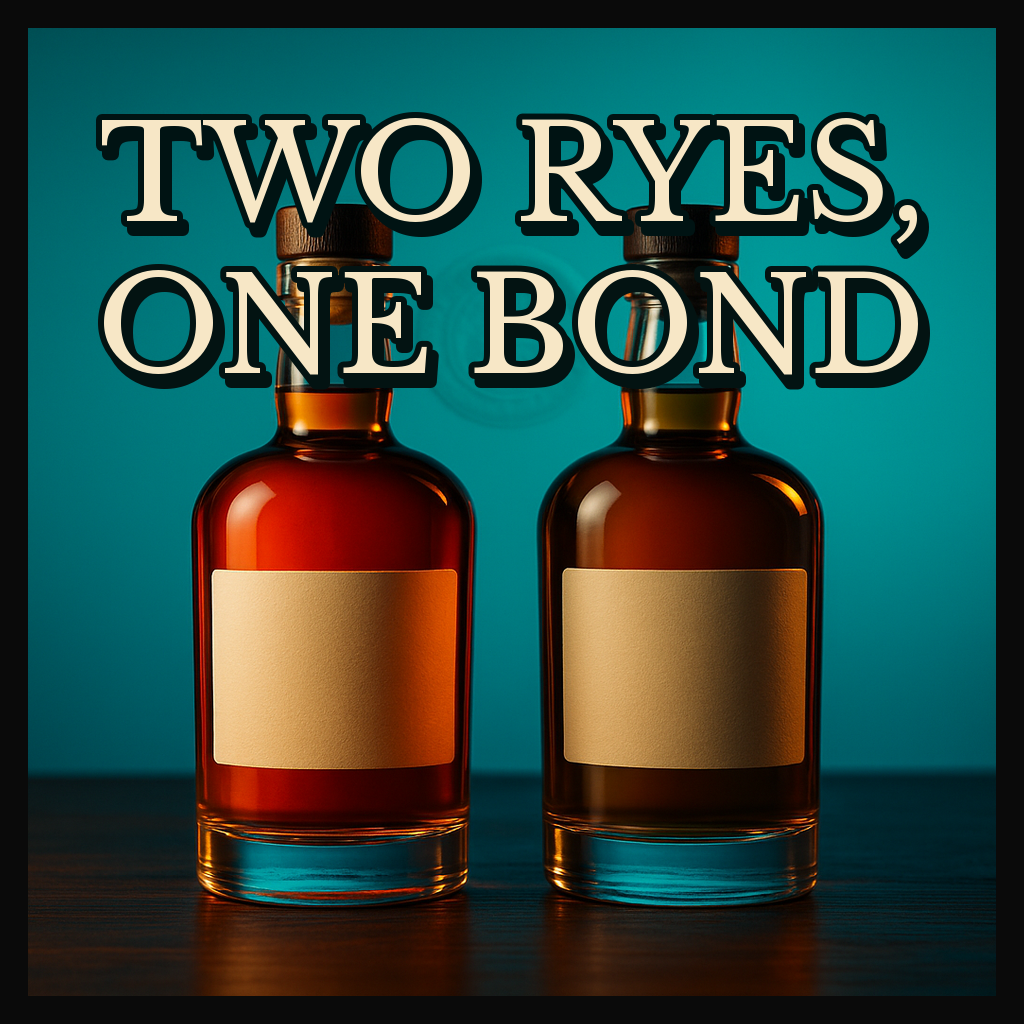
Here's what makes this one different. Hard Truth built Dark Roast Rye out of two separate mash bills — one leaning on chocolate malt, one on caramel malt — blended into a single 25-barrel batch. Most Bottled-in-Bond whiskey sticks to one recipe, because the law never asked you to blend, so nobody bothers. Hard Truth looked at that same rule and saw room to do something more interesting instead. Same distillery, same season, still fully compliant — just layered instead of simple. They're pouring it early too, at two Indiana preview events this month, before the official shelf date. That's a distillery confident enough in a blend to let people taste it before it's even final.
Now — today's Label Room. This is where we look past the headline of the day at one bottle that just cleared federal paperwork and got a fresh label — and what that label is actually telling you.
Because it isn't just Hard Truth filing something new this week. Down in far-western Kentucky, in a part of the state most bourbon coverage skips entirely, Jackson Purchase Distillery just released Kentucky Select Bourbon — and the name behind it is the whole story. Craig Beam. Kentucky Bourbon Hall of Fame. He's been distilling since before most craft operations existed, and he put his name on a four-year, 108-proof bourbon that Kentucky is keeping for itself — no distribution outside the state, at least not yet.
The mash bill runs 70 percent corn, 20 percent rye, 10 percent malted barley — a fairly standard bourbon recipe on paper. What's not standard is where it aged. Jackson Purchase is maturing this whiskey in a converted, palletized former blue-jean factory, not a purpose-built rickhouse. And the early word is that it's showing distinctive, unusually fast maturation for only four years in the barrel — which tracks, because a repurposed industrial building doesn't behave like a traditional Kentucky rickhouse. Different airflow, different thermal cycling, different result.
Here's my read. A Hall of Fame name is the kind of credential that can carry a young distillery's reputation before the whiskey itself has proven anything. But Jackson Purchase isn't hiding behind Beam's name — they're pairing it with a genuinely unconventional aging site and letting the two work together. Keeping it Kentucky-only for now reads less like a limitation and more like a decision: build credibility with the audience closest to home before you ask the rest of the country to trust an unfamiliar warehouse.
That's the pattern worth noticing across both of today's label filings. Hard Truth used an old law's flexibility to build something layered. Jackson Purchase used an unconventional building to get there faster than convention says you should. Neither one is cutting a corner — they're both just refusing to assume the standard playbook is the only one that works.
Which brings us to today's First Sip — one concept, because it's baked right into both of today's stories.
So here's what it is. The mash bill is simply the recipe of grains that goes into the still before distillation even starts, and it's where a whiskey's whole flavor direction gets decided. Bourbon needs at least 51 percent corn — that's federal law too. Rye whiskey flips that, built around rye grain instead. Corn brings sweetness. Rye brings spice — black pepper, cinnamon, a sharper finish that lingers longer than corn does. Malted barley, usually a small slice of the grain bill, helps fermentation along and adds a light, biscuity note underneath everything else.
Hard Truth's Dark Roast Rye takes that idea and doubles it — two separate rye mash bills, one built around chocolate malt, one around caramel malt, blended together in the same batch. Most producers pick one recipe and stay there. Blending two, on purpose, in a federally verified bottle, is a bet that the layered malt character adds real complexity instead of just muddying the whiskey.
What this changes — once you know the mash bill is the decision point, you start reading every new release differently. A blended mash bill isn't a shortcut. It's a distillery telling you exactly what choice they made and why.
And if you want to track how a bottle like that actually shifts your palate, log it in the Perfect Pour app — a pour of a dual-mash-bill rye next to a standard single-recipe rye is exactly the kind of comparison your Pour Print is built to catch. It's available now at theperfectpourapp.com.
One more thing worth your attention this week, since it's not tied to a shelf date at all. Frey Ranch, out in Fallon, Nevada, just opened enrollment for something called the Tractor Tailgate Club — a farm-to-glass membership hard-capped at 500 spots, with no promise it reopens once it's full. Nine hundred ninety-nine dollars gets you four quarterly shipments starting in September, founder tastings, and a discount at the tasting room — all built on grain Frey Ranch grows itself on its own twenty-five-hundred acres. This isn't a bottle you chase at a store. It's a window that closes the moment the five-hundredth person signs up. If farm-direct whiskey is your thing, that's the one to look at before it's gone.
So here's the one thing to walk away with today. Two distilleries this week made a whiskey more complicated than it needed to be — one by blending two rye recipes into a single bonded bottle, one by trusting an aging building nobody would've picked on purpose. Neither cut a corner to get there. That's usually the tell that a bottle's worth your attention — not the label, but the decision behind it.
That's The Cut. The full American Whiskey Industry Brief is free every morning at chasingtheunicornpodcast.com. I'm John Schuster. Thanks for joining me. Your unicorn is out there.
Listen to today's episode and find us on Spotify and everywhere you listen at chasingtheunicornpodcast.com/episodes.
Informational and entertainment purposes only. Nothing here is investment advice. Verify before buying, trading, or bidding. We are not liable for errors or financial losses.
A bottled whiskey just got federal backup. Hard Truth Distilling blended two rye recipes together and still cleared the strictest label rule in American whiskey — Bottled-in-Bond. It ships September 26 at exactly 100 proof, and you can taste it two weeks early at two Indiana preview pours.
Today's biggest move is a regulatory one, not a corporate one. Hard Truth Distilling in Nashville, Indiana locked in a Bottled-in-Bond rye that blends two different mash bills into a single, federally verified bottle. That matters because BiB is the one label claim that's backed by law, not marketing — one distillery, one season, four years minimum, 100 proof, no exceptions. Today's edition also covers a Kentucky-exclusive bourbon from a Hall of Fame distiller, a farm-direct whiskey club with a hard 500-member cap, and what Jim Beam's slipping U.S. volume says about where bourbon growth is actually headed.
Bottled-in-Bond is the oldest consumer protection law in American whiskey. Passed in 1897, it says a whiskey can only carry that label if it comes from one distillery, one distilling season, spends at least four years in a federally bonded warehouse, and hits exactly 100 proof. No wiggle room. Hard Truth Distilling in Nashville, Indiana just used that old law in a new way. Their upcoming Dark Roast Rye blends two different malted-rye recipes — one built around chocolate malt, one around caramel malt — into a single 25-barrel batch that still meets every BiB rule. Most Bottled-in-Bond whiskies stick to one recipe. The law never required that. It just requires everything to come from the same place and the same season. Hard Truth is using that flexibility on purpose, building a layered rye instead of a simple one. The bottle lands September 26 at $59.99. Before that, the distillery is pouring it early at two events — August 21 in Nashville, Indiana, and August 28 in Indianapolis — so regional drinkers get a taste weeks before it hits shelves.
The mash bill is the recipe of grains that goes into the still before distillation ever starts, and it's where a whiskey's flavor direction gets set. Every bourbon needs at least 51% corn; rye whiskey runs the opposite way, built around rye grain instead. Corn brings sweetness. Rye brings spice — black pepper, cinnamon, a sharper finish. Malted barley, usually a small slice of the recipe, helps fermentation along and adds a biscuit-like note. Hard Truth's Dark Roast Rye is an unusual case: it blends two separate rye mash bills together, one using chocolate malt barley and one using caramel malt barley, both built around a 51% rye, 38% corn base. Most whiskies stick to a single grain recipe. Blending two together, in the same batch, is a deliberate bet that the layered malt character adds complexity rather than muddying it.
Floor erosion measures how far a bottle's value has dropped from its highest recorded sale. This particular bottle didn't erode — it led the field, clearing above even the flagship Pappy Van Winkle 15 Year, which sold for $1,310 in the same weekend window. That's notable because Amaranth Grain of the Gods is an experimental-mash-bill release, not Buffalo Trace's best-known age-stated bourbon.
Rickhouse Report: 5 stories · Regional Report: 3 stories
◆ The Brief (free): https://chasingtheunicornpodcast.com/the-brief/
◆ Listen on Apple Podcasts: https://podcasts.apple.com/us/podcast/chasing-the-unicorn-bourbon-american-whiskey/id6788592653
◆ Listen on Spotify: https://open.spotify.com/show/1IZS2wXY7nAUcL9akukblE
◆ YouTube: https://www.youtube.com/@chasingtheunicornpodcast
Want the full picture? The complete American Whiskey Industry Brief — every section, every source, every story — is published free every morning at chasingtheunicornpodcast.com. Read it at chasingtheunicornpodcast.com/the-brief/.
Chasing a specific bottle? The Bourbon Release Calendar lists every lottery deadline, walk-up window and MSRP we're tracking — updated every morning.
Mentioned in this episode: E.H. Taylor, Buffalo Trace, Pappy Van Winkle, Heaven Hill, Bardstown, Maker's Mark, Jim Beam, BTAC