
September 7, 2026
Can You Trust a Receiver's Timeline in a Bankruptcy Sale?
Or subscribe where you already listen
New episode every weekday morning. The Cut Weekend lands Saturday and Sunday.
Read the full transcript
Do you take a receiver at his word when he says a company sale wraps up inside a month, or is that just the sentence court officials say to keep everyone calm?
I'm John from Chasing the Unicorn Podcast. This came out of this morning's brief, and these are the three stories I kept out of everything else in it.
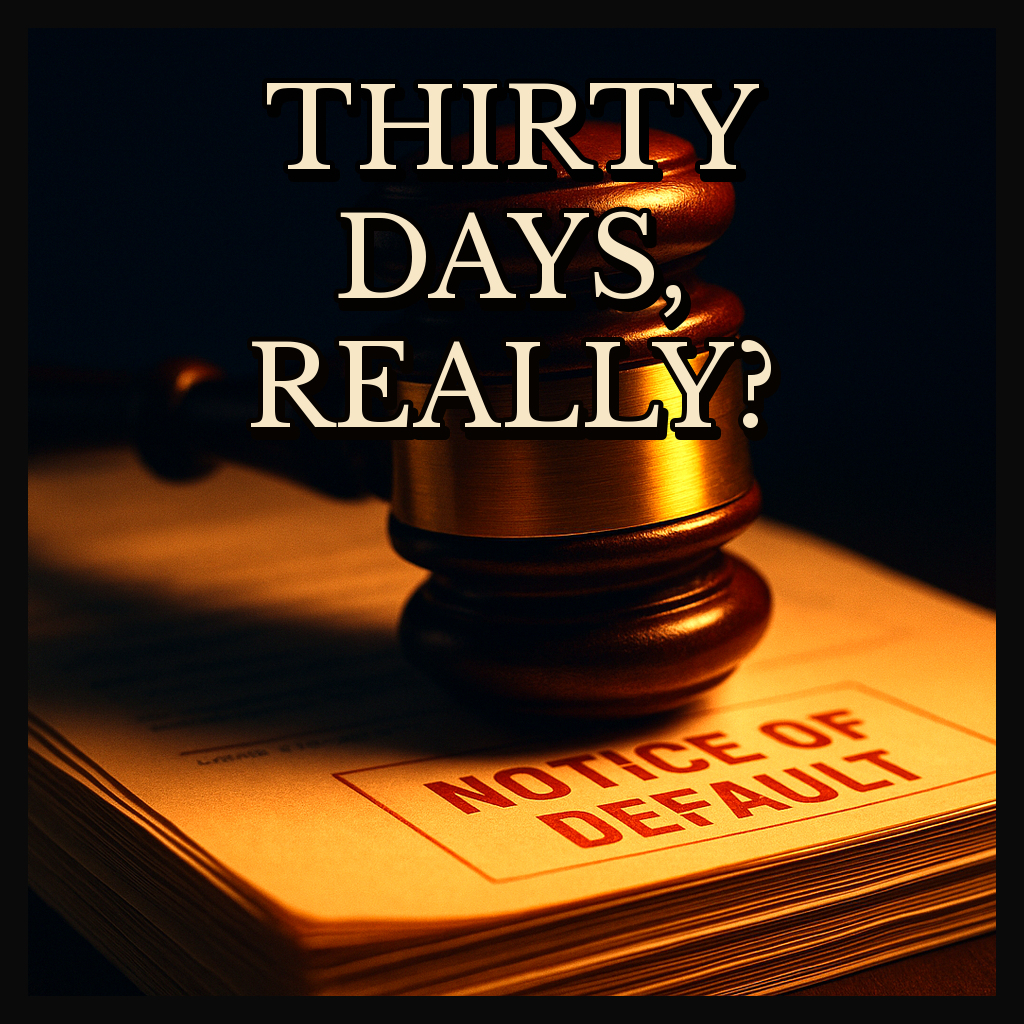
Phillip Young is the receiver appointed to sort out what's left of Uncle Nearest, and in an update he gave in late August, he told the court the brand's asset sale should wrap up within roughly thirty days. He's not a bourbon executive making a marketing promise — he's an officer of the court, and his job is narrower than most people think: find a buyer, get the assets sold, report back. His case for the timeline holding is that the legal machinery underneath it is already moving fast. Keith Weaver, one of the brand's co-founders, runs a separate bankrupt company called Humble Baron, and when Weaver missed the date the court had ordered him to return money it found he'd improperly taken out, the court didn't wait around — it filed a formal Notice of Default within days. The Internal Revenue Service — the IRS — piled on with a claim of its own for unpaid property taxes, and the receiver has already recommended turning that company's bankruptcy into a straight liquidation. That's not a process crawling. That's a court acting fast every time somebody misses a step, which is Young's whole argument for why thirty days is a real number and not a hopeful one.
Where I agree with him is that the legal machinery is genuinely moving — a Notice of Default inside days of a missed court date is not how a stalled case behaves. Where I don't follow him all the way is what a receiver's public timeline is actually worth. Receivers give courts and reporters optimistic windows as a matter of habit, because the alternative is saying "we don't know," and a Weaver-shaped mess sitting one level down from the brand — missed court dates, unfiled tax returns, a company headed for liquidation — is exactly the kind of thing that blows a thirty-day estimate past its own month. Agreeing with Young costs me trusting a court officer's optimism over a paper trail that keeps producing new surprises.
Do you take a receiver at his word when he says a company sale wraps up inside a month, or is that just the sentence court officials say to keep everyone calm?
Tell me whose read you'd bet on — his thirty days, or the mess underneath it — in the comments.
Do you actually know what those four words on a label — Bottled in Bond — are legally promising you, or do you just trust that they mean something?
Bib & Tucker just put out its first Bottled-in-Bond release, an eight-year Tennessee high-rye, and it's a good excuse to explain what that phrase is doing on a label in the first place, because most people treat it as a stamp of quality when it's really a stamp of paperwork. Bottled in Bond goes back to a law from 1897, and all it promises is that the whiskey inside came from one distillery, in one distilling season, aged at least four years, and bottled at exactly one hundred proof under federal supervision. That's the whole promise. It doesn't say the whiskey is good. It doesn't say the mash bill is interesting. It guarantees provenance and a floor on age and proof, and that mattered enormously back when whiskey was routinely cut with who knows what before it reached a bottle, and the label was the only proof a buyer had that they weren't being lied to.
Here's where it stops being what people assume it is. Bib & Tucker's release is eight years old, double the legal floor, and that's the brand choosing to age it longer — the law never required that part. The law only guarantees the four-year minimum and the proof. So when you see Bottled in Bond on a bottle, what you actually know is where it was made and how old it's allowed to be at minimum, and nothing at all about whether you'll like what's in the glass. It's the same shape as the mash bill breakdown we went through earlier this week — the label tells you the rules it followed, not the story it tells once it's poured.
Do you actually know what those four words on a label — Bottled in Bond — are legally promising you, or do you just trust that they mean something?
Tell me what you thought Bottled in Bond meant before you looked it up, because I bet a few of you are about to be surprised, in the comments.
Is Bulleit's new bourbon-rye a real second whiskey blended in, or one whiskey wearing a new label?
Bulleit added Bulleit '87 to its permanent lineup this week, its first new core bottle since 2011, and it's built differently than most bourbon-rye pairings out there. Most of those start from one mash bill that splits the difference between corn and rye before it ever sees a still. Bulleit didn't do that. They made a full bourbon in Shelbyville and a full rye in Indiana, aged each one at least four years on its own, finished the bourbon in toasted American oak and the rye in French oak staves, and only then blended the two finished whiskeys together. One camp says that's a genuinely different production choice — you're marrying two whiskeys that each already have their own finished character, not distilling a compromise from day one. The other camp says "blend" is doing a lot of work in that sentence, and until somebody pours the bourbon and the rye unblended, one after the other, there's no way to prove the separate finishing changes anything at all in the glass.
My call is that the production choice is real, even if the marketing leans on it harder than it needs to. Distilling two full whiskeys, aging each one, finishing each one separately, and blending afterward is genuinely more work and a genuinely different mechanism than a single hybrid mash bill, and that's true whether or not it moves your palate enough to notice. Here's the honest part the category doesn't like to say out loud: a lot of what gets marketed as innovation in this business is really just a new way of assembling old ingredients, and that doesn't make it fake, it just makes it less rare than the label wants you to believe.
Now, I could be wrong, and I'll make the case against myself. Nobody has actually shown you the unblended components against each other — not once — so everything I just said is trust in how Bulleit says it was built, not proof, and the whole case for "genuine blend" over "marketing math" rests on taking their word for it.
Is Bulleit's new bourbon-rye a real second whiskey blended in, or one whiskey wearing a new label?
So tell me which side you land on — since checking it yourself doesn't cost much, come back and argue with me about it in the comments.
There's a fifth story in this morning's Rickhouse Report I never got to — Redemption's Higher Marques line has an eighteen-year release coming later this year at a barrel proof of 102.85, and it didn't make the cut for these three. That's exactly why the full brief exists — go read it and check what I told you against everything else that moved this week.
That's The Cut. Follow the show wherever you listen, so the next one finds you first. The full American Whiskey Industry Brief is free every morning at chasingtheunicornpodcast.com. I'm John Schuster. Thanks for joining me. Your unicorn is out there.
Listen to today's episode and find us on Spotify and everywhere you listen at chasingtheunicornpodcast.com/episodes.

Informational and entertainment purposes only. Nothing here is investment advice. Verify before buying, trading, or bidding. We are not liable for errors or financial losses.
Bulleit just broke a fifteen-year streak. The brand hasn't added a new permanent bottle to its core lineup since 2011 — until this week, when it blended Kentucky bourbon and Indiana rye into one $29.99 bottle built for the everyday shelf.
Bulleit added its first new permanent core bottle in fifteen years, blending bourbon and rye into one $29.99 whiskey that's rolling out to regular liquor stores now. It matters because you don't need an allocation list or a lottery ticket to try it — this is a shelf-level release from a major brand, not a chase. Today's edition also covers Maker's Mark's oldest bourbon ever, a Bottled-in-Bond debut from Tennessee, and a one-day walk-up bottle that sold out across eleven distilleries in a single afternoon.
Bulleit just did something it hasn't done in fifteen years — it added a brand-new bottle to its permanent lineup. It's called Bulleit '87, and it's a blend of Kentucky bourbon and Indiana rye. Here's the interesting part. Bulleit didn't mix the two grains together before distilling. They made the bourbon in Shelbyville and the rye in Indiana, aged each one at least four years, then finished them separately — the bourbon in toasted American oak, the rye in French oak staves. Only after that did they blend the two together. Most bourbon-rye hybrids just distill one recipe that splits the difference between corn and rye. Bulleit built two full, finished whiskeys and let the blend do the work at the end. It bottles at 90 proof for $29.99, and it's Bulleit's first new core release since Bulleit 95 Rye came out back in 2011. That's the whole story: a widely distributed, permanent bottle under $30, sitting right next to the rest of the Bulleit lineup at your regular liquor store.
Not every hard-to-find bottle uses the same playbook. This week gave us two good examples of why matching your strategy to the release matters. Old Forester's 2026 Birthday Bourbon skipped the walk-up line entirely and moved to a sweepstakes — a thousand winners were picked in late August, and only they can buy in person through December. If you didn't enter, there's nothing to chase right now. The Tennessee Collective went the opposite direction: eleven distilleries sold one blended bottle simultaneously, in person only, no shipping, no website — and it sold out the same day. That's a walk-in release built entirely around showing up, not luck. Pre-orders, lotteries, and walk-ins each reward different things: pre-orders reward speed online, lotteries reward patience over many entries, and walk-ins reward being physically present. Knowing which one you're dealing with before you spend energy chasing a bottle saves you the frustration of using the wrong strategy on the wrong release.
Floor erosion measures how far a bottle's resale value has fallen from its all-time high. A 28.8% drop means this bottle is now selling for roughly seven dollars less on every ten it once commanded at its peak. In this case, the decline isn't about the whiskey itself — it's about uncertainty over who will own the brand once its court-ordered asset sale closes, expected within about a month.
Rickhouse Report: 5 stories · Regional Report: 3 stories
◆ The Brief (free): https://chasingtheunicornpodcast.com/the-brief/
◆ Listen on Apple Podcasts: https://podcasts.apple.com/us/podcast/chasing-the-unicorn-bourbon-american-whiskey/id6788592653
◆ Listen on Spotify: https://open.spotify.com/show/1IZS2wXY7nAUcL9akukblE
◆ YouTube: https://www.youtube.com/@chasingtheunicornpodcast
Want the full picture? The complete American Whiskey Industry Brief — every section, every source, every story — is published free every morning at chasingtheunicornpodcast.com. Read it at chasingtheunicornpodcast.com/the-brief/.
Chasing a specific bottle? The Bourbon Release Calendar lists every lottery deadline, walk-up window and MSRP we're tracking — updated every morning.
Mentioned in this episode: Maker's Mark, Old Forester, BTAC