
September 9, 2026
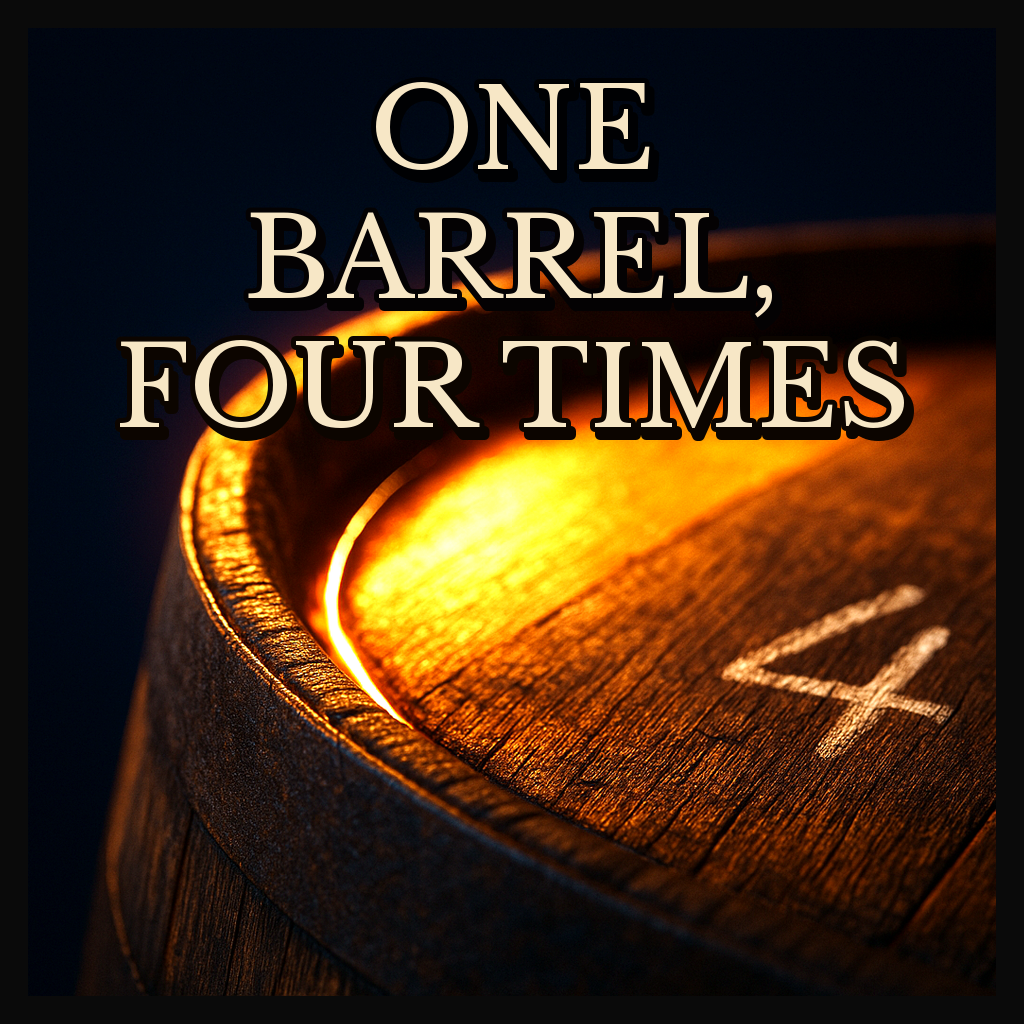
Is a Held-Back Single Barrel Worth Four Times the Blend?
Or subscribe where you already listen
New episode every weekday morning. The Cut Weekend lands Saturday and Sunday.
Read the full transcript
If a distillery takes eight barrels from the exact same finishing run, blends seven of them into one bottle, and holds the eighth back to sell alone for four times as much, are you actually getting something different, or are you just paying extra for the word "single" on the label?
I'm John from Chasing the Unicorn Podcast. These came out of the brief this morning, and I've kept the three I actually wanted to talk about.
Garrison Brothers just did exactly that down in Texas. Eight years total on this one — four in new American oak, then four more finishing in custom-coopered French Limousin barrels — and out of eight barrels that went through that same second finish, seven got blended together into their standard Laguna Madre release, and one got held back and bottled alone at full cask strength. That's the whole story in one batch: same wood, same years, same distillery, and one path costs roughly a quarter of the other.
The case for the single barrel is real, and I want to give it its full weight first. A blend, by definition, smooths things out — you're averaging seven barrels together, and whatever made barrel forty-four interesting on its own gets folded into six other opinions about what that whiskey should be. Bottled alone, at a hundred thirty-five and change, you're getting the finishing program at its rawest, no committee involved. For a collector who wants the truest read on what that Limousin oak actually did, that's not nothing.
The case against it is just as real. Seven of the eight barrels in this exact batch went into a bottle that costs a fraction of this one, made under the identical program, aged the identical amount of time. When six-sevenths of a batch gets treated as ordinary and the seventh gets treated as extraordinary, the whiskey didn't change — the story around it did. That's the part that should give you pause before you commit to it.
My call is that the premium here isn't buying you a different whiskey — it's buying you the one barrel a distillery decided to treat like an event, and the honest reason to pay it is scarcity, not flavor. Now, I could be wrong, and I'll make the case against myself: cask strength is a real, tastable difference, not a marketing word, and a hundred thirty-five proof reading genuinely shows more of the wood in the glass than a hundred-and-one-proof blend does. If that gap is worth the multiple to you, that's not a mistake, that's just what you value.
If a distillery takes eight barrels from the exact same finishing run, blends seven of them into one bottle, and holds the eighth back to sell alone for four times as much, are you actually getting something different, or are you just paying extra for the word "single" on the label?
Tell me which side of that argument you buy, down in the comments, and if you've ever bought a held-back single barrel over the blend it came from, let me know if it was worth it to you.
Freddie Noe put his own name on a claim this week, and I think it's worth testing against what's actually in the bottle. Basil Hayden's eighth-generation master distiller says the new Cognac Cask Reserve just takes the brand's regular high-rye bourbon and lets casks that held Cognac for twenty to twenty-five years "put a twist on it." Is that an honest description of a bourbon with an accent on it, or is he undercutting how much this bottle actually changed?
His case, put the way he'd put it: the mash bill underneath is the same high-rye recipe Basil Hayden's always used, the proof stayed right where the brand normally sits, and nothing about the base spirit moved. In his framing, the cask is doing decoration, not demolition — you're still getting Basil Hayden, just one that spent extra time somewhere interesting.
I can tell you this much: he's underselling it. Where I agree with him, the specs actually hold up better than most finishing claims do — most Cognac- or wine-cask finishes ship at ninety to a hundred proof to carry the extra cask character, because at house proof that character tends to get lost, and Basil Hayden held its ground at eighty. That's a distillery choosing not to chase the cask, which is the opposite of what you'd expect if this were really a new whiskey wearing an old one's name.
Where I don't agree: two full decades in Cognac oak is not a light touch, whatever proof the bottle lands at, and calling that a "twist" undersells how much work that wood did before a drop of bourbon ever touched it. If I'm being honest about what would change my mind, I'd need to compare it directly against the standard bottle and find the base profile still leading — and I haven't done that yet, so right now I'm taking his word further than I'd normally take a distiller's word for it.
Is that an honest description of a bourbon with an accent on it, or is he undercutting how much this bottle actually changed?
Whose read are you buying — his, or mine — and say so in the comments.
Everybody's said some version of this at a bar: naming a whiskey technique after a legendary distiller is just marketing dressed up as history. Is that true of "rye backset," the process Heaven Hill is putting on the label of the twentieth Parker's Heritage release, or is there real process behind the name?
It's an easy thing to believe, because the industry gives you plenty of reasons to. Plenty of releases put a founder's name or a folksy word on the label and the only thing behind it is a marketing meeting. When a distillery ties a process to a legend, the reflex — a fair one — is to assume you're being sold reverence instead of whiskey.
The honest answer is that the technique is real, and so is the sentiment, and this time they're not competing with each other the way the bar-stool version assumes. Rye backset is a specific, documented move — recycling spent rye mash liquid back into a new fermentation — and it's tied to how Parker Beam actually worked at Heaven Hill before he died. This release draws from a hundred barrels, all distilled in the same four-month window back in twenty-eleven and twenty-twelve, pulled from multiple floors across four rickhouses, bottled at barrel proof and left alone rather than filtered down. None of that paperwork is required to sell a whiskey with a legend's name on it — it's the kind of detail a distillery keeps for itself, not for you. The same shape as the bottled-in-bond rule we walked through earlier this week — a real technical requirement doing work under a name that sounds like sentiment — this is one more case where the label is honest about a process, not just borrowing a name for weight.
Is that true of "rye backset," the process Heaven Hill is putting on the label of the twentieth Parker's Heritage release, or is there real process behind the name?
Where'd you first hear that one — a bottle shop, a buddy who swears by it? Tell me in the comments.
Starlight Distillery, down in southern Indiana, split its oldest bourbon ever — a ten-year finished in Japanese oak from trees two to five centuries old — into two hundred and fifty bottles total: two hundred set aside for lottery winners, fifty held back to sell in person at the distillery once the drawing's done. I didn't touch it because three subjects a night is all I've got, not because it isn't worth your attention — that's exactly the kind of thing the brief exists to catch, and it's where you go every morning to check what I told you against what's actually in there.
That's The Cut. Follow the show wherever you listen, so the next one finds you first. The full American Whiskey Industry Brief is free every morning at chasingtheunicornpodcast.com. I'm John Schuster. Thanks for joining me. Your unicorn is out there.
Listen to today's episode and find us on Spotify and everywhere you listen at chasingtheunicornpodcast.com/episodes.

Informational and entertainment purposes only. Nothing here is investment advice. Verify before buying, trading, or bidding. We are not liable for errors or financial losses.
A Beam family distiller went to France. Freddie Noe just finished Basil Hayden's high-rye bourbon in casks that held Cognac for up to 25 years, and it's on shelves now for under $50 — no lottery, no allocation gate.
The biggest shelf news this window is Basil Hayden's new Cognac Cask Reserve, a sub-$50 finished bourbon that undercuts most Cognac-cask releases by $20 or more. It matters because finishing programs usually come with a steep price tag, and this one doesn't. Today's edition also covers a $99.99 tribute blend honoring a 50-year Master Distiller, Heaven Hill's 20th Parker's Heritage edition, and a Texas single barrel that costs four times its own blended sibling.
Basil Hayden just gave its signature bourbon a second life in French oak. Beam Suntory's Cognac Cask Reserve takes the brand's familiar high-rye bourbon and finishes it in casks that spent 20 to 25 years holding Cognac before a drop of bourbon ever touched them. Eighth-generation Beam family distiller Freddie Noe framed it simply — the casks let the team take the Basil Hayden profile everyone already knows and "put a twist on it." That's the key detail here. This isn't a new bourbon. It's the same high-rye mash bill you'd get in a standard bottle, with a finishing step layered on top. The bottle stays at Basil Hayden's usual 80 proof, which is lower than most finished releases on shelves right now — most Cognac- or wine-cask finishes ship between 90 and 100 proof to carry the added cask character. Basil Hayden held at house proof instead, which tells you this bottle is built for the brand's existing drinker, not a barrel-proof chase crowd. At $49.99, it undercuts most Cognac-finished bourbons by a wide margin — many run past $70 once a specialty cask enters the picture. It's at select retailers now, not gated behind a lottery.
After a bourbon finishes its primary aging, some distilleries give it a second stint in a different barrel — rum, port, sherry, Cognac, French oak. That second stay is called finishing, and Basil Hayden's new Cognac Cask Reserve is a clean example of how it's supposed to work. The base bourbon keeps its familiar high-rye mash bill intact, then spends time in French oak that held Cognac for 20 to 25 years. Done right, a finish adds a layer on top of a bourbon that's already good — you taste the base spirit first, and the finish arrives after, like an echo. Done wrong, the cask covers up a thin whiskey underneath. The way to tell the difference is simple: taste through the finish. If you can still taste the bourbon under the Cognac notes, the finish earned its place. If all you get is the cask, something's being hidden. What this changes: Next time you try a finished bourbon, ask what you're tasting first — the base whiskey or just the barrel it visited.
Most bottles we track here have a track record — a peak price and a current price to measure the drop against. This one doesn't exist yet, because it just landed on shelves. What we do know is the scarcity math: 100 barrels, 14 years old, barrel proof, all distilled in a single four-month window a decade ago. That's the kind of spec sheet that has historically pushed past Parker's Heritage editions well above their $199.99 launch price once the initial pool clears retail.
Rickhouse Report: 5 stories · Regional Report: 3 stories
◆ The Brief (free): https://chasingtheunicornpodcast.com/the-brief/
◆ Listen on Apple Podcasts: https://podcasts.apple.com/us/podcast/chasing-the-unicorn-bourbon-american-whiskey/id6788592653
◆ Listen on Spotify: https://open.spotify.com/show/1IZS2wXY7nAUcL9akukblE
◆ YouTube: https://www.youtube.com/@chasingtheunicornpodcast
Want the full picture? The complete American Whiskey Industry Brief — every section, every source, every story — is published free every morning at chasingtheunicornpodcast.com. Read it at chasingtheunicornpodcast.com/the-brief/.
Chasing a specific bottle? The Bourbon Release Calendar lists every lottery deadline, walk-up window and MSRP we're tracking — updated every morning.
Mentioned in this episode: Heaven Hill, Parker's Heritage, Bardstown, Jim Beam, Old Forester, Woodford Reserve, Garrison Brothers, King of Kentucky, BTAC