
August 18, 2026
Is Maker's Mark 46 Worth the Hype After Its 99-Point Score?
Or subscribe where you already listen
New episode every weekday morning. The Cut Weekend lands Saturday and Sunday.
Read the full transcript
This is The Cut. American whiskey, daily.
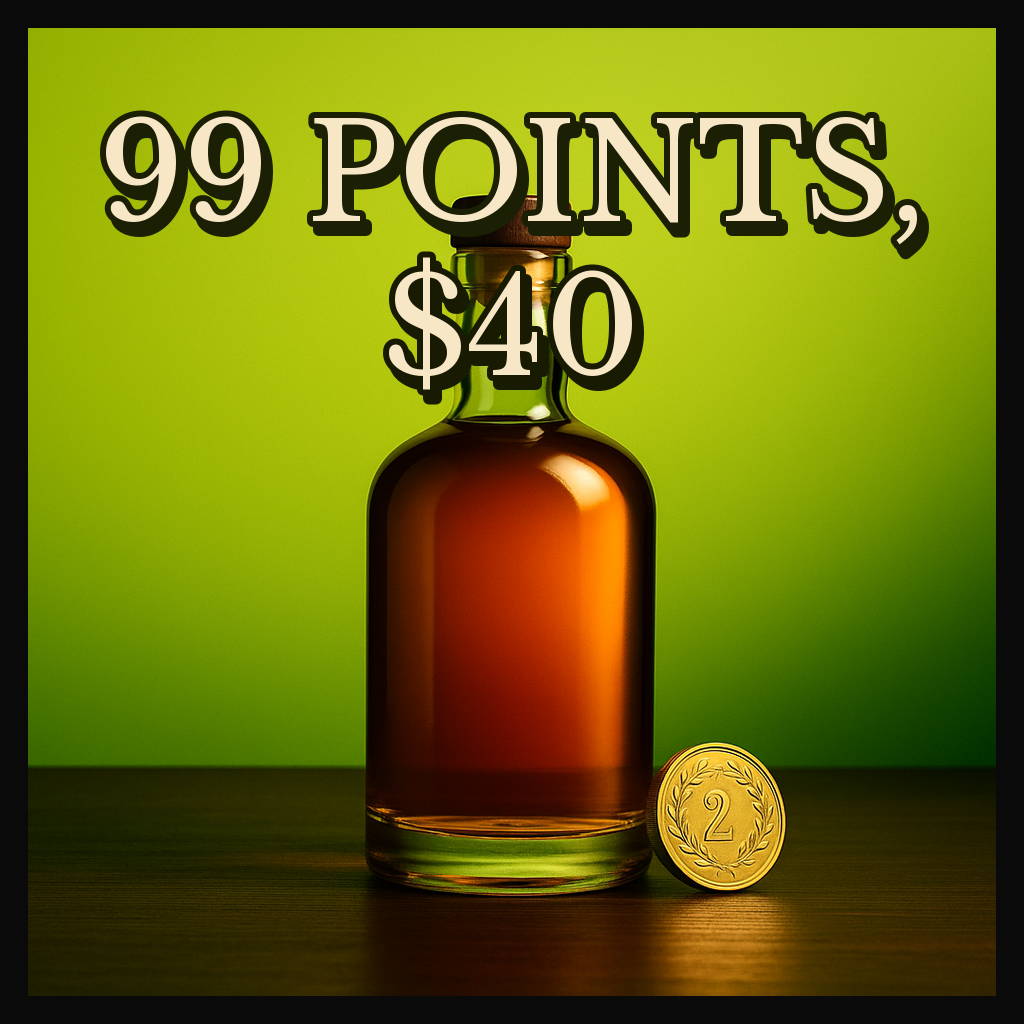
Ninety-nine points. Forty dollars. One bottle you can walk into almost any store and buy right now, no lottery, no wait list, no distillery connection required. That almost never happens. Today it did.
I'm John from Chasing the Unicorn Podcast. Here's what moved today. August 18, 2026.
Here's the Big Move. Maker's Mark 46 just scored a 99 out of 100 — Double Gold — at the San Francisco World Spirits Competition, one of the biggest judging events in the world. That's the kind of number you expect from a barrel-proof single barrel running you 300 dollars after you win a raffle for the privilege. Maker's Mark 46 is 94 proof, about 40 dollars, sitting on a regular shelf near you.
This isn't a one-off, either. Earlier this year, the same bottle won World's Best Finished Bourbon at the World Whiskies Awards. Two competitions. Two separate panels of judges. Same bottle landing near the top of the scale both times. That's not a fluke — that's a real signal. The move here is starting-Maker's-Mark, then finishing it with seared French oak staves dropped right into the barrel — extra wood contact that pushes more vanilla, more baking spice, and a longer finish out of a bourbon that started life as something simpler. My take: this is the rarest combination in the category — a bottle that scores like an allocation and costs like a Tuesday pickup.
Now — it isn't just one bottle making news today. Over in the Label Room, two names from bourbon's recent past just filed something worth a closer look.
John Little and John Foster built Smooth Ambler from scratch in West Virginia, then sold it to Pernod Ricard back in 2017. Nine years later, they're back — and this time nobody owns them but themselves. Their new venture, Little and Foster Whiskey Company, just filed its debut label: Marriage of Mashbills Bourbon. It blends a high-rye recipe and a low-rye recipe, each aged more than nine years, bottled non-chill filtered at 107 proof.
Here's what makes the filing interesting. They're sourcing from MGP and a Kentucky partner distillery called Wenzel — and they're saying so, right on the label. First-year production is capped at just 35 barrels. That's not a marketing wrapper around bulk contract whiskey. That's two guys who spent a decade proving they know how to blend, doing it again at a scale small enough to control by hand. After eight years working inside somebody else's corporate structure, this is their first independent bet — and they're leading with technical craft, not a heritage story.
So here's what it is. NDP stands for Non-Distiller Producer — a brand that doesn't run its own still. Instead, they buy whiskey from a contract distillery, blend or age it, and bottle it under their own name. The biggest source in the country is MGP of Indiana — a massive contract distiller whose whiskey ends up behind dozens of labels you've probably had a pour from without knowing it. Sourced whiskey isn't a red flag on its own. What matters is whether the brand tells you. Little and Foster's label names both suppliers plainly. That's the whole ballgame — a brand willing to name its source is giving you real information. A brand hiding behind heritage language while quietly buying the same MGP stock as fifty competitors is not.
What this changes — check the back label for "distilled in" language before you assume a bottle was made where its story implies. The honest ones will just tell you. And if you're tracking pours like this one, log it in your Logbook on the Perfect Pour app and put it side by side with a house-distilled bottle in your Pour Print — the transparency usually tells you more than the marketing does. It's available now at theperfectpourapp.com.
One more worth knowing about — Garrison Brothers just opened the remaining stock of Laguna Madre 2026, and this is the line's first-ever Cask Strength Single Barrel. Eight years aged across American and French Limousin oak, bottled at full barrel proof, 135.4 to be exact. That's not a higher-proof relabel of the standard release — that's a genuinely different bottle. It runs about 410 dollars, which is real money, so this isn't an impulse buy. But if you've had the standard Laguna Madre and wondered what it'd taste like without water added at any point in the process, this is your answer. It's out now at the distillery in Hye, Texas, and trickling into select retail — worth tracking down if full barrel proof from a Texas heat cycle sounds like your kind of bottle.
So here's the one thing to take from all of this. The best bourbon story today isn't a hunt or a hard-to-get name — it's two totally different paths converging on the same lesson. A widely available bottle just proved price and quality can actually line up. And two founders relaunching small, transparent, and by hand just proved you don't need to hide where your whiskey comes from to make something worth drinking. Honesty on the label, wherever it shows up, is the thing to reward with your money.
That's The Cut. The full American Whiskey Industry Brief is free every morning at chasingtheunicornpodcast.com. I'm John Schuster. Thanks for joining me. Your unicorn is out there.
Listen to today's episode and find us on Spotify and everywhere you listen at chasingtheunicornpodcast.com/episodes.

Informational and entertainment purposes only. Nothing here is investment advice. Verify before buying, trading, or bidding. We are not liable for errors or financial losses.
Ninety-nine points. Forty dollars. One bottle. Maker's Mark 46 just scored a Double Gold, 99 out of 100, at the world's biggest spirits competition — on a bottle sitting on regular shelves nationwide, no lottery, no wait list required.
A $40 bourbon just matched scores usually reserved for bottles you can't find. Maker's Mark 46 earned a 99-point Double Gold at the San Francisco World Spirits Competition, adding to an earlier World's Best Finished Bourbon win — and it's sitting on shelves right now. That matters because top-tier scores almost never land on something this accessible. Today's edition also covers two founders relaunching independently after selling Smooth Ambler, a Texas cask-strength debut, and a Columbus event with a $10 door and a Pappy pour behind it.
Maker's Mark 46 just scored a 99 out of 100. Double Gold. At the San Francisco World Spirits Competition, one of the biggest spirits judging events in the world. That's a score you'd expect from a barrel-proof single barrel that costs $300 and requires a lottery win. Maker's Mark 46 costs about $40. It's 94 proof. It's sitting on regular shelves right now, nationwide. No allocation. No waiting list. This isn't a one-off, either. Earlier this year, the same bottle won World's Best Finished Bourbon at the World Whiskies Awards. Two separate competitions, two separate judging panels, both landing near the top of the scale on the same bottle. That's a real signal, not a fluke. The bottle starts as standard Maker's Mark, then gets finished with seared French oak staves added right into the barrel. That extra wood contact is what pushes the flavor — more vanilla, more baking spice, longer finish — past the base bourbon it started from. Most bottles that score this high are hard to get and harder to afford. This one isn't either.
NDP stands for "Non-Distiller Producer" — a brand that doesn't run its own still. Instead they buy whiskey from a contract distillery, age or blend it, and bottle it under their own name. The biggest source in America is MGP of Indiana, a massive contract distiller whose whiskey ends up behind dozens of labels you've probably had a drink from without knowing it. Sourced whiskey isn't a red flag by itself — the two founders behind Little & Foster Whiskey Co., who built Smooth Ambler before selling it to Pernod Ricard in 2017, just launched a new bourbon sourced from both MGP and a Kentucky partner distillery. The label says so plainly. That transparency is the whole ballgame. A brand that names its sourcing partner is giving you real information. A brand that hides behind heritage marketing while quietly buying the same MGP juice as fifty competitors is not. What this changes: check the back label for "distilled in" language before you assume a bottle was made where its story implies. The honest brands will just tell you.
This weekend's tracked auction batch shows how split the secondary market really is. In the same batch where a 2004 George T. Stagg cleared $1,420, entry-level bottles like Weller Antique and Orphan Barrel Fable & Folly changed hands for as little as $100. That's the same auction sheet, the same weekend — a nearly $1,300 gap between the top and bottom of the same list.
Rickhouse Report: 5 stories · Regional Report: 3 stories
◆ The Brief (free): https://chasingtheunicornpodcast.com/the-brief/
◆ Listen on Apple Podcasts: https://podcasts.apple.com/us/podcast/chasing-the-unicorn-bourbon-american-whiskey/id6788592653
◆ Listen on Spotify: https://open.spotify.com/show/1IZS2wXY7nAUcL9akukblE
◆ YouTube: https://www.youtube.com/@chasingtheunicornpodcast
Want the full picture? The complete American Whiskey Industry Brief — every section, every source, every story — is published free every morning at chasingtheunicornpodcast.com. Read it at chasingtheunicornpodcast.com/the-brief/.
Chasing a specific bottle? The Bourbon Release Calendar lists every lottery deadline, walk-up window and MSRP we're tracking — updated every morning.
Mentioned in this episode: Buffalo Trace, Weller, George T. Stagg, Pappy Van Winkle, Maker's Mark, Sazerac, Garrison Brothers, BTAC