
Or subscribe where you already listen
New episode every weekday morning. The Cut Weekend lands Saturday and Sunday.
Read the full transcript
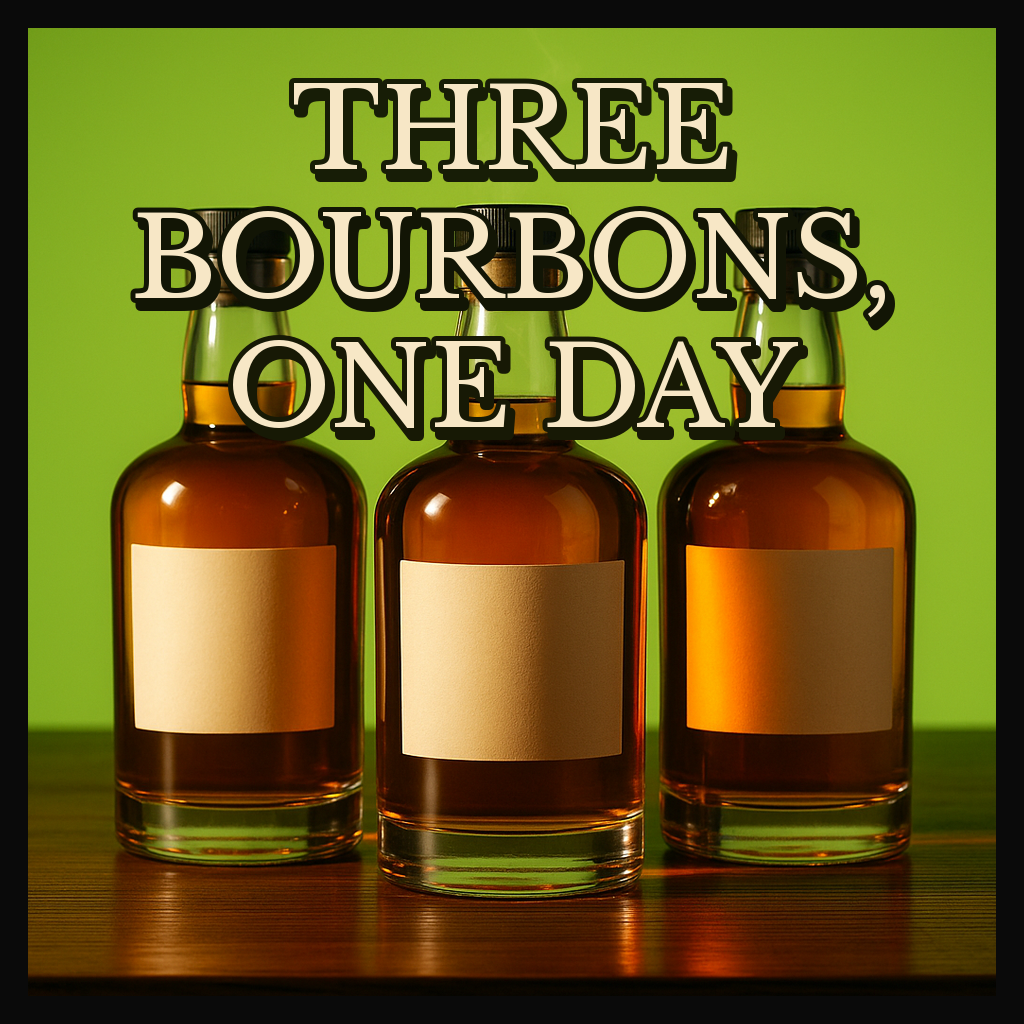
One distillery. Three bourbons. One day. Same age, same price — only the grain changes. Old Elk just handed drinkers the cleanest mash bill comparison the category's seen in a long time, no lottery required.
I'm John from Chasing the Unicorn Podcast. Here's what moved today. July 31, 2026.
Today's Big Move — one distillery deciding not to pick a favorite. Here's what happened.
Old Elk Distillery, under Middle West Spirits' ownership since last year, released its first major collection nationwide on Tuesday: a Straight Bourbon, a Wheated Bourbon, and a Straight Wheat Whiskey. All ten years old. All sixty-nine ninety-nine. All on shelves the same day. The only variable is the grain. The Straight Bourbon runs fifty-one percent corn, thirty-four percent malted barley, fifteen percent rye, at a hundred and five proof. Swap that rye for wheat and you get the Wheated Bourbon — forty-six percent wheat, same proof. Push all the way to ninety-six percent soft red winter wheat and you land on the Straight Wheat Whiskey.
Normally, tasting mash bill differences means cross-shopping different brands, different ages, different prices — too many variables to draw a clean line. Old Elk removed every one of them. Same distillery. Same decade in the barrel. Same shelf tag. For two hundred and ten dollars, you can run a controlled bourbon tasting most people spend years piecing together bottle by bottle. That's not a small thing. That's the whole story.
Now — today's Flight. Because it isn't just three bottles sitting next to each other. It's a debate the bourbon community has already started having.
The Flight this week puts the Straight Bourbon head to head with the Wheated Bourbon — same distillery, same age, same day, same price, mash bill as the only real variable. The Straight Bourbon's fifteen percent rye share points toward more spice — black pepper, a drier entry, a longer, sharper finish. The Wheated Bourbon trades that rye for wheat, and the profile softens — rounder, more caramel and vanilla, a gentler finish that leans sweet instead of hot. If you already like a spicier, traditional bourbon, the Straight wins. If you're a Maker's Mark or Weller drinker, the Wheated Bourbon is your lane, now with a full decade behind it instead of the usual six or seven years.
And that's exactly what's fueling this week's Bar Talk. One camp says this is as close to a real, controlled taste test as a shelf ever offers — hold the distillery, the age, and the proof constant, and only the grain moves. The skeptical camp says without a blind tasting, you'll just taste whatever the label tells you to, and two hundred and ten dollars is an expensive way to confirm what you already believed. Here's my take — the self-fulfilling-expectations critique is fair. But the underlying comparison is still real. Holding almost everything constant and changing one variable is closer to an actual experiment than nearly anything else on a shelf right now.
Which brings me to today's First Sip — because there's another release this week that only makes sense once you understand where sourced whiskey actually comes from.
So here's what it is. NDP stands for non-distiller producer — a brand that doesn't run its own still. It buys whiskey from a contract distillery, ages or finishes it, bottles it, and puts its own name on the label. The biggest source in the country is MGP of Indiana, whose bulk whiskey backs dozens of brands you'd swear were distilling their own juice. Sourced whiskey isn't a red flag by itself — MGP makes real, well-regarded whiskey. The difference is honesty about it. This week, a Wisconsin brand called Dancing Goat launched a label called Stillman's Sonder, built from MGP barrels distilled between 2010 and 2016. Instead of hiding that, they built the whole story around it — a former MGP stillman's own son and grandson doing the barrel selection, putting his name on the bottle. That's the opposite of a brand hiding behind heritage marketing while quietly buying the same barrels as fifty competitors.
What this changes — next time you're holding a bottle, check the back label for "distilled in" a state that doesn't match where the brand claims to be from. That's sourced whiskey. Now you know the right question to ask about it. And if you're logging pours, drop Stillman's Sonder into your Perfect Pour Logbook next to anything else you own that traces back to MGP — the app's available now at theperfectpourapp.com, and watching your Pour Print line up by distillery is a fast way to learn what you actually gravitate toward.
One more before we close. Garrison Brothers just opened its first-ever pre-sale window for Hye Rye — a high-rye bourbon out of Texas that hasn't seen a real release since a thousand-bottle drop back in 2020. Thirty-seven percent organic rye means a spicier, drier pour than their flagship, layered with that Texas-heat caramel extraction they're known for. Ninety-nine ninety-nine, limit four bottles, window open through August tenth. The bottle doesn't ship until 2028 — that's a real patience test — but locking in the price now beats whatever this trades for once it's actually in hand.
So here's the one thing to take with you. A shelf full of bourbon can teach you more than any review ever will, if you know how to read it. Three bottles from one distillery, at the same age and price, aren't a gimmick — they're a lesson somebody else already built for you. The best bourbon education this year might not come from a class. It might come from your own kitchen counter.
That's The Cut. The full American Whiskey Industry Brief is free every morning at chasingtheunicornpodcast.com. I'm John Schuster. Thanks for joining me. Your unicorn is out there.
Listen to today's episode and find us on Spotify and everywhere you listen at chasingtheunicornpodcast.com/episodes — next episode Monday morning.

Informational and entertainment purposes only. Nothing here is investment advice. Verify before buying, trading, or bidding. We are not liable for errors or financial losses.
One distillery. Three bourbons. One day. Old Elk released a Straight Bourbon, a Wheated Bourbon, and a Straight Wheat Whiskey on the same day, at the same age, at the same $69.99 price — daring drinkers to taste the difference grain alone makes.
Old Elk didn't pick one bourbon to relaunch under new ownership — it picked three, and put them on shelves side by side at identical age and price. That matters because it's the cleanest, cheapest mash-bill comparison the category has offered in a while, no lottery or allocation required. Today's edition also covers Beyoncé's split from Moët Hennessy, Brown-Forman's rejection of a $15 billion buyout, and what "allocated" really means the next time you're staring at a shelf tag.
Old Elk Distillery, under Middle West Spirits' ownership since May 2025, dropped its first major release nationwide on July 29 — and instead of picking one bourbon to lead with, it picked three. A Straight Bourbon, a Wheated Bourbon, and a Straight Wheat Whiskey. Same age: 10 years. Same price: $69.99. Same release day. The only thing that changes is the grain. The Straight Bourbon runs 51% corn, 34% malted barley, and 15% rye at 105 proof. Swap that rye for wheat and you get the Wheated Bourbon — 46% wheat, still 105 proof. Push further to 96% soft red winter wheat and you land on the Straight Wheat Whiskey, at 103 proof. Normally, tasting mash bill differences means cross-shopping different brands at different ages and different prices — too many variables to draw a clean conclusion. Old Elk removed all of that. Same distillery, same decade in the barrel, same shelf tag. It's also the clearest signal yet of what Middle West Spirits plans for the brand it bought over a year ago: a full decade of aged inventory, released all at once instead of trickled out bottle by bottle.
NDP stands for "Non-Distiller Producer" — a brand that doesn't run its own still. Instead, it buys whiskey from a contract distillery, ages or finishes it, bottles it, and puts its own name on the label. The biggest source in America is MGP of Indiana, whose bulk whiskey backs dozens of familiar brands. Sourced whiskey isn't a red flag by itself — MGP makes real, well-regarded juice. The difference is transparency. Dancing Goat's new Stillman's Sonder label is a case study in doing it right: the barrels came from MGP between 2010 and 2016, and instead of hiding that, the brand built its whole story around it — a former MGP stillman's own son and grandson curating the barrels and putting his name on the bottle. That's the opposite of a brand hiding behind heritage marketing while quietly using the same source as fifty competitors. Read the fine print on any back label for "Distilled in [state]." If that state doesn't match where the brand claims to be from, you're holding sourced whiskey — and now you know what questions to ask about it.
Floor erosion is how much a bottle's resale value has dropped from its all-time high. William Larue Weller peaked at $2,200 on the secondary market back in mid-2022; it's now realizing about $980, meaning it's given back more than half its value. That's the sharpest pullback among the wheated BTAC releases, and it reflects a broader correction working through mid-tier allocated bourbon over the past two years rather than anything specific to this one bottle.
Rickhouse Report: 5 stories · Regional Report: 3 stories
◆ The Brief (free): https://chasingtheunicornpodcast.com/the-brief/
◆ Listen on Apple Podcasts: https://podcasts.apple.com/us/podcast/chasing-the-unicorn-bourbon-american-whiskey/id6788592653
◆ Listen on Spotify: https://open.spotify.com/show/1IZS2wXY7nAUcL9akukblE
◆ YouTube: https://www.youtube.com/@chasingtheunicornpodcast
Want the full picture? The complete American Whiskey Industry Brief — every section, every source, every story — is published free every morning at chasingtheunicornpodcast.com. Read it at chasingtheunicornpodcast.com/the-brief/.
Chasing a specific bottle? The Bourbon Release Calendar lists every lottery deadline, walk-up window and MSRP we're tracking — updated every morning.
Mentioned in this episode: William Larue Weller, Maker's Mark, Woodford Reserve, Sazerac, Garrison Brothers, BTAC