The Cut — April 29, 2026 — Bourbon Has a New Shape — Balcones Pot Still Bourbon
In this episode
Bourbon has a new shape. Balcones Distilling in Waco, Texas announced Wednesday their Texas Pot Still Bourbon — straight bourbon distilled entirely on copper pot stills from a 100% Texas-grown corn mashbill, bottled at 113 proof, non-chill-filtered, $89.99 SRP, arriving Q3 2026 through the same standard specialty distribution that carries their True Blue corn whisky…
Mentioned in this episode: Weller, Four Roses, Blanton’s
Read the full transcript
Target runtime: 7:48 Word count: 1,204 Estimated runtime: 8:02 Source: The Cut Daily 2026-04-29
—
This is The Cut. American whiskey, daily.
Bourbon has a new shape. A Waco distillery just announced the first pot still bourbon from a major American craft producer — 113 proof, non-chill-filtered, $89.99 this summer, no lottery attached.
I’m John from Chasing the Unicorn Podcast. Here’s what moved today. April 29, 2026.
Today’s Big Move — Balcones Distilling just changed what American craft bourbon looks like. Here’s what happened.
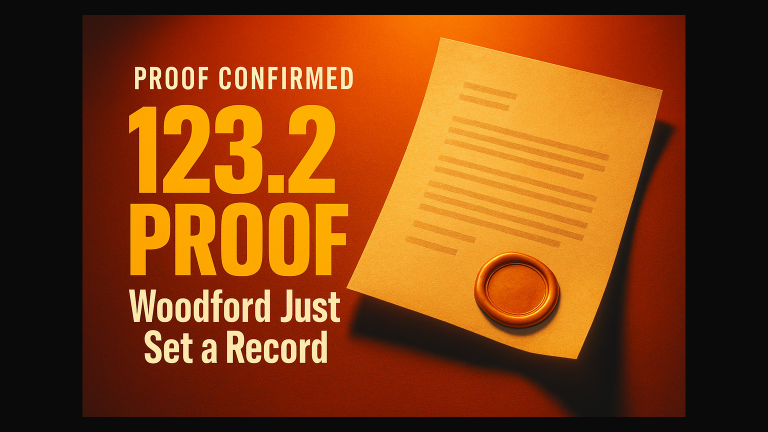
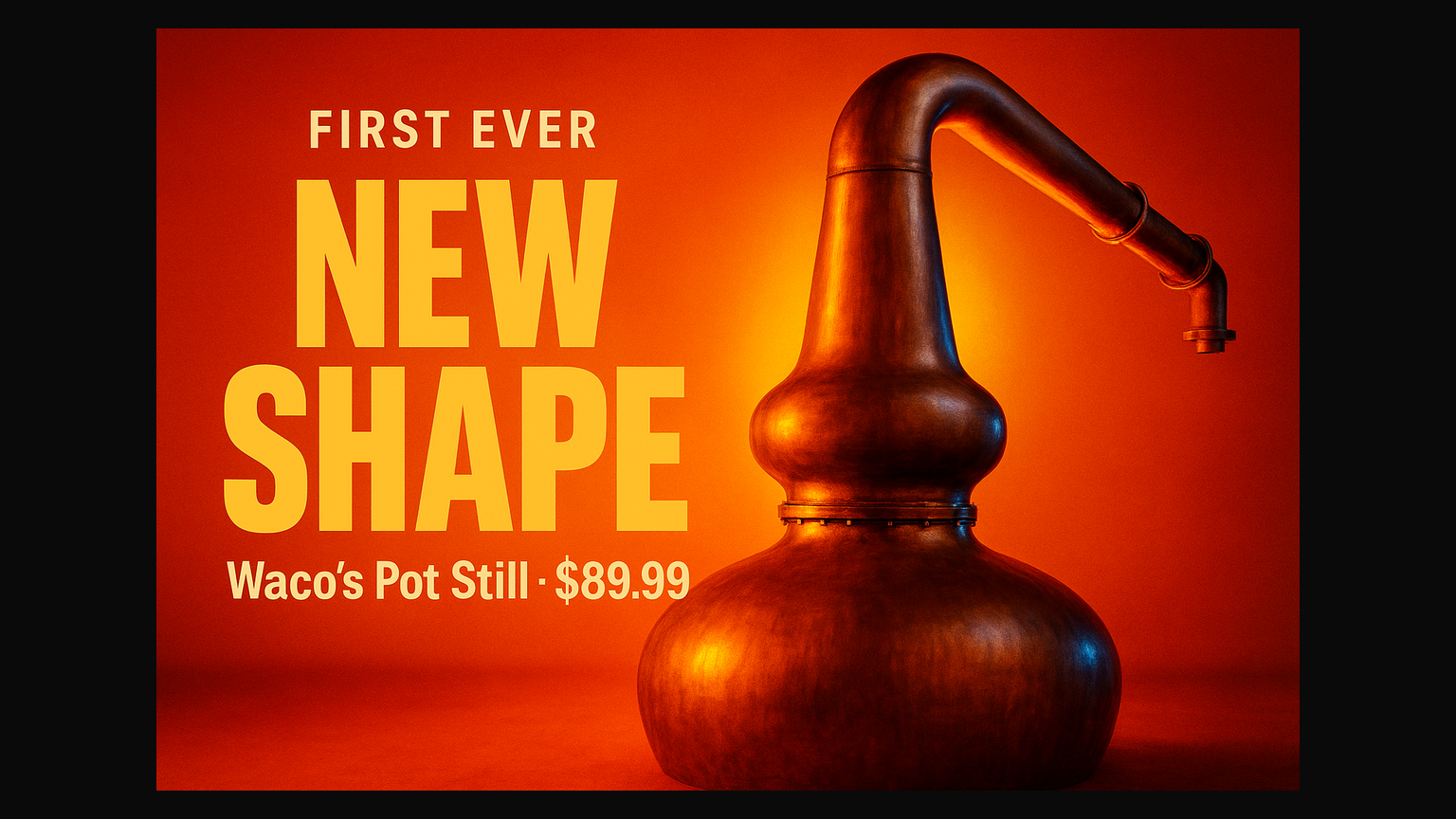
Balcones Distilling out of Waco, Texas announced Wednesday their Texas Pot Still Bourbon — a straight bourbon distilled entirely on copper pot stills from a 100% Texas-grown corn mashbill. 113 proof, non-chill-filtered, $89.99, Q3 2026 target release.
Here’s why this is unusual. American bourbon is almost universally made on continuous column stills — tall, efficient towers that run spirit through constantly. A pot still works differently. You distill in batches, like a kettle, not a pipeline. The pot captures more of the grain’s natural flavor compounds — oils, texture-carrying molecules, aromatics that add body and complexity — because it doesn’t strip them out the way a high-efficiency column does. It’s how traditional Irish whiskey gets its richness. It’s how Cognac gets its depth. No major American craft distillery has commercially established this in bourbon at Balcones’ distribution scale until now.
Master Distiller Jared Himstedt called the timing “ready when it’s ready” — language Balcones typically means. The Q3 window is July through September.
Garrison Brothers announced their 2026 Cowboy Bourbon the same morning — 134.9 proof, $249.99, 3,500 bottles across 15 markets. Two Texas producers, two completely different arguments, one Wednesday. Garrison Brothers makes the case through extreme Hill Country maturation. Balcones makes the case through production method and grain character. Neither is wrong, and the flavor profiles will be genuinely different.
Balcones distributes through the same specialty network that carries their True Blue corn whisky line. No lottery. If your shop stocks True Blue today, the Pot Still Bourbon arrives through the same door this summer.
Those proof numbers — 113 and 134.9 — are today’s First Sip. Before you react to a number on a label, it helps to know exactly what it’s telling you.
Today’s First Sip — proof and ABV. Both Balcones and Garrison Brothers led with proof as a primary spec today, and most drinkers use the term without fully understanding what it measures.
So here’s what it is.
Proof is twice the alcohol by volume. 80 proof is 40% ABV. 100 proof is 50%. 113 proof is 56.5%. The math never changes. The reason bourbon uses “proof” at all is historical — in colonial America, if you poured whiskey on gunpowder and lit it, the whiskey was “proven” to be above roughly 50% ABV if the flame held. The doubled number is a holdover from that test.
Higher proof doesn’t automatically mean harsher or harder to drink. Some 120-proof bourbons are more approachable than some 90-proof ones. But higher proof generally means less water was added between barrel and bottle — more of the original barrel character is still intact when it reaches you.
The number that matters beyond the label is the barrel entry proof — the proof at which the raw distillate went into the barrel to begin with. Federal rules cap that at 125. Distillers who enter at lower proofs pull richer, more integrated flavor from the wood over time. Think of it like steeping tea — the concentration of the original liquid changes what you pull from the leaves.
A 113-proof bottle and a 134.9-proof bottle can both come from high-entry barrels. The bottling proof tells you what the distillery chose to preserve and what they chose to dilute away.
What this changes — the number on the bottle is only half the story. The barrel entry proof tells the rest. And today’s Chase has a bottle where that distinction is exactly why it’s the pick.
Today’s Chase — three bottles across three tiers. One claim window closing in hours, one Pacific Northwest pickup racing retail clearance, and a 22-year age statement with a deadline today. Let’s start with the one that matters most.
Blade and Bow 22-Year 2026. Premium tier, $299.99.
In the glass: Stitzel-Weller wheated bourbon character — honey, dried apricot, mature caramel, and a soft entry. The 18% pre-1992 Stitzel-Weller component adds bready depth and a long oxidative finish. Twenty-two years in barrel delivers concentrated vanilla and barrel polish that younger Diageo wheated expressions don’t reach yet.
Here’s why it’s the spotlight. The confirmed allocation claim deadline is today — April 30. Most retailer claim systems close Thursday morning, not end of business. If your allocation was confirmed, call today. Unclaimed bottles revert to account discretion and are not guaranteed to surface at the May 18 shelf price. Secondary is already staging $420 to $460 on confirmed pre-retail units. The at-MSRP window closes in hours.
This is worth the chase.
Also on today’s Chase — the Virginia ABC spring lottery claim window, still active through approximately May 30. If you won and haven’t confirmed your pickup store and timing, check abc.virginia.gov now. Individual store deadlines vary and unclaimed bottles redistribute rather than hold. And Westland Garryana Edition 7 at $179.99 — Portland and Boise accounts were running fewer than 10 bottles each as of Tuesday and may be gone by Thursday. Secondary is already staging $280 to $320 before retail clears. Full detail in today’s Cut Daily. If you want more, head to our Patreon at chasingtheunicornpodcast.
Which brings us to today’s Bar Talk — Blanton’s is sitting on a Total Wine shelf at $64.99, and the question the whole community is asking is whether this is normal now.
Today’s Bar Talk — Blanton’s at sticker price, on the shelf. Community’s split on whether this is a real correction or a temporary blip. Here’s what’s actually going on.
Someone on r/bourbon posted a photo this week — Blanton’s at Total Wine, $64.99, no ticket, no hunt. Over two thousand upvotes. The top question in the thread wasn’t where the store was. It was whether this is normal now.
The DISCUS Q1 2026 data answers that. DISCUS is the industry trade group that tracks how many cases of American whiskey actually sell at retail each quarter. Q1 2026 showed a 4.2% decline in volume — the second consecutive negative quarter after Q4 2025’s 3.1% drop. The value tier compressed 7.9%, the steepest single-tier decline since they started tracking by tier in 2019.
That Blanton’s isn’t on the shelf because the distillery made more. It’s there because the pace at which people were buying it has slowed below the pace at which it arrives. When demand drops below supply, allocation pressure releases. Bottles that haven’t been on the shelf in three years start appearing at sticker.
But here’s the tension. The same week this data published, MGP reported an 18.3% decline in bulk whiskey revenue, and Suntory extended their Clermont distillery idle through Q3 2026. Two major producers cutting production simultaneously. Those cuts don’t hurt you in 2026. They affect what’s available in 2029 to 2031.
Here’s what it means for the rest of us — the correction is real, Blanton’s on the shelf proves it. Buy what you want now. The 2026 production cuts mean this window won’t last forever.
One more for today — today’s full American Whiskey Industry Brief has the Four Roses TTB label filing for a 2026 OESV Single Barrel Limited at 125.4 proof with a 14-year minimum age statement. That’s the highest-proof, longest-aged Four Roses collector release in this year’s filing window, with September to October specialty retail arrival projected. It’s waiting on Patreon.
That’s The Cut. The full American Whiskey Industry Brief is waiting at patreon.com/ChasingTheUnicornPodcast. I’m John Schuster. Thanks for joining me. Your unicorn is out there.
The Cut Daily
Listen to today’s episode and find us on Spotify and everywhere you listen at chasingtheunicornpodcast.com/podcast.

Informational and entertainment purposes only. Nothing here is investment advice. Verify before buying, trading, or bidding. We are not liable for errors or financial losses.
Bourbon has a new shape. A Waco distillery just announced the first pot still bourbon from a major American craft producer — 113 proof, non-chill-filtered, $89.99 this summer, no lottery attached.
Texas made two significant bourbon announcements Wednesday, and the more interesting one for most drinkers costs $89.99 — Balcones Distilling in Waco just revealed the first commercially positioned pot still bourbon from a major American craft producer, arriving this summer through standard specialty distribution with no lottery required. That is today’s lead. This edition also covers what this week’s industry sales data means for the bottle of Blanton’s that just appeared on your local Total Wine shelf — and whether this is the right moment to act — plus the Secondary Spotlight on why a well-regarded Westland bottle is selling for 22% less than it did six months ago and what that tells you about buying allocated whiskey in a correction year.
Balcones Distilling out of Waco, Texas announced Wednesday their Texas Pot Still Bourbon — a straight bourbon distilled entirely on copper pot stills using a 100% Texas-grown corn mashbill. 113 proof, non-chill-filtered, $89.99, Q3 2026 target release.
Here’s why this is unusual. American bourbon is almost universally made on continuous column stills — tall, efficient towers that run spirit through constantly. A pot still is a different machine. You distill in batches, like a kettle, not a pipeline. The pot captures more of the grain’s natural flavor compounds — oils, texture-carrying molecules, aromatic congeners that add body and aromatic complexity — because it doesn’t strip them out the way a high-efficiency column does. It’s how traditional Irish whiskey gets its characteristic richness. It’s how Cognac gets its depth. No major American craft distillery has commercially established this in bourbon at Balcones’ distribution scale.
Master Distiller Jared Himstedt called the timing “ready when it’s ready” — non-committal language Balcones typically means. The Q3 window is July through September.
Garrison Brothers announced their 2026 Cowboy Bourbon the same morning — 134.9 proof, $249.99, 3,500 bottles across 15 markets, May 10 Texas priority window. Two Texas producers, two completely different arguments, one Wednesday. Garrison Brothers makes the case through extreme Hill Country maturation. Balcones makes the case through production method and grain character. Neither is wrong, and the flavor profiles will be genuinely different.
Balcones distributes through the same specialty network that carries their True Blue corn whisky line. No allocation race. No lottery. If your shop stocks True Blue, the Pot Still Bourbon arrives through the same door this summer.
Today’s Big Move comes front-loaded with a proof number: 113 proof for the Balcones Pot Still Bourbon. Garrison Brothers’ Cowboy Bourbon, also announced Wednesday, lands at 134.9. Both numbers matter. Neither is measuring “strength” the way most people mean it.
Proof is twice the alcohol by volume. 80 proof is 40% ABV. 100 proof is 50%. 113 proof is 56.5%. The math never changes. The reason bourbon uses “proof” instead of just the percentage is historical — in colonial America, if you poured whiskey on gunpowder and lit it, the whiskey was “proven” to be above about 50% ABV if the flame held. The doubled number is a linguistic holdover from that test.
Higher proof doesn’t automatically mean harsher or harder to drink. Some 120-proof bourbons are more approachable than some 90-proof ones. But higher proof generally means less water was added between the barrel and the bottle — more of the original barrel character is intact when it reaches you.
The number that matters beyond the label is the barrel entry proof — the proof at which the raw distillate went into the barrel in the first place. Federal rules cap this at 125. Distillers who enter at lower proofs pull richer, more integrated flavor from the wood because more water-soluble flavor compounds get extracted over time. A 113-proof bottle and a 134.9-proof bottle can both come from high-entry barrels, but the bottling proof tells you what the distillery chose to preserve and what they chose to dilute away.
What this changes: The number on the bottle is only half the story. The number the distillery chose when they filled the barrel tells the rest — and it’s why two bourbons at the same proof can taste entirely different.
Floor erosion is the gap between a bottle’s all-time high at auction and what it is actually selling for today. Westland’s Garryana Edition 6 — the 2025 annual release from Seattle — peaked at $340 in October 2025. It sold at Unicorn Auctions on April 22 for $265, which is 22% below that peak. The $75 decline is not a sign the bottle lost its value — it is a predictable pattern. Westland’s Garryana Edition 7 launched this week, pulling collector attention and spending toward the new vintage. When a new annual release hits retail, secondary pricing for the previous vintage typically compresses while buyers redirect capital. The comparison that makes this useful: Garryana 7 is currently staging at $280 to $320 on secondary before retail even clears. Garryana 6 is available right now at $265 — same distillery, same Garry oak maturation program, same production philosophy, 22% cheaper.
The Hunt: 5 active drops · Bar Talk: 2 debates · The Secondary: 3 graded bottles
◆ Full AWIB (Paid Patreon Subscriber): https://www.patreon.com/c/ChasingTheUnicornPodcast
◆ Listen on Spotify: https://open.spotify.com/show/56Lt67gvTPjifCyeqFW3IT
◆ YouTube: https://www.youtube.com/@chasingtheunicornpodcast
Want the full picture? The complete American Whiskey Industry Brief — every section, every source, every story — is published daily for subscribers on Patreon. Join us at patreon.com/ChasingTheUnicornPodcast.