The Cut — April 30, 2026 — Congress Might Declare Rye America’s Spirit | The Cut
In this episode
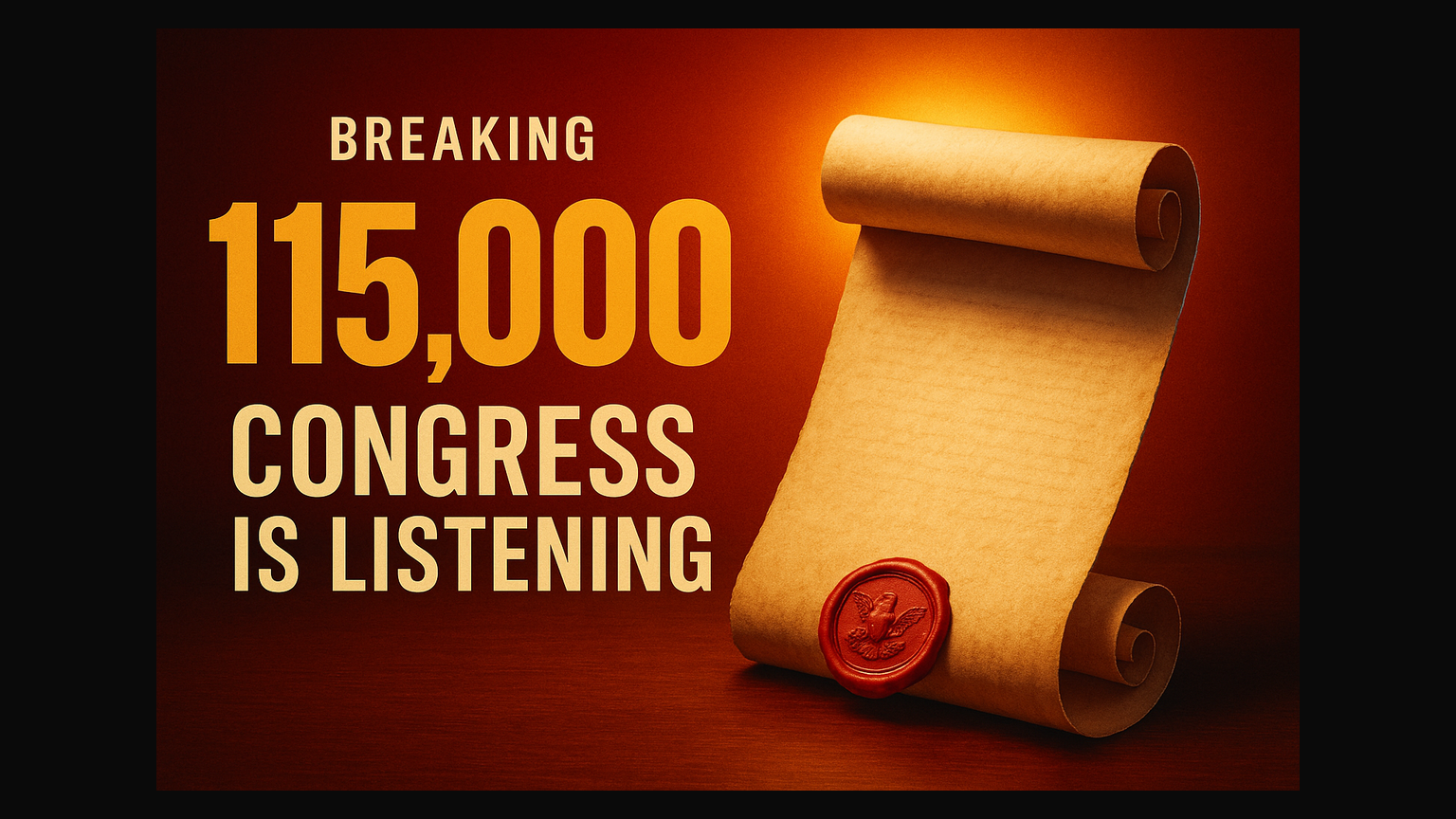
The biggest story in American whiskey this week started with a petition and ended with Congress drafting resolution language. WhistlePig launched “Rye, White and Blue” on April 20 asking Congress to formally recognize American rye whiskey as the nation’s original spirit. In nine days, the campaign crossed 115,000 signatures and secured both a Senate sponsor…
Mentioned in this episode: Eagle Rare, Heaven Hill, Elijah Craig, Maker’s Mark, Old Forester, Angel’s Envy
Read the full transcript
Target runtime: 7:48 Word count: 1,214 Estimated runtime: 8:05 Source: The Cut Daily 2026-04-30
—
This is The Cut. American whiskey, daily.
Congress might declare rye America’s spirit. WhistlePig’s petition hit 115,000 signatures in nine days. A Senator is already drafting the resolution, and a House sponsor just confirmed. The whiskey that dominated American drinking before Prohibition is close to a Congressional designation.
I’m John from Chasing the Unicorn Podcast. Here’s what moved today. April 30, 2026.
Today’s Big Move — WhistlePig’s petition to recognize rye whiskey as America’s original spirit just got real Congressional traction. Here’s what happened.
A Vermont distillery called WhistlePig launched a campaign on April 20 — “Rye, White and Blue” — asking Congress to formally recognize American rye as the nation’s original spirit. They set a Memorial Day goal of 100,000 signatures. They hit it in seven days.
As of April 29, the count is at 115,000 and still climbing. Senator John Fetterman of Pennsylvania confirmed Senate sponsorship on April 25. Representative Dean confirmed House companion sponsorship on April 28. Real Congressional offices are now drafting real resolution language.
Here’s what that resolution actually is: symbolic. No legal force. Congress designates national birds and flowers this way — nothing changes on the distillery floor, nothing changes on your shelf. WhistlePig can’t put “Officially Recognized by Congress” on the bottle.
What it does accomplish is a formal Congressional acknowledgment that rye was the dominant American whiskey for two centuries — from colonial farmhouses through Prohibition — before a long post-Prohibition decline left bourbon with most of the shelf space and the cultural story. The July 4 target is intentional, tied to the 250th anniversary of American independence. Pennsylvania, Maryland, and Virginia — the states that signed — were all rye country when they did it.
Is it marketing? Yes. WhistlePig’s allocation requests are up sharply since the campaign launched. Is it a genuine category argument? Also yes. Those two things can coexist.
Nothing changes on your shelf this week. But if you’ve been curious about rye, the category just had its most-talked-about moment in years. Which brings us to today’s First Sip — the mash bill.
Today’s First Sip — the mash bill. It shows up on labels for rye, bourbon, and everything in between — and it tells you more about what’s in the glass than almost anything else on the label.
So here’s what it is.
The mash bill is the grain recipe that goes into the still before distillation. Every bourbon must be at least 51% corn. The remaining 49% is where distilleries make their call — and that’s where flavor direction is set before a barrel is ever filled.
Corn brings sweetness. Rye brings spice — black pepper, cinnamon, a sharper finish. Wheat brings softness — rounder, mellower. Malted barley, usually a small percentage, helps fermentation along and adds a biscuit note.
Rye whiskey flips the math: at least 51% rye instead of corn. The grain bourbon uses for edge becomes the star. The result is a fundamentally different profile — spice-forward, drier, herbal and peppery in a way a corn-dominant bourbon doesn’t reach.
Two bottles show the spectrum clearly. Maker’s Mark is wheated — wheat replaces rye, soft and round. Bulleit is high-rye — more rye content, punchier. Neither is rye whiskey. But the contrast shows you exactly where true rye sits and why WhistlePig’s argument that rye deserves its own designation is a grain fact, not just a slogan.
What this changes — read the mash bill like a recipe. Love Maker’s? You lean wheated. Love Bulleit? You lean high-rye. A true rye is the next step along that spectrum. And today’s Chase has a bottle that shows you how finishing builds on top of that grain foundation. Let’s get into it.
Today’s Chase — three bottles across three tiers. A finishing experiment, a last-call window, and a live auction floor. Let’s start with the one that matters most.
Hard Truth Barrel Finish Reserve French Oak Cask. Under $80 tier. $79.99, 100 proof, Indiana straight bourbon aged five years, finished six months in French Limousin oak. About 4,200 bottles nationally.
In the glass: vanilla custard, dried apricot, white pepper, and a tighter tannin structure over a caramel-forward Indiana bourbon base. French Limousin oak is the same cask type used in Cognac and Armagnac production. It adds Old World structure that American-oak-only programs don’t produce — and at this price, you can taste the difference.
The base stock is traceable Indiana straight bourbon. The finish period is long enough to register in the profile. This isn’t a cosmetic finish — it’s a real structural contribution. Hard Truth has the infrastructure to support the program, and the result justifies the $79.99.
This is worth the chase.
The window runs April 27 through approximately May 15. Find it at Binny’s in Chicago, Kahn’s in Indianapolis, Jungle Jim’s or Total Wine in Columbus, or through Seelbach’s and ReserveBar if you’re outside that corridor.
Also on today’s Chase — Angel’s Envy Cask Strength 2026 in the mid-tier at $89.99 and 118.2 proof, port-finished and concentrated. May 1 is the final clearance window — if your retailer has allocation left, move now. And Eagle Rare 30 is live at Bonhams online through May 8, current bid around $13,440. Final price action concentrates in the last 72 hours. Full detail in today’s Cut Daily. If you want more, head to The Brief at chasingtheunicornpodcast.
Alright — today’s Bar Talk. Does higher proof actually mean better bourbon?
Today’s Bar Talk — the new Elijah Craig Barrel Proof filing came in at 130.4 proof and restarted a very old argument. Community’s split on whether that number means a better bottle. Here’s what’s actually going on.
Heaven Hill just filed the label for Elijah Craig Barrel Proof C926 — 130.4 proof, highest of the three 2026 batches, coming to retail in June or July at $64.99. The community noticed within hours of the filing, and the proof debate kicked back up immediately.
Here’s what proof actually represents. Bourbon enters the barrel at up to 125 proof and ages until it’s pulled. Water evaporates faster than alcohol in hot rickhouse conditions — that’s the angel’s share. A barrel on the top floor of a Kentucky rickhouse for nine years loses more water than a barrel on the middle floor of the same building over the same time. Neither barrel is inherently better. They experienced different heat and humidity cycles. The final proof is physics — where the barrel sat, how the seasons moved through the wood. It’s information. It is not a score.
ECBP runs non-chill-filtered, no water dilution, 9-year Kentucky straight bourbon. Historical proof across the program’s 14-year run goes 112 to 139.4. The most collector-coveted batch — B117 from 2017 at 134.4 proof — isn’t prized for the number. It’s prized because that proof and those particular barrels produced something people still chase. Proof was a data point. Not the verdict.
Here’s what it means for the rest of us — buy it at $64.99, taste it, and let the review consensus catch up. At that price, the floor risk is nearly zero.
One more for today — today’s full American Whiskey Industry Brief has the complete breakdown on Old Forester Birthday Bourbon 2026, including what the one-proof increase from 2025 signals about this year’s barrel selection. It’s waiting at chasingtheunicornpodcast.com.
That’s The Cut. The full American Whiskey Industry Brief is waiting at chasingtheunicornpodcast.com/the-brief/. I’m John F. Schuster II. Thanks for joining me. Your unicorn is out there.
The Cut Daily
Listen to today’s episode and find us on Spotify and everywhere you listen at chasingtheunicornpodcast.com/podcast.

Informational and entertainment purposes only. Nothing here is investment advice. Verify before buying, trading, or bidding. We are not liable for errors or financial losses.
Congress might declare rye America’s spirit. WhistlePig’s petition hit 115,000 signatures in nine days. A Senator is already drafting the resolution, and a House sponsor just confirmed. The whiskey that dominated American drinking before Prohibition is close to a Congressional designation.
The biggest move in American whiskey right now isn’t a new release — it’s a political one. WhistlePig’s petition to recognize rye as the nation’s original spirit cleared 115,000 signatures in nine days, picked up a Senate sponsor, and just added a House companion, converting a social media campaign into a live Congressional drafting process. That’s the lead. Also in today’s edition: a Nashville bourbon brand just earned a 38-state distribution footprint, a new batch of one of bourbon’s most collected barrel-proof expressions just filed paperwork at a proof the community is already arguing about, and we’re digging into whether proof is actually a meaningful quality signal — or just a number people use to argue at bars.
Here’s what happened in rye whiskey this week — and it’s a stranger story than most bourbon news.
A Vermont distillery called WhistlePig launched a petition on April 20 asking Congress to formally recognize American rye whiskey as the nation’s original spirit. The campaign — “Rye, White and Blue” — set a goal of 100,000 signatures by Memorial Day. They hit it in seven days.
As of April 29, the petition is at 115,000 signatures and still growing. Senator John Fetterman of Pennsylvania confirmed Senate sponsorship on April 25. Representative Dean — also from Pennsylvania — confirmed House companion sponsorship on April 28. That means real Congressional offices are now drafting real resolution language.
Here’s what a concurrent resolution actually is: symbolic. It carries no legal force. Congress designates national birds and flowers this way — nothing changes on the distillery floor, nothing changes on your shelf. WhistlePig can’t put “Officially Recognized by Congress” on the bottle.
What it does accomplish is a formal Congressional acknowledgment that rye was the dominant American whiskey for two centuries — from colonial farmhouses through the Prohibition era — before a long post-Prohibition decline left bourbon with most of the shelf space and the cultural story. The July 4 target is intentional: it’s tied to the 250th anniversary of the Declaration of Independence, which was signed in Pennsylvania, Maryland, and Virginia — all historically rye country.
Is it marketing? Yes. WhistlePig sells PiggyBank Rye at $89.99 and Declaration Wheat at $54.99, and their allocation requests are up sharply since the campaign launched. Is it also a genuine category argument? Also yes. Those two things are allowed to coexist.
What it means for your shelf: Nothing changes this week. The resolution is symbolic. But if you’ve been curious about rye whiskey, the category just had its most-talked-about moment in years — which is a decent excuse to pick one up.
The WhistlePig petition’s argument rests on a simple fact: rye isn’t bourbon. They’re related, but distinct — and the difference starts in the grain bin before the still even turns on.
The mash bill is the recipe of grains that goes into the still before distillation. Every bourbon must be at least 51% corn. The other 49% is where distilleries differ — and where flavor direction is set before the barrel ever enters the picture.
Corn is the sweetness. Rye is the spice — black pepper, cinnamon, a sharper finish. Wheat is the softness — rounder, mellower, easier on the palate. Malted barley (usually a small percentage) helps fermentation along and adds a biscuit-like note.
Rye whiskey flips the math: at least 51% rye instead of corn. The grain that bourbon uses for edge and heat becomes the star. The result is a fundamentally different flavor profile — more spice-forward, drier, with an herbal and peppery character that bourbon’s corn base doesn’t produce.
Two bottles that tell the story cleanly: Maker’s Mark is a “wheated” bourbon — wheat replaces the rye, soft and round. Bulleit is a “high-rye” bourbon — more rye content, punchier. Neither is rye whiskey, but the spectrum shows you where rye sits and why WhistlePig’s argument that the category has a distinct identity worth naming isn’t a marketing claim. It’s a grain fact.
What this changes: Read the mash bill like a recipe. If you love Maker’s Mark, you lean wheated. If you love Bulleit, you lean high-rye. A true rye whiskey is the next step along that spectrum — and now you know why it tastes the way it does.
Floor erosion is the gap between a bottle’s all-time high realized price at auction and what it actually sold for most recently. A 1.7% erosion means this bottle — a 2003 Stitzel-Weller era Van Winkle 18 Year private barrel selection — hammered at $84,500 last Saturday at the Chicago Unicorn auction, just $1,500 below its 2024 peak. In auction terms, 1.7% is about as close to flat as a rare bottle gets across two consecutive years. The Stitzel-Weller distillery produced this bourbon before the Van Winkle family’s 2002 partnership with Buffalo Trace — that campus is closed, that stock is exhausted, and Julian Van Winkle III selected this specific cask himself. You cannot make another one. The market, apparently, has priced that in.
The Hunt: 5 active drops · Bar Talk: 2 debates · The Secondary: 3 graded bottles
◆ The Brief (free): https://chasingtheunicornpodcast.com/the-brief/
◆ Listen on Spotify: https://open.spotify.com/show/56Lt67gvTPjifCyeqFW3IT
◆ YouTube: https://www.youtube.com/@chasingtheunicornpodcast
Want the full picture? The complete American Whiskey Industry Brief — every section, every source, every story — is published free every morning at chasingtheunicornpodcast.com. Read it at chasingtheunicornpodcast.com/the-brief/.