The Cut — May 6, 2026 — Heaven Hill Cuts Evan Williams BiB — First Price Drop Since 2018 | The Cut
In this episode
The most time-sensitive story Wednesday is a Louisville distillery opening its doors for one day. Michter’s Fort Nelson Distillery opens for walk-up access Thursday, May 7 at 801 West Main Street — three simultaneous releases including US★1 Barrel Strength Sour Mash Batch 25S1 at a series-high 116.2 proof. That’s the only single consumer-access event before…
Mentioned in this episode: Heaven Hill, Elijah Craig, Larceny, Parker’s Heritage, Evan Williams, Four Roses, Michter’s, Old Grand-Dad, Sazerac
Read the full transcript
Target runtime: 7:48 Word count: 1,195 Estimated runtime: 7:58 Source: The Cut Daily 2026-05-06
—
This is The Cut. American whiskey, daily.
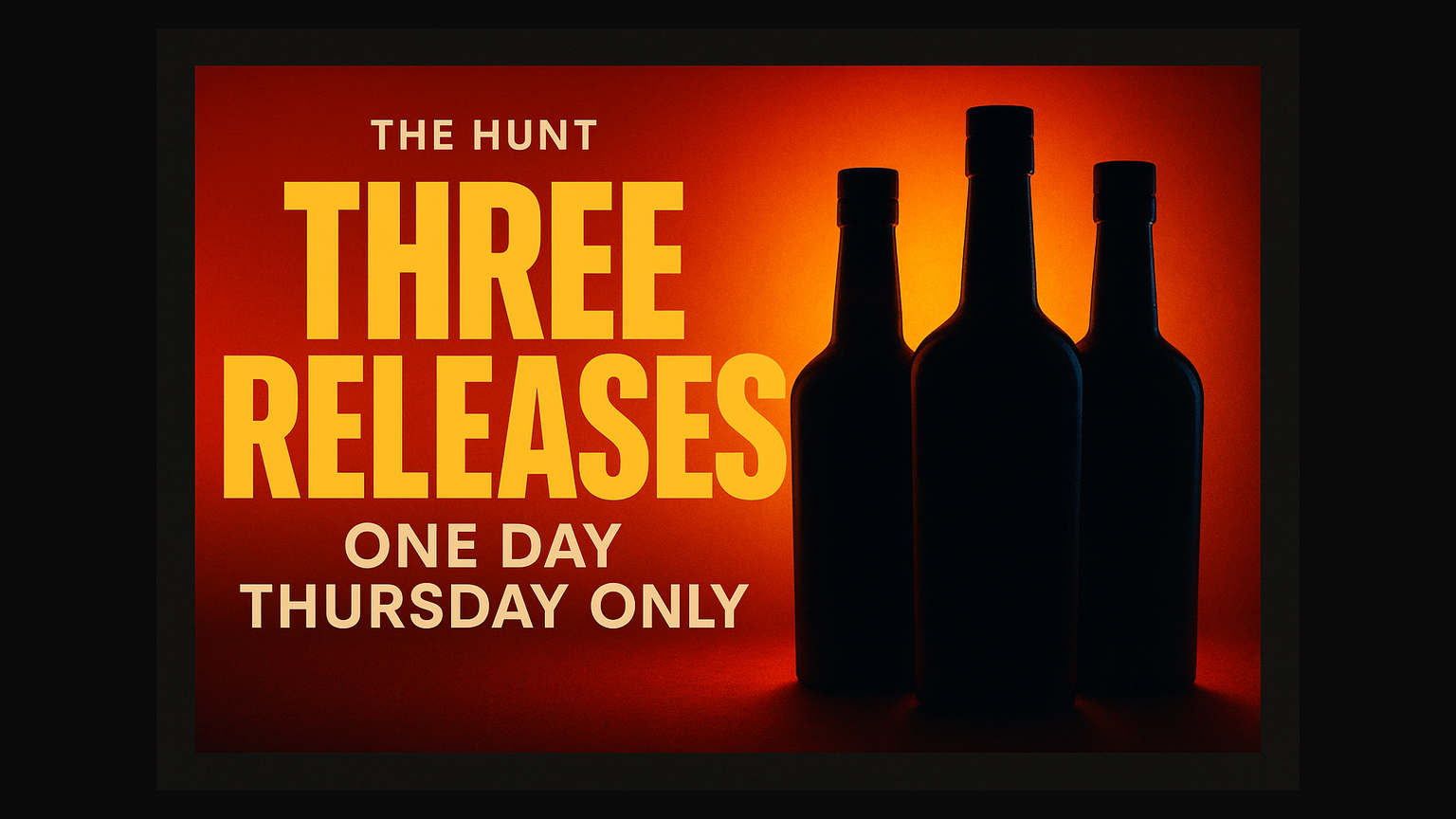
Three Michter’s releases. One day. Thursday only. Michter’s Fort Nelson Distillery opens for walk-up access tomorrow — Batch 25S1 at a series-high 116.2 proof alongside Bomberger’s Declaration and Shenk’s Homemade, before next week’s national window absorbs all available allocation.
I’m John from Chasing the Unicorn Podcast. Here’s what moved today. May 6, 2026.
Today’s Big Move — Heaven Hill just cut the price on Evan Williams Bottled-in-Bond for the first time in eight years. Here’s what happened.
Wednesday on The Cut is Market, Pricing, and Release Specs — and today the market gave you a direct data point. Heaven Hill distributed its Q3 2026 wholesale pricing architecture to its national distributor network this morning. Most of it is flat. Elijah Craig Small Batch and Larceny Original Batch both hold for a third consecutive year. But one line tells the whole story.
Evan Williams Bottled-in-Bond is getting a price cut. A 3.4% reduction in suggested wholesale pricing puts the target shelf price at roughly $16.99 to $17.99, down from the current $17.99 to $18.99. This is the first downward move on Evan Williams BiB since 2018. Eight years of flat pricing on the best-value bonded bourbon in the country — and now the correction cycle has worked its way to a bottle that genuinely didn’t need the adjustment.
Here’s the logic. The 100-proof bonded tier has gotten more competitive in a soft-demand environment. Old Grand-Dad BiB and George Dickel No. 8 are both competing at that shelf position. Heaven Hill isn’t signaling weakness. They’re repositioning Evan Williams BiB as the most aggressively priced bonded option on the national shelf. When a buyer is comparing a row of $18-to-$22 bottles, this price cut removes the last argument for choosing anything else at that tier.
At the same time, Elijah Craig Barrel Proof C926 — anticipated at 130.4 proof — goes to $79.99 suggested retail, up from $75.99 on C825. Higher proof gets a premium. A value tier with softened depletion gets a cut. Both moves on the same day at the same company. That’s what deliberate portfolio correction looks like.
The Q3 wholesale architecture takes effect July 1. Large chain accounts typically adjust shelf pricing three to four weeks prior as they work through Q3 purchase orders. Expect to see the lower Evan Williams BiB price at major chains in late June.
Today’s First Sip — why bourbon prices move the direction they do. The Heaven Hill announcement this morning is the correction cycle written out as two specific numbers on the same pricing sheet. Understanding the mechanics makes you a sharper buyer at any shelf.
So here’s what it is.
Bourbon prices don’t move randomly. Specific forces drive them. Glass costs spike with supply chain pressure. White oak barrel prices have been climbing for a decade — new barrels cost more every year, and that cost doesn’t show up at retail until years after the barrel is filled. Trade tariff cycles push export-oriented bourbon to compete harder for domestic shelf space. And when too much bourbon was produced during a demand peak — as happened between 2020 and 2023 — that oversupply works through the system slowly, showing up as softer prices in the tiers where depletion has slowed.
The analogy is airline pricing. Every seat on a flight costs roughly the same to put in the air. The price on your ticket reflects what the airline needs to cover its costs — plus what it believes the market will bear for that specific seat position. Bourbon works exactly the same way. The bottle’s cost is locked when the barrel is filled. The shelf price is set against the market that exists when that liquid finally hits retail.
Heaven Hill’s BiB cut is competitive repositioning in a value tier where demand has softened. EC Barrel Proof’s increase is proof-indexed demand that has held through the same correction. Two different bottle trajectories. One market moment.
What this changes — when you see a price move on a bottle you know, it’s not arbitrary. It’s the market talking. Alright — today’s Chase has the most time-sensitive opportunity in this window.
Today’s Chase — three bottles across three tiers. The spotlight is in the $80-to-$200 range, and the first access window opens tomorrow. Let’s start with the one that matters most.
Michter’s US★1 Barrel Strength Sour Mash Batch 25S1. $80-to-$200 tier. $119.99 MSRP.
Batch 25S1 comes in at 116.2 proof — the confirmed highest print in this series’ four-year run. Expect charred vanilla, toasted caramel, dark dried fruit, and pronounced barrel spice throughout. There’s a tangy sour-mash note mid-palate that opens measurably with three or four drops of water. At 116.2, that water is not optional. It changes the glass.
Here’s why this is the spotlight. The Fort Nelson Distillery walk-up tomorrow — Thursday, May 7 — is the only single consumer-access event before national specialty retail opens the week of May 11. After that, every acquisition decision compresses into the same 72-hour window simultaneously. The series has tracked a consistent proof trajectory: Batch 22S1 at 109, Batch 23S1 at 111.2, Batch 24S1 at 113.6. Batch 24S1 established a $185-to-$220 secondary floor within 30 days of national distribution. Batch 25S1 is the series high. The floor argument tracks the proof line upward.
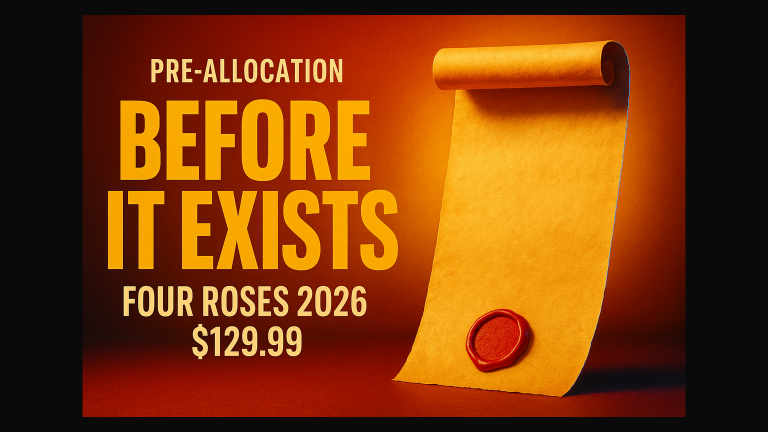
This is worth the chase. Fort Nelson walk-up tomorrow. National retail week of May 11 — contact your specialty retailer today on pre-allocation.
Also on today’s Chase — Four Roses Single Barrel Collection Second Rotation, OBSK and OESQ, $79.99 MSRP in the under-$80 tier. Open allocation is likely at its last meaningful day today — reach out to your retailer now if you haven’t already. And in the $200-and-up tier, no active Hunt entry this edition. Blade and Bow 22-Year is the incoming candidate at an anticipated $249.99 — assessment pending arrival week of May 18. Full detail in today’s Cut Daily. If you want more, head to our Patreon at chasingtheunicornpodcast.
Which brings us to today’s Bar Talk — and a bottle where the category designation is doing most of the arguing.
Today’s Bar Talk — Parker’s Heritage 2026 and whether “American Blended Whiskey” on a $99.99 label signals genuine quality or a premium-margin play on a flexible legal category. Community’s split on whether this program has earned a different default than the category’s bottom-shelf reputation. Here’s what’s actually going on.
Tuesday’s r/bourbon thread pulled 847 upvotes and 312 comments, and it split fast along category-skepticism lines. One side reads “American Blended Whiskey” on a $99.99 label and sees the mechanism clearly — the TTB definition allows blending straight whiskey with grain-neutral spirit, a high-proof flavorless distillate that adds volume without adding flavor character. That read has a basis. Most of the category earns its reputation by using that flexibility to the maximum.
The other side points at the evidence. The 2025 Parker’s Heritage American Blended Whiskey rated 91 points in Whisky Advocate and established a $145-to-$165 secondary floor within 30 days — 45-to-65% above MSRP. The 2026 edition carries a ten-year minimum age statement, the most explicit maturation documentation any Parker’s Heritage blended edition has carried. Heaven Hill hasn’t disclosed the blend ratio — TTB doesn’t require it on the consumer label — but the straight bourbon base is documented as fully mature. The program has run under Heaven Hill’s premium-tier identity since Parker Beam built it in 2007. That’s 17 years of specialty-tier execution behind a category flag that normally signals something much cheaper.
Here’s what it means for the rest of us — at $99.99 with a ten-year age floor and a 91-point benchmark from last year, the category skepticism needs more evidence than the label alone provides.
Two more things before we close. First — today’s AWIB on Patreon has the full Flight comparison: Evan Williams Bottled-in-Bond at the new $17.99 post-cut price versus Heaven Hill 7-Year Bottled-in-Bond at $40. Same distillery, same BiB designation, $22 spread, the value-tier-versus-upgrade-tier math on the wheek’s biggest pricing news. Verdict on which one wins for which kind of buyer is in the brief. Second — the AWIB has Sazerac’s supplemental FTC filing from this morning, submitted ahead of the May 9 window expiration, proposing a fifteen-year transitional supply framework to address the production-entanglement objection raised Monday. What resolves at that window carries direct shelf consequences depending on which acquirer prevails. Both are waiting on Patreon.
That’s The Cut. The full American Whiskey Industry Brief is waiting at patreon.com/ChasingTheUnicornPodcast. I’m John Schuster. Thanks for joining me. Your unicorn is out there.
The Cut Daily
Listen to today’s episode and find us on Spotify and everywhere you listen at chasingtheunicornpodcast.com/podcast.

Informational and entertainment purposes only. Nothing here is investment advice. Verify before buying, trading, or bidding. We are not liable for errors or financial losses.
Three Michter’s releases. One day. Thursday only. Michter’s Fort Nelson Distillery opens for walk-up access tomorrow — Batch 25S1 at a series-high 116.2 proof alongside Bomberger’s Declaration and Shenk’s Homemade, before next week’s national window absorbs all available allocation.
The most time-sensitive story this Wednesday is a Louisville distillery opening its doors for one day before a national launch cluster swallows the inventory. But that’s not the only thing moving in American whiskey right now. Heaven Hill distributed a wholesale pricing architecture Wednesday that cuts Evan Williams Bottled-in-Bond’s suggested retail for the first time since 2018 — the correction cycle’s most direct consumer benefit at the shelf level. In today’s edition: what that price cut means for the best-value bonded bourbon in the country, why the community is arguing about whether Parker’s Heritage 2026 is worth $99.99, and a floor-erosion number that puts the bourbon secondary market’s correction into the sharpest focus yet.
Heaven Hill distributed its Q3 2026 pricing architecture to its national distributor network Wednesday. Most of the news is stable — Elijah Craig Small Batch and Larceny Original Batch both hold flat for a third consecutive year, which means the two bottles you’re probably already buying aren’t changing at the checkout. But one line item tells you exactly where the correction cycle has now arrived: Evan Williams Bottled-in-Bond is getting a price cut.
The 3.4% suggested wholesale reduction translates to a target shelf price of about $16.99 to $17.99, down from the current $17.99 to $18.99. This is the first time Heaven Hill has moved Evan Williams BiB downward since 2018. That’s eight years of flat pricing on the best-value bonded bourbon in the country — and now the correction is working its way to a bottle that didn’t need the help.
Here’s what’s actually happening. The 100-proof bonded tier has gotten more competitive in a soft-demand environment. Old Grand-Dad Bottled-in-Bond and George Dickel No. 8 are both competing at the same shelf position. Heaven Hill isn’t conceding weakness with the cut — they’re repositioning Evan Williams BiB as the most aggressively priced bonded bourbon on the national shelf so that when a buyer is looking at a row of $18-to-$22 bottles, there’s no remaining argument for choosing anything else at that tier.
At the same time, Heaven Hill is raising Elijah Craig Barrel Proof C926 — which is expected to confirm at 130.4 proof — to a suggested retail of $79.99, up from $75.99 on C825. Higher proof gets a proportional premium. Lower-demand tier gets a competitive cut. Both moves make sense simultaneously, which is what a deliberate portfolio correction response looks like.
The Q3 wholesale architecture takes effect July 1, but major chain accounts typically adjust shelf pricing in the three-to-four weeks prior as they process incoming Q3 purchase orders. Expect to see the lower Evan Williams BiB price at large chains in late June.
Heaven Hill’s Wednesday pricing announcement is the correction cycle in numerical form — one bottle going down, one going up, at the same company on the same day. That bifurcation has a logic, and understanding it makes you a smarter buyer at any shelf.
Bourbon prices don’t move randomly. The same bottle at $45 in Kentucky can cost $85 in Utah because of state liquor control rules and the three-tier distribution system. A bottle that was $60 last year and $80 this year reflects decisions made years upstream in production or input costs.
Specific things that move bourbon prices at the shelf: glass shortages spike bottling costs. White oak barrel supply has been under pressure for a decade — new barrels cost more every year. Trade tariffs push export-oriented bourbon to compete harder for domestic shelf space. Distillery idles make existing inventory relatively more valuable. And when too much bourbon was made during a demand peak — as happened in 2020 to 2023 — that oversupply works through the system over years, showing up as softer prices in the tiers where demand hasn’t held.
Heaven Hill’s BiB cut is that last force: a competitive repositioning in a value tier where depletion velocity has softened. EC Barrel Proof’s increase is the opposite: proof-indexed demand that has held through the correction. Both are rational responses to the same market moment.
What this changes: The industry news in the AWIB isn’t background noise. Today’s wholesale pricing announcement is next quarter’s price tag on your shelf.
Floor erosion measures how far a bottle’s market price has dropped from its all-time high. Elijah Craig Barrel Proof C925 peaked at $295 at auction in March 2022 — the height of collector competition for barrel-proof allocated expressions. The May 4 realized price of $132 is within $62 of the bottle’s own $69.99 MSRP. That’s called approaching MSRP parity: a situation where the secondary premium above retail has compressed so far that the collector incentive for buying at auction effectively disappears. Weller Full Proof reached functional MSRP parity earlier this year. EC Barrel Proof C925 is one or two auction cycles from joining it. When that happens, the secondary market narrative for that batch ends — there’s no meaningful premium left to capture. C926’s anticipated arrival at 130.4 proof will either arrest this trajectory if the proof-escalation thesis generates renewed secondary interest, or accelerate it by pulling collector attention to the newer batch.
Rickhouse Report: 5 stories · Regional Report: 3 stories · Research Notes: complete
◆ Full AWIB (Paid Patreon Subscriber): https://www.patreon.com/c/ChasingTheUnicornPodcast
◆ Listen on Spotify: https://open.spotify.com/show/56Lt67gvTPjifCyeqFW3IT
◆ YouTube: https://www.youtube.com/@chasingtheunicornpodcast
Want the full picture? The complete American Whiskey Industry Brief — every section, every source, every story — is published daily for subscribers on Patreon. Join us at patreon.com/ChasingTheUnicornPodcast.