A $15 Gap Her Staff Couldn’t Guess — The Cut — S02E82

In this episode
Tonight, Louisville’s The Rickhouse Room runs the sixth annual edition of a blind wheated-bourbon showdown that’s quietly become one of the better real-world data sets in the category. Owner Sara Beth Hoagland pours Maker’s
Mentioned in this episode: Buffalo Trace, Eagle Rare, Weller, Wild Turkey, Larceny, Maker’s Mark
Read the full transcript
Feature: The Flight + Bar Talk Word count: 937
This is The Cut. American whiskey, daily.
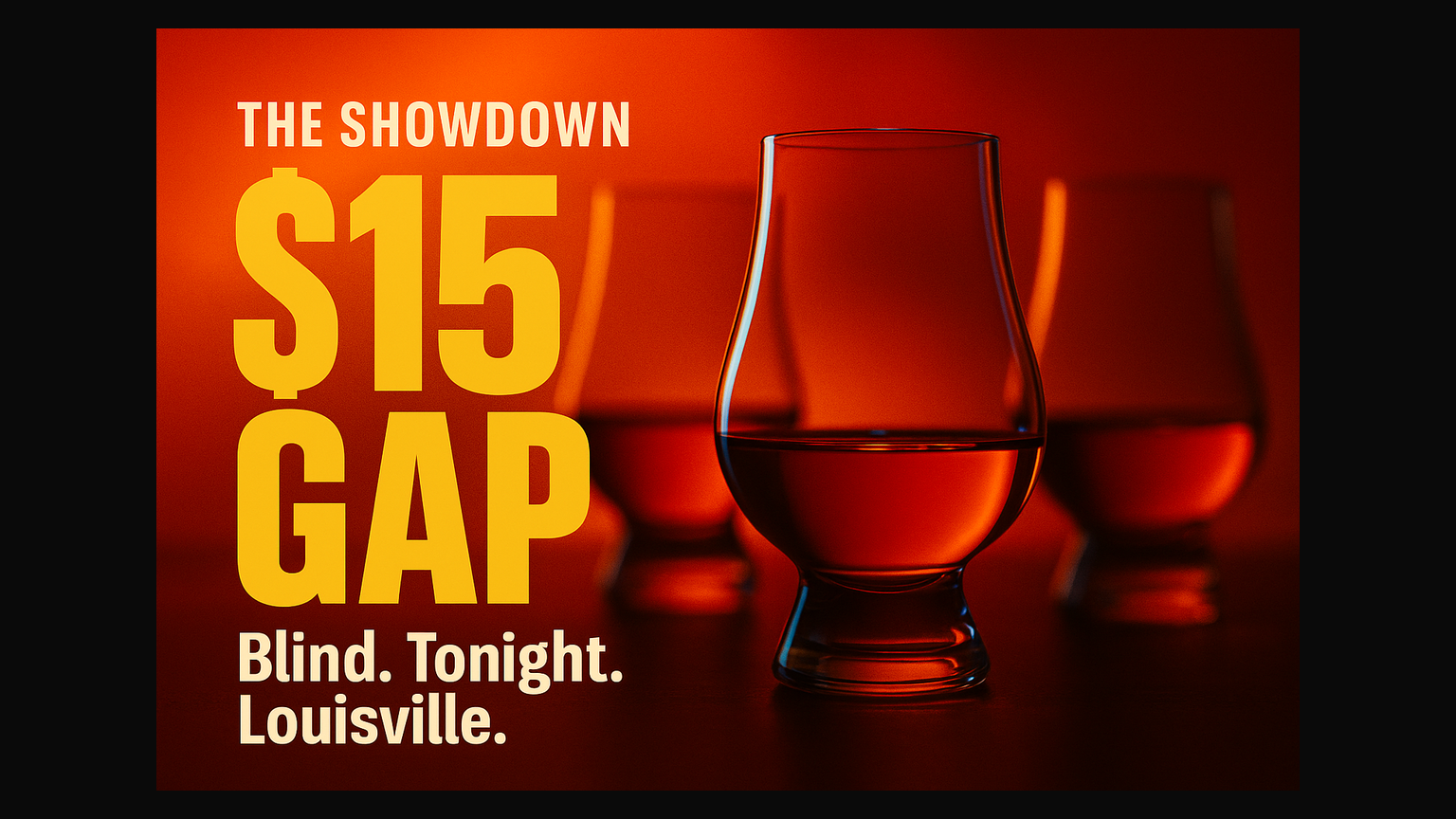
Her staff couldn’t out-guess a fifteen-dollar gap. Tonight, a Louisville bar runs its sixth annual blind wheated-bourbon showdown — Maker’s Mark, Larceny, and Weller Special Reserve, labels hidden — and a staff trial run last week nearly split the room.
I’m John from Chasing the Unicorn Podcast. Here’s what moved today. July 17, 2026.
Today’s Big Move is happening live, tonight, in Louisville. Sara Beth Hoagland has run blind tastings at her three bars for six years, but this is the lineup her own staff can’t stop arguing about. The Rickhouse Room pours Maker’s Mark, Larceny, and Weller Special Reserve blind tonight — labels stay hidden until the very last pour. She’s run this format quarterly since 2020, and she says a staff trial last week produced something new: a near-even split between Larceny and Weller. That’s a surprise, because Weller carries the bigger reputation and the bigger secondary premium. All three bottles share a wheated mash bill and sit within about fifteen dollars of each other at retail — that’s the whole design. Strip away the name, strip away the price anxiety, see what’s actually in the glass. This isn’t one night’s opinion, either. Hoagland’s compiled roughly twenty-four of these events since 2020 — something close to a thousand scored pours feeding one running database. That’s a real sample questioning whether secondary reputation and blind preference are actually the same thing. Nothing on your shelf changes tonight. But the test does — three bottles, about seventy-five dollars total, poured blind for a friend this weekend.
Now, today’s Flight. Because the same question — does the price tag match what’s in the glass — is playing out in a second comparison this week, and it comes with real numbers behind it.
Fred Minnick just ran Buffalo Trace against Eagle Rare 10 Year through a blind panel of five tasters, but he scored it differently than usual — nose, palate, and finish, graded separately instead of one combined number. Both bourbons come off the same Buffalo Trace line, same wheated-leaning mash bill. The only real variable is six extra years in the barrel and about ten to fifteen extra dollars at the register. The panel came back almost tied on nose. Almost tied on palate. The gap showed up in one place — finish. Eagle Rare pulled ahead there by a wide margin. Minnick’s read: the age statement is buying you a longer goodbye, not a different bourbon. That’s a useful way to shop. If you drink slow and you chase a long finish, pay the premium. If you’re pouring it into a cocktail or drinking it fast on a weeknight, save the ten dollars — you’re not getting a meaningfully different bourbon for it, just a shorter one. It’s the same question the Rickhouse Room is asking tonight with wheated bourbons under fifteen dollars apart: how much of what you’re paying for is actually in the glass, and how much is the name on the label. Run both tests yourself before your next bottle. It’s the cheapest real research in bourbon.
Now — today’s First Sip. Because both of tonight’s comparisons hinge on the same thing: the mash bill.
So here’s what it is. The mash bill is the grain recipe behind a bourbon — corn, rye or wheat, and a little malted barley — and it’s the single biggest factor in how a bourbon tastes, bigger than age, bigger than proof. Traditional bourbons, like Buffalo Trace and Eagle Rare, run around seventy percent corn and eighteen to twenty percent rye — balanced, all-purpose. High-rye bourbons push that rye up past twenty-five percent, trading balance for black pepper and a sharper finish — Wild Turkey lives here. Wheated bourbons drop rye entirely and swap in wheat — softer, more bread and caramel, less spice. Maker’s Mark, Larceny, and Weller all live in that family, which is exactly why tonight’s Louisville showdown works — same family, different execution. What this changes — once you know the mash bill, you can predict roughly what a bottle will taste like before you ever pour it. If you’re logging pours in the Perfect Pour app, tonight’s a good one to track — a wheated lineup shapes your Pour Print differently than a high-rye night would, and it’s available now at theperfectpourapp.com.
One to grab this week, while we’re on the subject. Larceny Barrel Proof, batch B926, just restocked nationally at retail — sixty-nine ninety-nine, no allocation, no lottery, just find a store that has it. It’s the direct subject of a running community comparison against last year’s A926, and the difference shows up fast — caramel apple and toasted almond, with a slightly hotter finish than the prior batch from a modest proof bump. It’s also the wheated bottle sitting quietly next to tonight’s blind lineup, one price tier down from Weller. Grab it this weekend, run it against Weller Special Reserve yourself, and see if your palate lands where Hoagland’s staff did — split right down the middle.
So here’s the one thing to take from all of this. Six years of blind data in one bar, and a five-taster panel comparing two bottles off the same still, are both saying the same quiet thing — price and reputation don’t move in lockstep with what’s actually in the glass. That gap is where the good, cheap bottle lives. Go find it yourself before you trust the label again.
That’s The Cut. The full American Whiskey Industry Brief is waiting at patreon.com/ChasingTheUnicornPodcast. I’m John Schuster. Thanks for joining me. Your unicorn is out there.
The Cut Daily
Listen to today’s episode and find us on Spotify and everywhere you listen at chasingtheunicornpodcast.com/podcast — next episode Monday morning.

Informational and entertainment purposes only. Nothing here is investment advice. Verify before buying, trading, or bidding. We are not liable for errors or financial losses.
Her staff couldn’t out-guess a $15 gap. Tonight, a Louisville bar runs its sixth annual blind wheated-bourbon showdown — Maker’s Mark, Larceny, and Weller Special Reserve, labels hidden — and a staff trial run last week nearly split the room.
The biggest story this week isn’t a new release — it’s a live experiment happening tonight in Louisville, where a bar owner’s six years of blind-tasting data are contradicting what secondary-market prices say about which wheated bourbon is actually better. It matters because it hands you a $75, three-bottle test you can run at your own kitchen table. Today’s edition also covers a judged cocktail final testing high-rye against wheated bourbon, a fresh side-by-side on Buffalo Trace versus Eagle Rare, and a Larceny Barrel Proof restock worth grabbing this weekend.
Sara Beth Hoagland has run blind tastings at her Louisville bars for six years. Tonight’s lineup is the one her own staff can’t stop arguing about. The Rickhouse Room opens its doors tonight for a blind flight of Maker’s Mark, Larceny, and Weller Special Reserve — labels hidden until the final pour. Hoagland’s run this format quarterly since 2020, but she says a staff trial run last week produced something new: a nearly even split between Larceny and Weller. That’s a surprise. Weller carries a stronger secondary-market reputation and higher collector interest than Larceny does. All three bottles share a wheated mash bill and sit within about $15 of each other at retail — that’s the whole point of the exercise. Strip away the brand name and the price anxiety, and see what’s actually in the glass. Tonight’s event caps at 40 seated guests, and the waitlist is already running. Guests score each pour blind on a simple 1-10 card before the labels come off. Hoagland compiles the results into a running database that now spans roughly 24 quarterly events — close to a thousand scored pours. That’s not one night’s opinion. That’s a real sample size questioning whether secondary-market reputation and blind-palate preference are actually the same thing.
The mash bill — the grain recipe behind a bourbon — is the single biggest factor in how it tastes, bigger than age or proof. Traditional bourbons run around 70% corn, 18-20% rye, and a little malted barley: balanced, all-purpose, the Buffalo Trace and Eagle Rare style. High-rye bourbons push rye up to 25-35%, trading balance for black pepper, cinnamon, and a sharper finish — think Bulleit or Wild Turkey. Wheated bourbons swap rye out entirely for wheat, dropping the spice for bread, almond, and soft caramel — Maker’s Mark, Larceny, and Weller all live here. Tonight’s Louisville showdown puts three wheated bottles against each other to see if price and reputation actually track flavor within one family. You can run a similar test at home for under $90: one traditional, one high-rye, one wheated, poured blind for a friend.
Floor erosion measures how far a bottle’s resale price has fallen from its all-time high. A 54.8% erosion means this batch is now trading for roughly 45 cents on every dollar of its 2021 peak. Elijah Craig Barrel Proof used to trade like a scarce, hunted bottle — now Heaven Hill’s steady twice-a-year release cadence keeps enough supply flowing that even a well-reviewed older batch has settled toward retail-adjacent pricing.
Rickhouse Report: 5 stories · Regional Report: 3 stories
◆ Full AWIB (Paid Patreon Subscriber): https://www.patreon.com/c/ChasingTheUnicornPodcast
◆ Listen on Spotify: https://open.spotify.com/show/56Lt67gvTPjifCyeqFW3IT
◆ YouTube: https://www.youtube.com/@chasingtheunicornpodcast
Want the full picture? The complete American Whiskey Industry Brief — every section, every source, every story — is published daily for subscribers on Patreon. Join us at patreon.com/ChasingTheUnicornPodcast.