The Cut — May 5, 2026 — Parker’s Heritage 2026: A $99.99 Blended Whiskey With a Ten-Year Age Statement | The Cut
In this episode
The biggest whiskey news Tuesday isn’t about a scarce allocated bottle with a three-digit secondary floor. It’s about a category most shoppers skip entirely. Heaven Hill announced Parker’s Heritage Collection 2026 as a ten-year American Blended Whiskey at 96 proof — $99.99 MSRP, 22,000 bottles nationally, specialty retail starting late June. The American Blended Whiskey…
Mentioned in this episode: Pappy Van Winkle, Heaven Hill, Old Fitzgerald, Parker’s Heritage, Henry McKenna, Four Roses, Bardstown, Michter’s, BTAC
Read the full transcript
Target runtime: 7:48 Word count: 1,194 Estimated runtime: 7:58 Source: The Cut Daily 2026-05-05
—
This is The Cut. American whiskey, daily.
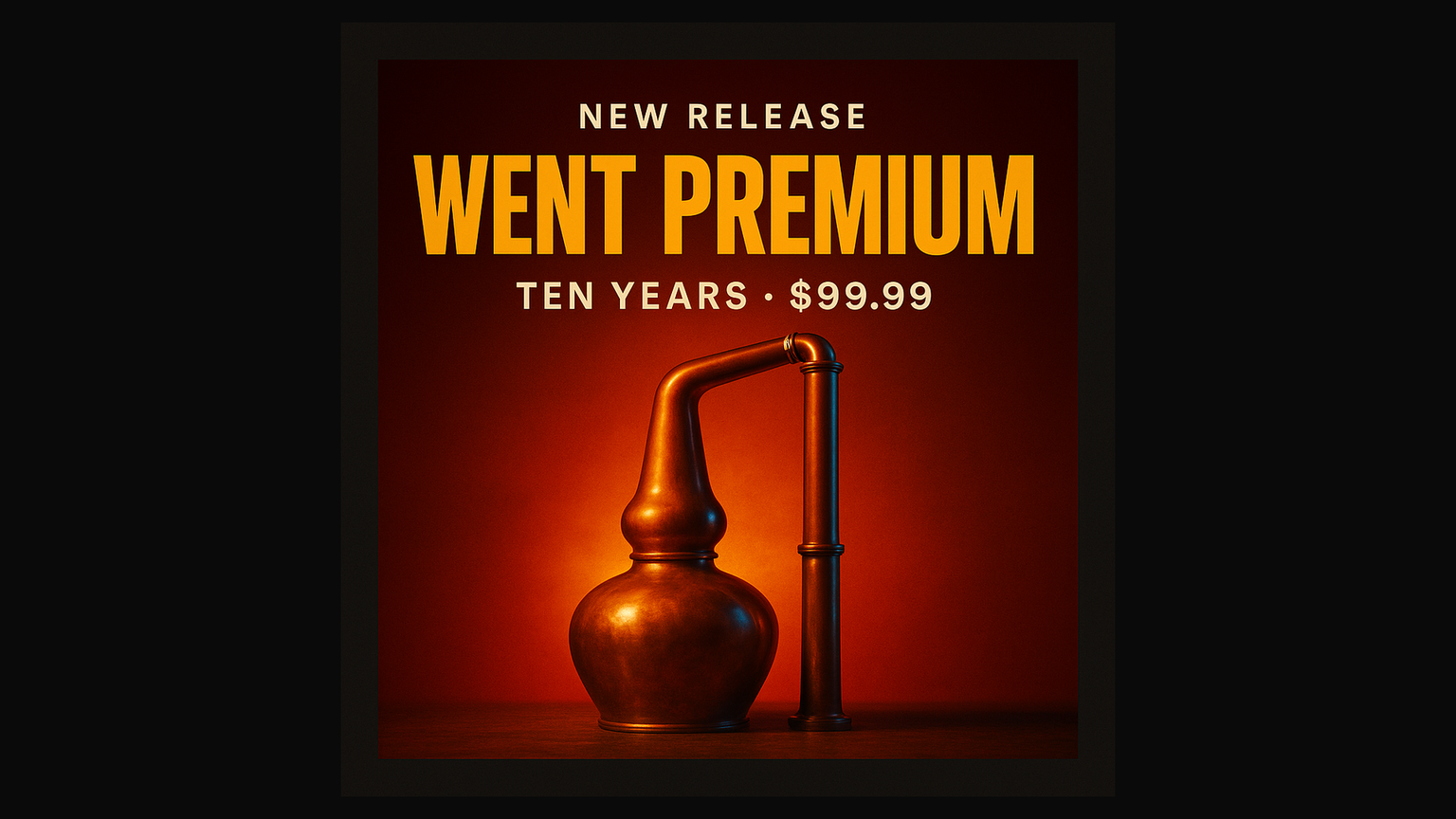
A blended whiskey just went premium. Heaven Hill confirmed Parker’s Heritage Collection 2026 as a ten-year American Blended Whiskey at $99.99 MSRP — 22,000 bottles headed to specialty retail in late June. The category label sounds entry-level. The specs say otherwise.
I’m John from Chasing the Unicorn Podcast. Here’s what moved today. May 5, 2026.
Today’s Big Move — Heaven Hill’s Parker’s Heritage Collection 2026 arrives as a ten-year American Blended Whiskey at $99.99 MSRP. Here’s what happened.
Tuesday is release day on The Cut, and this one earned it. Heaven Hill announced the 2026 Parker’s Heritage Collection Tuesday morning. Ten-year age statement, confirmed. 96 proof. 22,000 bottles nationally. Specialty retail starting late June.
Let’s deal with the designation first. American Blended Whiskey has a bad reputation because the category is broadly associated with cheap mass-market products. The legal definition allows a blend of straight bourbon and grain-neutral spirit — a high-proof grain distillate with no flavor character of its own. That sounds like a shortcut. For Heaven Hill, it’s been a deliberate production statement since the program’s inaugural 2013 blended edition. The straight bourbon backbone does the heavy lifting. The neutral component provides structural balance, not cheap volume.
The ten-year minimum age statement is the most significant documentation commitment this blended format has ever carried. The youngest barrel in the blend is ten years old. A significant portion of the inventory draws from 2013 and 2014 distillation — barrels that aged through the 2015 Bardstown warehouse fire and represent some of the most complex mature stock Heaven Hill currently holds.
The 22,000-bottle allocation is an 8% increase from last year, reflecting expanded mature barrel inventory from Bernheim Distillery’s 2015-to-2018 production scaling now hitting the ten-year maturation point. At $99.99, it sits at the accessible ceiling of the specialty tier — below the $150-and-above range where a bottle’s audience narrows to committed collectors.
One more: a dollar from every bottle goes to ALS research. That’s run every year since Parker Beam’s 2012 diagnosis. The man built Heaven Hill’s premium programs for 37 years. This is the ninth consecutive year that component runs.
Contact your specialty retailer for pre-allocation notification now. Late June arrival. And today’s First Sip ties directly to this release — because the most important word on the Parker’s Heritage label is “minimum.” What does an age statement actually guarantee?
Today’s First Sip — age statements versus no age statements. You’ll see the difference on the Parker’s Heritage label, and after Tuesday’s TTB guidance, what’s printed there carries more legal weight than it did yesterday.
So here’s what it is.
“Aged 10 years” on a label means one specific thing: the youngest whiskey in the bottle is ten years old. If there’s older stock blended in — some twelve-year, some fourteen-year — the label still reads ten. The rule is the age of the youngest drop, not the average.
“No Age Statement” — NAS — means the distillery isn’t committing to a minimum. They might be using six-year whiskey. They might be blending across a wide range. An NAS bourbon isn’t automatically worse. Plenty of excellent bottles don’t carry a number because the distillery wants blending flexibility.
Here’s the analogy. A fuel gauge reading a quarter tank is telling you the floor. It’s not averaging your last five fills. An age statement works the same way — it’s the minimum, not the mean.
The TTB’s Tuesday guidance adds one layer: if a label states a range — “aged 6 to 10 years” — the low number now carries mandatory compliance weight. Same as a single-point statement. The minimum is the promise, and the COLA deadline to comply is December 31, 2026.
The thing to watch for is when an age statement disappears from a label that used to have one. That usually means younger stock is stretching to meet demand.
What this changes — age statements are promises. Missing age statements are possibilities. Dropped age statements are usually warnings. Alright — today’s Chase.
Today’s Chase — three bottles across three tiers. The spotlight is in the $80-to-$200 range, and the first access window opens Thursday. Let’s start with the one that matters most.
Michter’s US★1 Barrel Strength Sour Mash Batch 25S1. $80-to-$200 tier. $119.99 MSRP.
Batch 25S1 pours at 116.2 proof — the highest print in the series’ four-year run. Charred vanilla, toasted caramel, dark dried fruit, and a pronounced barrel-spice finish. There’s a tangy sour mash note mid-palate that opens noticeably with three or four drops of water. At 116.2 proof, don’t skip the water.
Here’s why it’s the spotlight. The Fort Nelson Distillery walk-up on Thursday, May 8 is the first consumer-access window before national specialty retail opens the week of May 11. If you’re in Louisville, that’s your cleanest path. The trajectory on this series has been consistent: Batch 22S1 at 109 proof, Batch 23S1 at 111.2, Batch 24S1 at 113.6. Batch 24S1 established $185 to $220 at secondary within 30 days. Batch 25S1 is the highest print the series has produced. The floor tends to follow.
This is worth the chase. Fort Nelson walk-up Thursday. National retail week of May 11 — contact your specialty retailer now on pre-allocation.
Also on today’s Chase — Four Roses Single Barrel Collection Second Rotation, OBSK or OESQ, $79.99 MSRP in the under-$80 tier. Lottery claim windows close approximately May 7 — confirm your inbox today if you entered Ohio, Virginia, or Pennsylvania. And in the $200-and-up tier, no active Hunt entry this edition. Blade and Bow 22-Year is the incoming candidate at an anticipated $249.99 — full assessment on arrival week of May 18. Full detail in today’s Cut Daily. If you want more, head to our Patreon at chasingtheunicornpodcast.
Which brings us to today’s Bar Talk — the best $50 bourbon on the shelf doesn’t have a lottery.
Today’s Bar Talk — Bottled-in-Bond as the 2026 value tier. Community’s split on whether BiB is the best risk-adjusted bourbon buy on the market right now. Here’s what’s actually going on.
A thread Sunday on r/bourbon pulled 1,204 upvotes and 418 comments over the weekend. The question was straightforward: is Bottled-in-Bond the smartest buy available? The argument applies every time you’re standing at a shelf deciding whether an allocated bottle with a markup is worth the hunt.
“Bottled-in-Bond” is not a marketing phrase. It’s a federal statutory guarantee that has been law since 1897 — written to stop producers from adulterating bourbon with industrial alcohol and tobacco juice. The first consumer protection law in American history. Four non-negotiable requirements: one distillery, one distilling season, minimum four years aged in a federally bonded warehouse, bottled at exactly 100 proof. No exceptions, no flexibility.
The math: Old Fitzgerald BiB Spring 2026 arrives at $49.99 the week of May 11. The Fall 2025 edition of that same expression is trading at $108 at secondary right now — 2.2 times MSRP. Pappy Van Winkle 15-Year crossed below $1,000 at auction last weekend for the first time since 2019. That’s 6.6 times its $149.99 retail price. The speculative premium on the blue-chip tier is compressing, and that’s making BiB’s statutory guarantee newly visible to buyers who were previously fixated on BTAC acquisition ratios. Henry McKenna 10-Year Bottled-in-Bond at $39.99 adds a confirmed decade of bonded aging to the same framework — and it’s been sitting on the shelf without a lottery the entire time.
Here’s what it means for the rest of us — BiB was the best value in bourbon in 2019. It still is. The market just caught up.
Two more things before we close. First — today’s AWIB on Patreon has the full Flight comparison: Parker’s Heritage Collection 2026 versus Henry McKenna 10-Year Bottled-in-Bond. Same Heaven Hill distillery, same 10-year minimum age, $99.99 versus $50, blended whiskey versus straight bourbon. The verdict on which one wins for which kind of bourbon-curious drinker is in the brief. Second — the AWIB has the complete affected-expression list from the TTB’s Tuesday age-range labeling guidance, cross-referenced against the COLA database, with a December 31, 2026 compliance deadline for approximately 17 nationally distributed expressions. Both are waiting on Patreon.
That’s The Cut. The full American Whiskey Industry Brief is waiting at patreon.com/ChasingTheUnicornPodcast. I’m John Schuster. Thanks for joining me. Your unicorn is out there.
The Cut Daily
Listen to today’s episode and find us on Spotify and everywhere you listen at chasingtheunicornpodcast.com/podcast.

Informational and entertainment purposes only. Nothing here is investment advice. Verify before buying, trading, or bidding. We are not liable for errors or financial losses.
A blended whiskey just went premium. Heaven Hill confirmed Parker’s Heritage Collection 2026 as a ten-year American Blended Whiskey at $99.99 MSRP — 22,000 bottles headed to specialty retail in late June. The category label sounds entry-level. The specs say otherwise.
Heaven Hill announced the Parker’s Heritage Collection 2026 Tuesday morning, and the headline is unusual: an American Blended Whiskey with a confirmed ten-year age statement at $99.99 MSRP. A category most shoppers associate with cheap blends just landed a premium specialty-tier release. In today’s edition: why the blended designation doesn’t mean what you think it means, what the TTB’s new age-labeling guidance means for the bottles already on your shelf, and why the Bottled-in-Bond category is generating the bourbon community’s most engaged value debate of the year — plus a $49.99 bottle that’s been making that case the entire time.
Heaven Hill announced the 2026 Parker’s Heritage Collection Tuesday morning. The expression is an American Blended Whiskey at 96 proof with a confirmed ten-year age statement — 22,000 bottles nationally at $99.99 MSRP, specialty retail starting late June.
Let’s deal with the designation first. American Blended Whiskey gets a bad reputation because the category is broadly associated with cheap mass-market products. The legal definition allows a blend of straight bourbon and grain-neutral spirit — a high-proof grain distillate that carries no flavor character of its own. That sounds like a shortcut. In Heaven Hill’s case, it’s been a deliberate production statement since the program’s inaugural 2013 blended edition: a straight bourbon backbone doing the heavy lifting, with the neutral component providing structural balance rather than cheap volume.
The ten-year minimum age statement is the most significant documentation commitment the Parker’s Heritage blended format has ever carried. The youngest barrel in the blend is ten years old. A significant portion draws from 2013 and 2014 distillation — barrels that aged through the 2015 Bardstown warehouse fire and represent some of the most complex mature inventory in Heaven Hill’s current program.
The 22,000-bottle allocation is an 8% increase from last year, reflecting expanded mature barrel inventory from Bernheim Distillery’s 2015-to-2018 production scaling now arriving at the ten-year maturation point. At $99.99 MSRP, it sits at the accessible ceiling of the specialty tier — below the $150-and-above range where a bottle’s audience typically narrows to committed collectors.
One more thing: a dollar from every bottle goes to ALS research. The program has run that way since Parker Beam’s 2012 diagnosis — the man who built Heaven Hill’s premium programs for 37 years. This is the ninth consecutive year that component runs. The 2026 edition is the most substantively documented blended whiskey the program has produced since Parker was alive to make the case in person.
The TTB issued guidance Tuesday requiring that the low end of any stated age range on a bourbon label — “aged 6 to 10 years,” say — carry the same legal compliance weight as a single-point age statement. It’s the most direct regulatory clarification of what age labels are actually promising in six years. Here’s what they’re promising.
“Aged 10 years” on a label means something specific: the youngest whiskey in the bottle is ten years old. If there’s older whiskey blended in — some twelve-year, some fourteen-year — the label still reads ten, because the rule is the age of the youngest drop, not the average. Today’s Parker’s Heritage Big Move demonstrates the distinction clearly: “ten-year minimum” on that label is now a compliance obligation, not a marketing estimate.
“No Age Statement,” or NAS, means the distillery isn’t committing to a minimum. They might be using six-year whiskey. They might be using twelve-year. They might be blending across a range. An NAS bourbon isn’t automatically worse — plenty of excellent bottles don’t carry an age statement because the distillery wants blending flexibility or because the whiskey is legitimately premium without needing a number.
The thing to watch for is when an age statement disappears from a label that used to have one. That usually means the distillery is stretching younger stock to meet demand, and the bottle is likely younger than it used to be. The TTB’s Tuesday guidance makes the range minimum a compliance fact rather than a marketing estimate going forward.
What this changes: Age statements are promises. Missing age statements are possibilities. Dropped age statements are usually warnings.
Floor erosion measures how far a bottle’s market price has dropped from its all-time high. Pappy Van Winkle 15-Year peaked at $2,600 at auction in October 2021 — the height of pandemic-era collector competition, when every allocated bottle in the Buffalo Trace lineup was riding a speculative wave. The May 3 realized price of $995 is the first time Pappy 15-Year has traded below $1,000 since 2019. That 61.7% decline across 55 months is not a crash — it’s a correction back toward the gravity of a bottle that retails at $149.99 and is scarce but not supernatural. The whiskey in the bottle is exactly what it was in 2021. What changed is the speculative premium collectors were willing to pay to own the name above what the liquid justified. The fall 2026 BTAC season arriving in roughly five months is the next variable that could generate modest upward pressure, typically beginning in late August.
Rickhouse Report: 5 stories · Regional Report: 3 stories · Research Notes: complete
◆ Full AWIB (Paid Patreon Subscriber): https://www.patreon.com/c/ChasingTheUnicornPodcast
◆ Listen on Spotify: https://open.spotify.com/show/56Lt67gvTPjifCyeqFW3IT
◆ YouTube: https://www.youtube.com/@chasingtheunicornpodcast
Want the full picture? The complete American Whiskey Industry Brief — every section, every source, every story — is published daily for subscribers on Patreon. Join us at patreon.com/ChasingTheUnicornPodcast.